



Leaderboard
-
.jpg.1006585dfe4e2977315b67c3d642e37b.jpg)
Guest_
FREEDOM51Points83,824Posts -
Lady Elanore
FREEDOM45Points25,084Posts -
Lee01
FREEDOM23Points36,947Posts -
skomaz
FREEDOM21Points11,413Posts


.thumb.jpg.9dd3f612ba7f13d10be5c518d3c8d255.jpg)

Popular Content
Showing content with the highest reputation on 12/06/24 in all areas
-
Update-reegassed by local independent garage using Mahle system and f gas. Passed all tests including vacuum andregassed £100 no charge if fails. I think the Škoda machine is faulty or not used properly. I have UV tracer liquid in it now.5 points
-
5 pointsIndeed - the systems remain fallible... as a typical example I have an app on my phone that tracks my driving - including things like max speed, hard acceleration and hard braking - It uses GPS data. The other day it flashed up a warning that I'd exceeded the speed limit, along with similar for hard a hard braking and hard acceleration and informed me that my max speed had been 101mph. I know that is not the case as the car sat on the drive most of the day and the furthest it went was a 14 mile round trip on 30mph roads where there isn't the space or distance to get above that.5 points
-
3 pointsI have friends from all walks of life and those that are in a less fortunate financial position drive ICE cars (I have several friends who live in Ancoats and Hulme in Manchester, for instance), those that have taken early retirement or have well paid jobs often have an EV in the household (these people are not car enthusiasts it has to be said). Hence, I see a divide that is partial attributable to personal wealth: also none of these friends are self-employed and are in a position to take advantage of the corporation tax relief). As for mega miles, my best friend has a daughter up in Scotland and travels often with her husband to visit. She has had several Mini convertibles and I've asked if she fancies an electric version. She tells me the range of the small cars she likes (Fiat, Minis etc) do not have range to visit her almost off grid daughter and get her to the Lake District and back in a day. She is not happy to take the chance of struggling to find charge points (some single women I know don't like the idea of having to go and sit in service stations on their own). So for now, petrol it is.3 points
-
3 pointsWhereas with my Superb (or any other ICE) I don’t need to think about the state of charge. Even if I’m down to half a tank I can still do best part of a 300 mile round trip without thinking about it. And if I do need more fuel it takes minutes. Many months I may fill up once and that does me for the month with plenty of spare range available. As I think I said previously I want a vehicle that suits me and not me have to adapt greatly to the vehicle. With the current state of EVs I would have to adapt, maybe that will change at some point in the future but until then (for me at least) fossil fuels rule although I am a bit of a nerd and I love the technology that’s coming out.3 points
-
3 points@skomaz different strokes for different folks. Different phone types and charge / use times. I always plug in my mobile to charge while driving as i have been caught before with phones not fully charged or charged enough for what ever i end up needing it to do, or where i might end up being, stuck at a roadside or charging bay. I tend to do the same with EV,s or Electric Bikes, full charge and know that any change of plan or emergency is within whatever limit. When i get places in an EV i like it to be charged incase of the need to get back. 99 year old mum and all that kind of thing.3 points
-
Times change with technical progression and demographics to say the least - that’s why we don’t have a man walking in front with a red lamp, right? The current road safety campaign strapline of “speed kills” is too low brow. Speed doesn’t kill alone, it’s speed without control, awareness and a moral code that tends to have the undesired effect. But “Speed kills” is simple and straightforward for the masses. And I think this legislation is the same issue - there are far too many nuances to driving to all be managed, but if they sort the headline-grabber then that helps lawmakers feel like they’re making a difference. As for wording if the article, it actually ebbs and flows all over the shop. Explaining what a limiter is (preventing speed limit breaches) then elaborating that it will be action to alert the driver. They’re not the same thing at all but there we are. Are there issues with vehicles with existing speed limiters? Lorries, coaches etc.?3 points
-
Instantaneous fuel use figures under acceleration are practically of no use - as are the figures achieved during overrun / downhill. Avoid using spot readings and set the fuel computer to average setting - although it is common for the readings of these computers to be a little optimistic. The only accurate method to check consumption is to calculate tank to tank fills.3 points
-
3 pointsI have a set of criteria and Range is one of them. If the potential range isn't possible then for me the vehicle isn't suitable. I don't see anything there that meets my personal range requirements. An EV needs to meet my requirments and not me suit the EV Yes most of the time I don't need the full range. My superb can get 600 miles on a tank and I typically refuel at 300 miles. I like having the range there in case it's needed And yes, am aware the used market isn't there yet for any number of reasons. When it is I may consider the move.3 points
-
News just in - just had a call from the dealers - Their dealership garage is busy but they now have the go ahead to process the car. I asked again what the issue was - something around s/w for the gear box apparently! Anyway they will get back to me for pick up a week today or next Monday depending on fitting it in.3 points
-
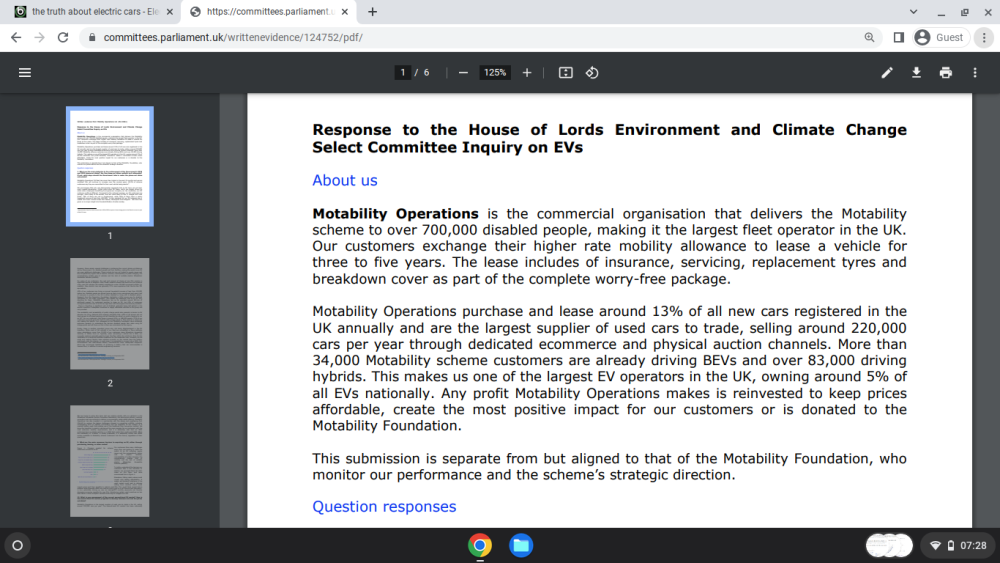
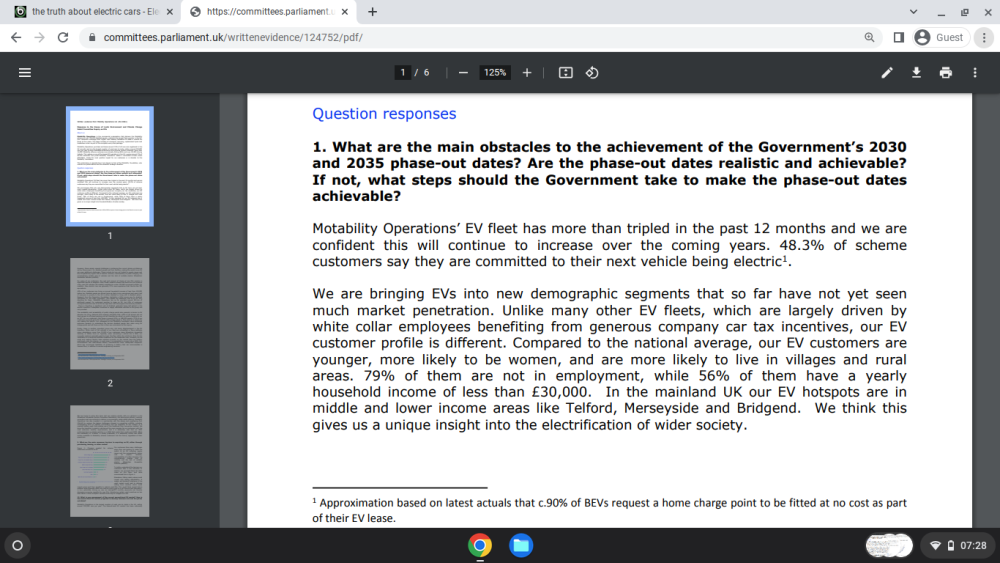
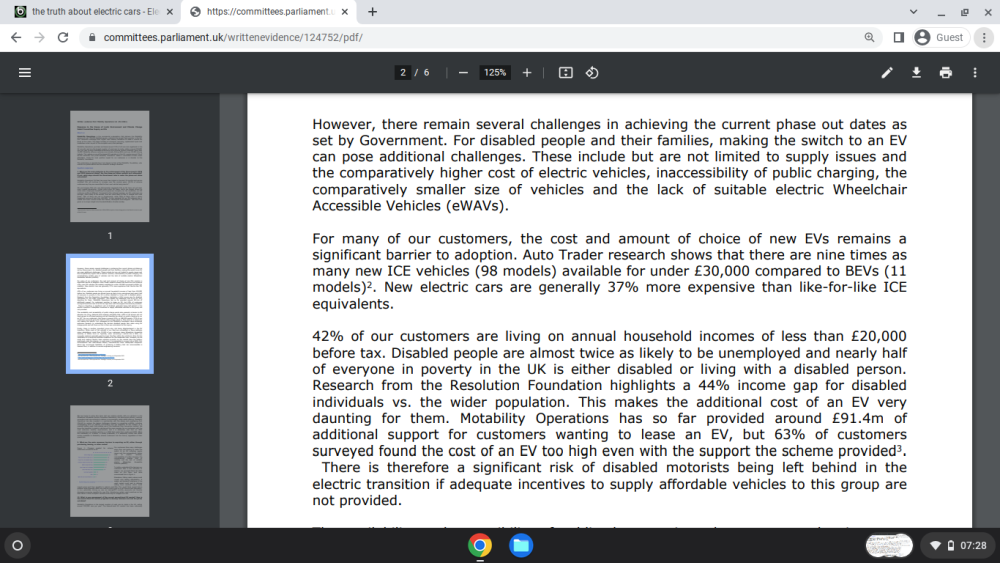
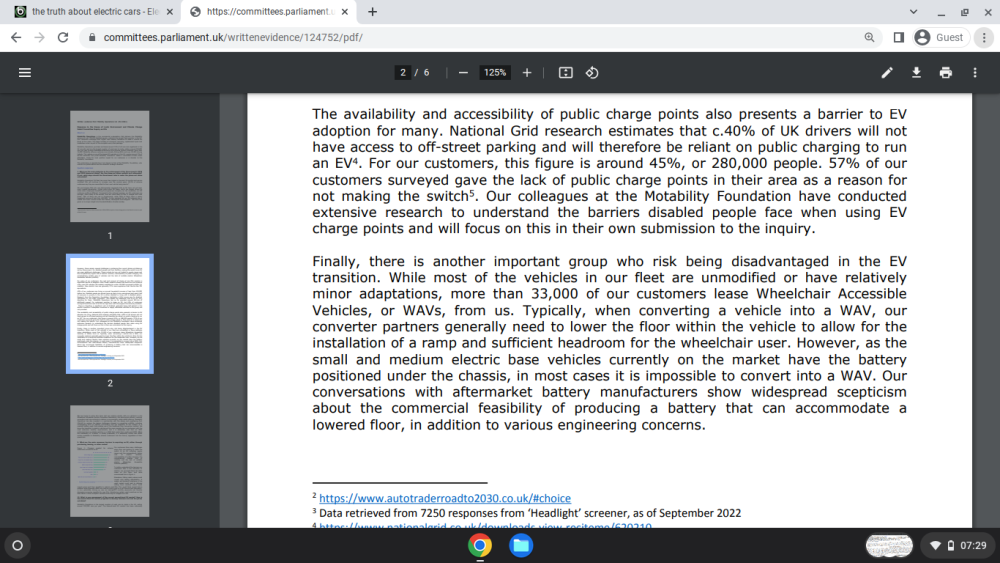
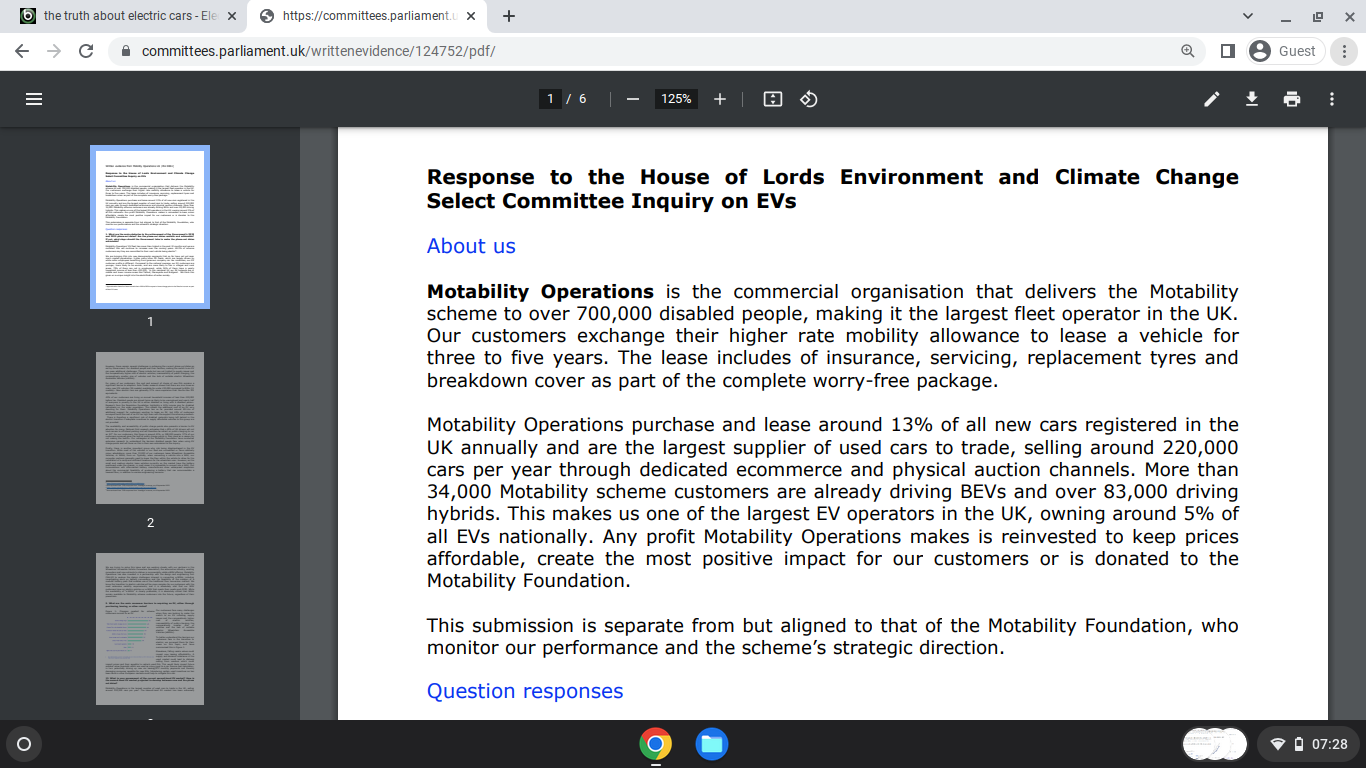
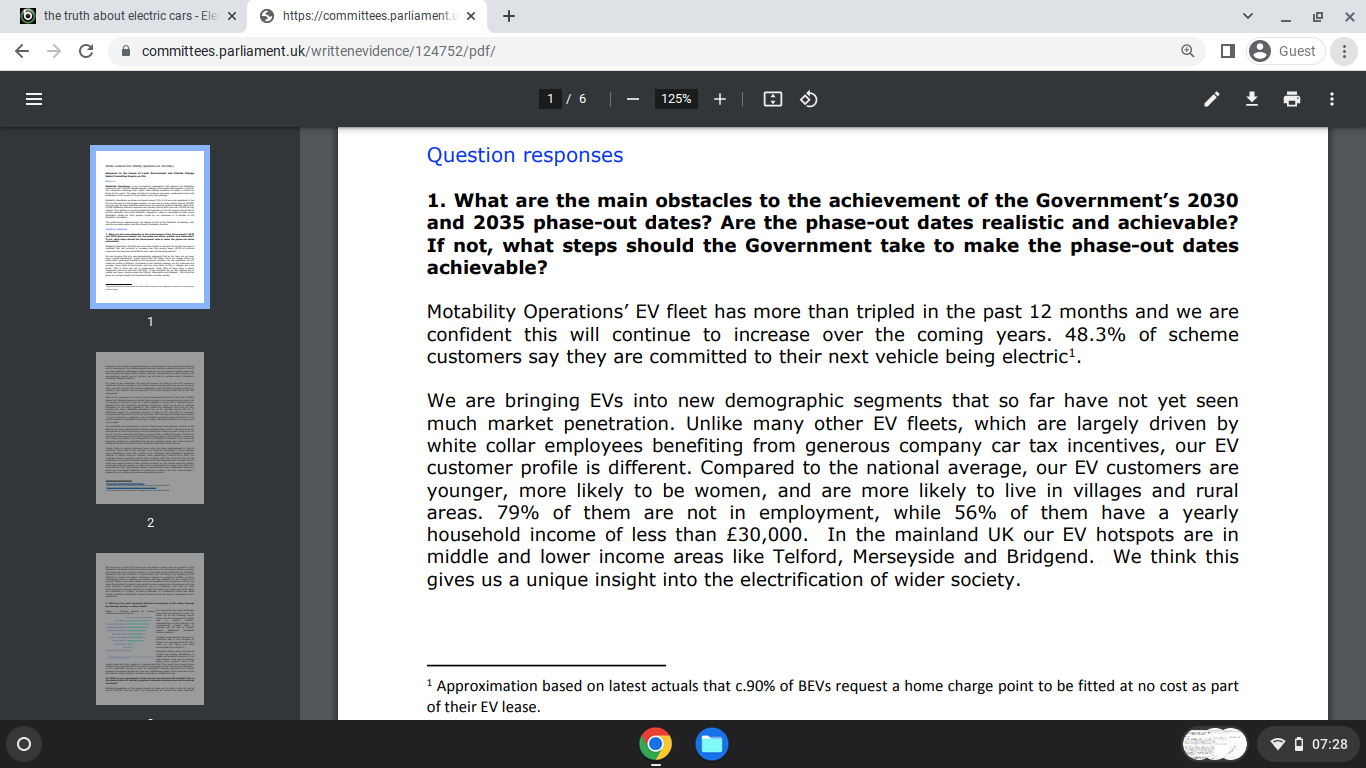
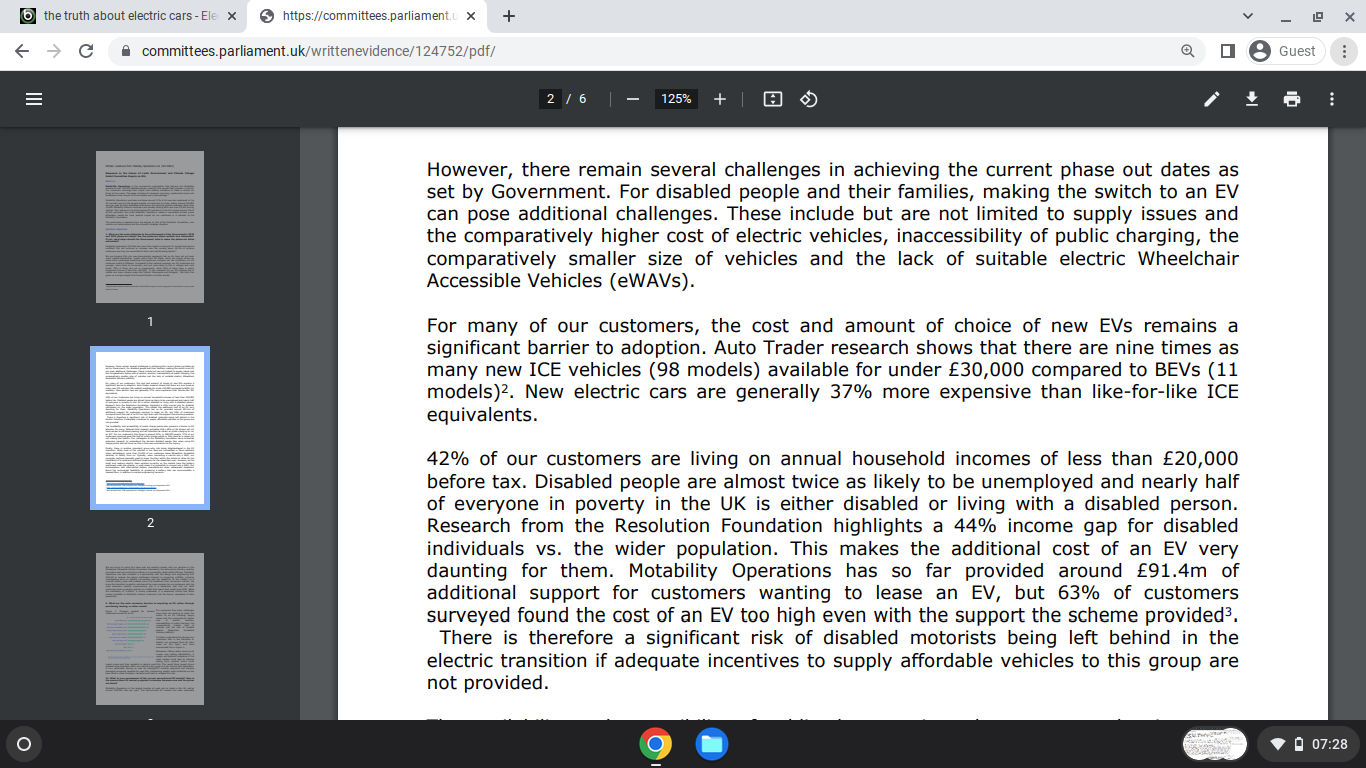
3 pointsMotability own about 5% of BEV,s in the UK & around 13% of new cars registered in the UK each year were bought by them. They now offer for lease to customers over 115 BEV,s and no doubt the manufacturers are offering them better a better deals on new BEV,s to help them get to their 22% first Registrations. The Nil or Low Advance Payments are certainly good, and the Free Installation of a Home Charger for those that can have one. There are those that have got a BEV from them and then regret that once they experience Public charging with them. Remember that not all leasing are drivers of the vehicles. Not all will be doing the charging of the vehicles. It might be & is for many just £11 a day to have your car sitting available, no other expenses other than the Electricity or Petrol / Diesel. No Insurance, Servicing or VED to pay. Even some money back if the car is in a good condition after 3 or 5 years, or when handed back. 34,000 BEV,s & 83,000 Hybrids at the time of this. (They should really say how many PHEV,s from that 83,000 Hybrids.)
 3 points
 -
2 pointsActually, this is a common misconception. If I travel to London for instance, a journey I take several times a year and approximately 240 miles (I do it in one non-stop trip of course). I can increase my fuel efficiency by many mpg if I fully charge my PHEV first and - this is the important bit - use the Sat Nav. This enables the car to meter out the charge to maximise its efficiency. Cruising on a motorway is a weak point for EVs, whereas in heavy traffic, it plays to their strengths. My PHEV can keep some charge available for when I get to London, for instance. It works well and the car usually depletes its charge with a mile or two of my destination. Without using the Sat Nav the car tends to use the charge at the beginning and also on the motorway, which means you drag around all that ruddy extra battery weight for no benefit. Once in London I'm generally screwed, as they say, as charging becomes a nightmare and is generally not feasible, so the return trip is done in pure petrol mode. I've explained the scenario before, so won't bore with my life story on this matter, again. PHEVS are the most complicated of all cars and you have to give them as much information as possible, if you want to maximise their efficiency. I would never buy a secondhand one, they are far too complex. For instance, my car can run with .. Front EV motor Rear EV Motor Front and rear EV Motors combined Petrol engine Petrol engine and front EV motor Petrol engine and rear EV motor Petrol engine and both EV Motors it can recharge from... Type 2/mains supply Front EV motor Rear EV motor Brake regen using a combination of the above or the petrol engine can recharge as you drive (you can set for 3 different levels of total charge). It can run in 'Pure electric', Pure petrol 'Hybrid' combination 'Sport' where ever thing can run simultaneously '4x4' where the electric motors run almost all the time and the petrol occasionally helps out. Nuts! Dread to think the problems some poor sod will have with this car in 10 years time.2 points
-
2 pointsAre you getting an EV, Graham or in the market for one or even considering considering getting one? I thought you were happy with your Superb?2 points
-
All sorts, including the archetypal "elephant race" where the vehicle in lane 2 has a limiter set 0.2mph faster than the vehicle in lane 2...2 points
-
2 pointsI'd strongly advise considering replacing the expansion tank for one without the silikat bag.2 points
-
2 pointsVauxhall is one of those brands that have people getting new cars and them never getting to the end of an agreement, the car is back at a dealers long before that. That is what comes with targeting younger people with cars that are over priced but look like monthlies are cheap. They get to know the car is crap and want something better. @Graham Butcher you can have as many points of view as you like best have plenty while you can. All about the banter. ? Have you tried an EV yet, or do you ever intend to? VW partnering with Chinese car manufacturers or even those from the USA is not 'simply clever'.2 points
-
2 points@Graham Butcher I know you are retired and unlikely to be driving after 2035. Maybe best not get an ulcer bothering about stuff that will never affect you. If we put our fingers in our ears and shut our eyes it will not happen. PS There are issues of some kind as far as people waiting on Skoda ICE cars that Dealers are not telling the customer what it is. Today a member says they have been told 'DSG software'. There are always reasons for vehicles being bunkered, and Skoda do not Sell / First Register many cars in the UK even in the best of years and it will be VW Group UK or in the EU that controls the numbers & the fleet emissions etc.2 points
-
2 pointsMy Local airfield already has vast stocks of pre-registered Skodas stored there in order to get around the quota problems as they will simply shift them as second-hand cars. I'm expecting to see more arriving soon ready for next years quota.2 points
-
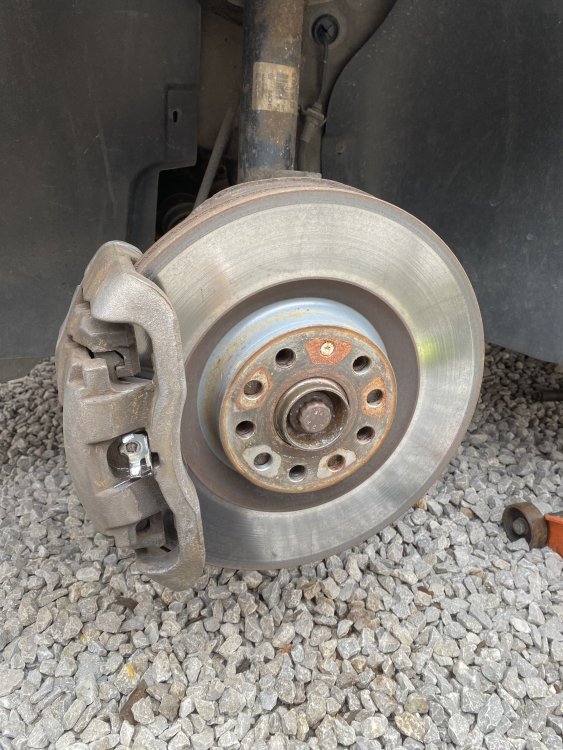
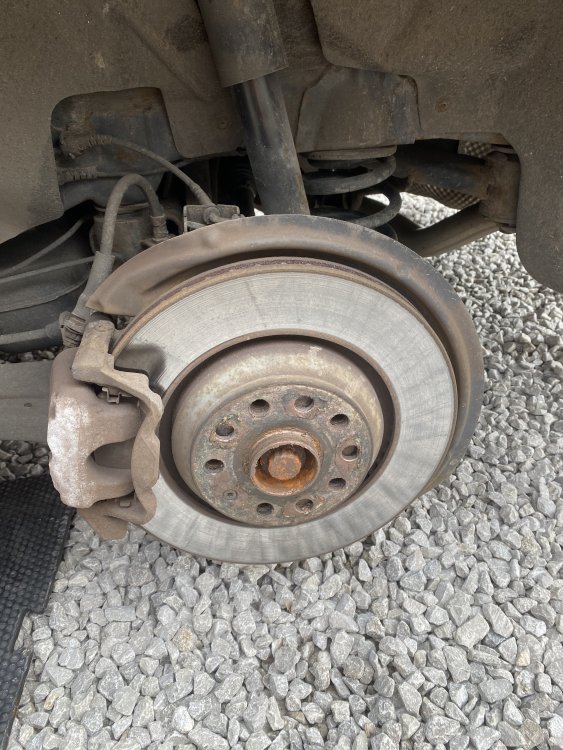
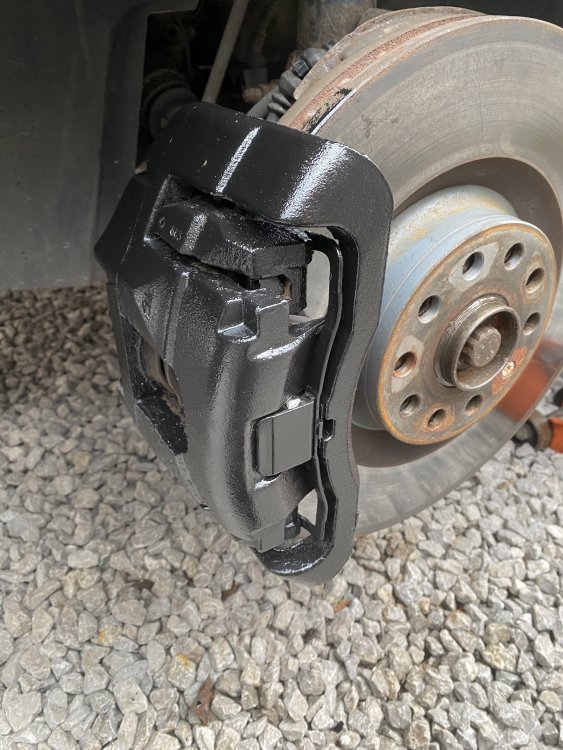
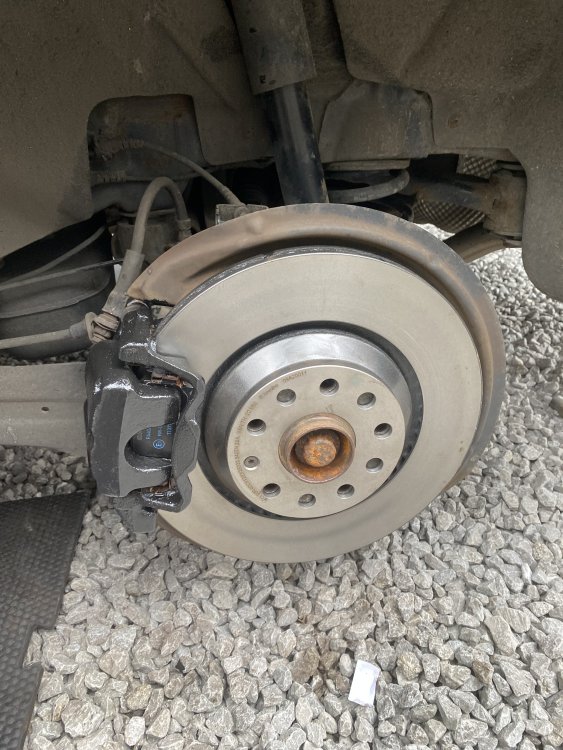
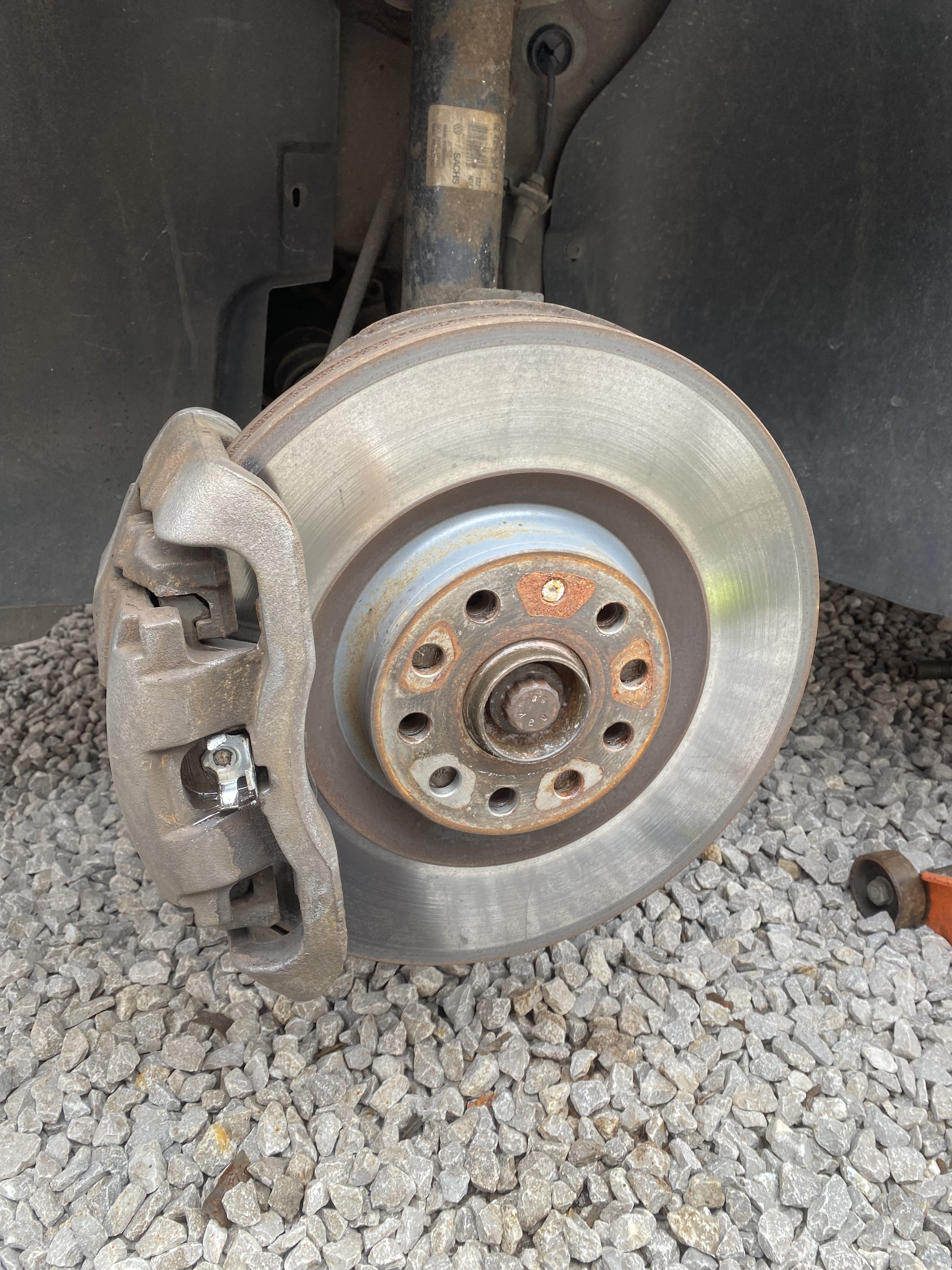
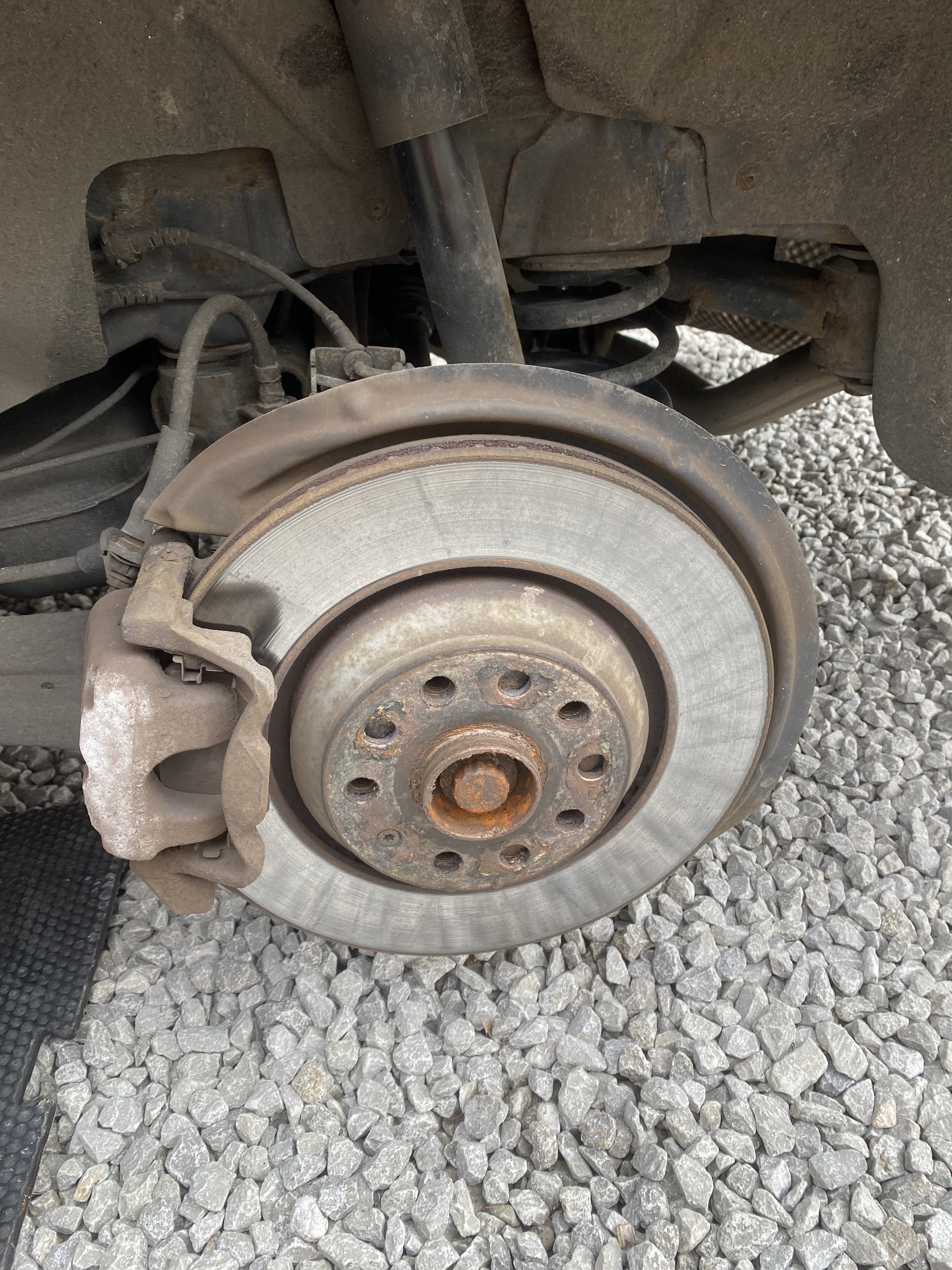
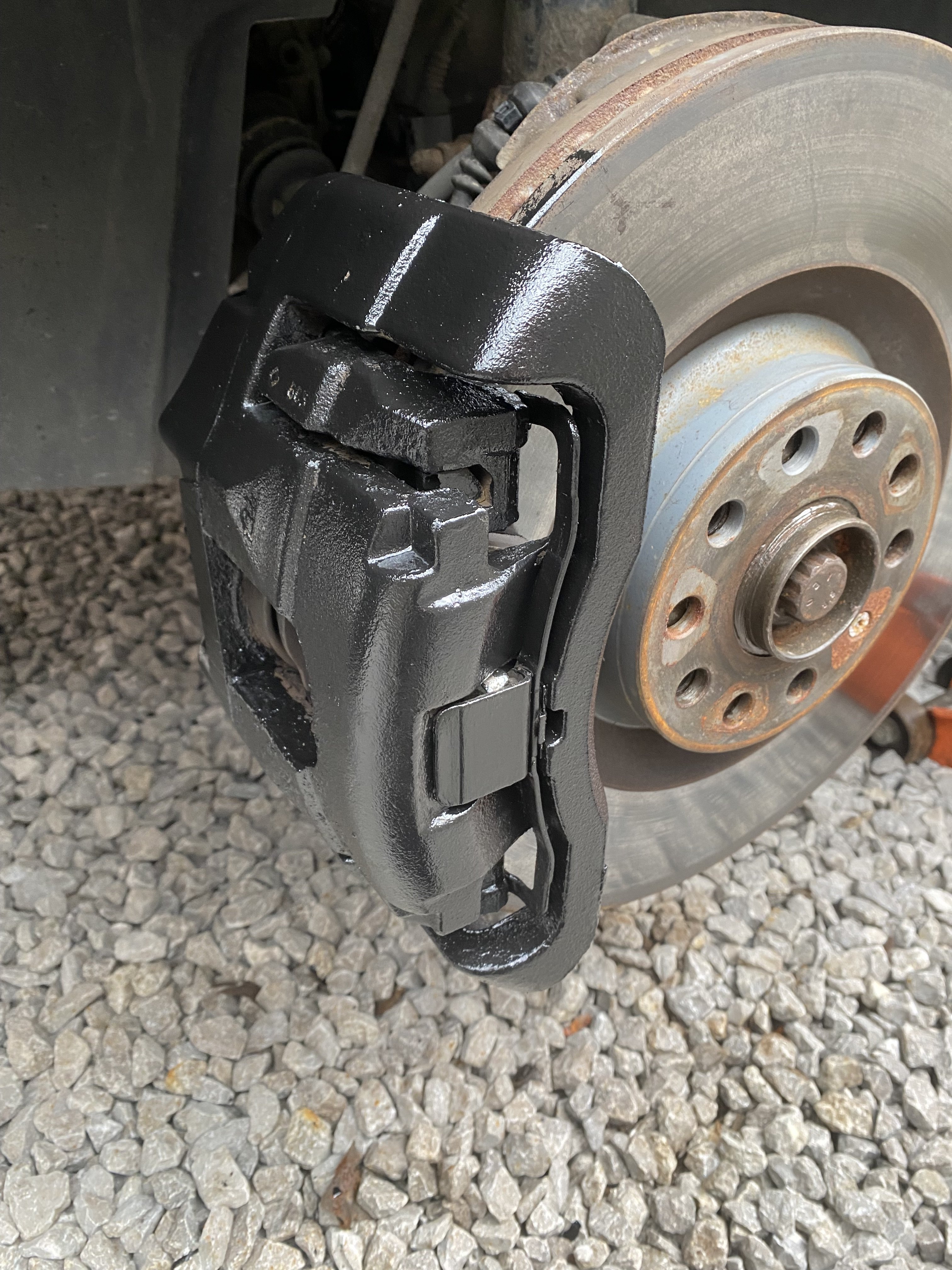
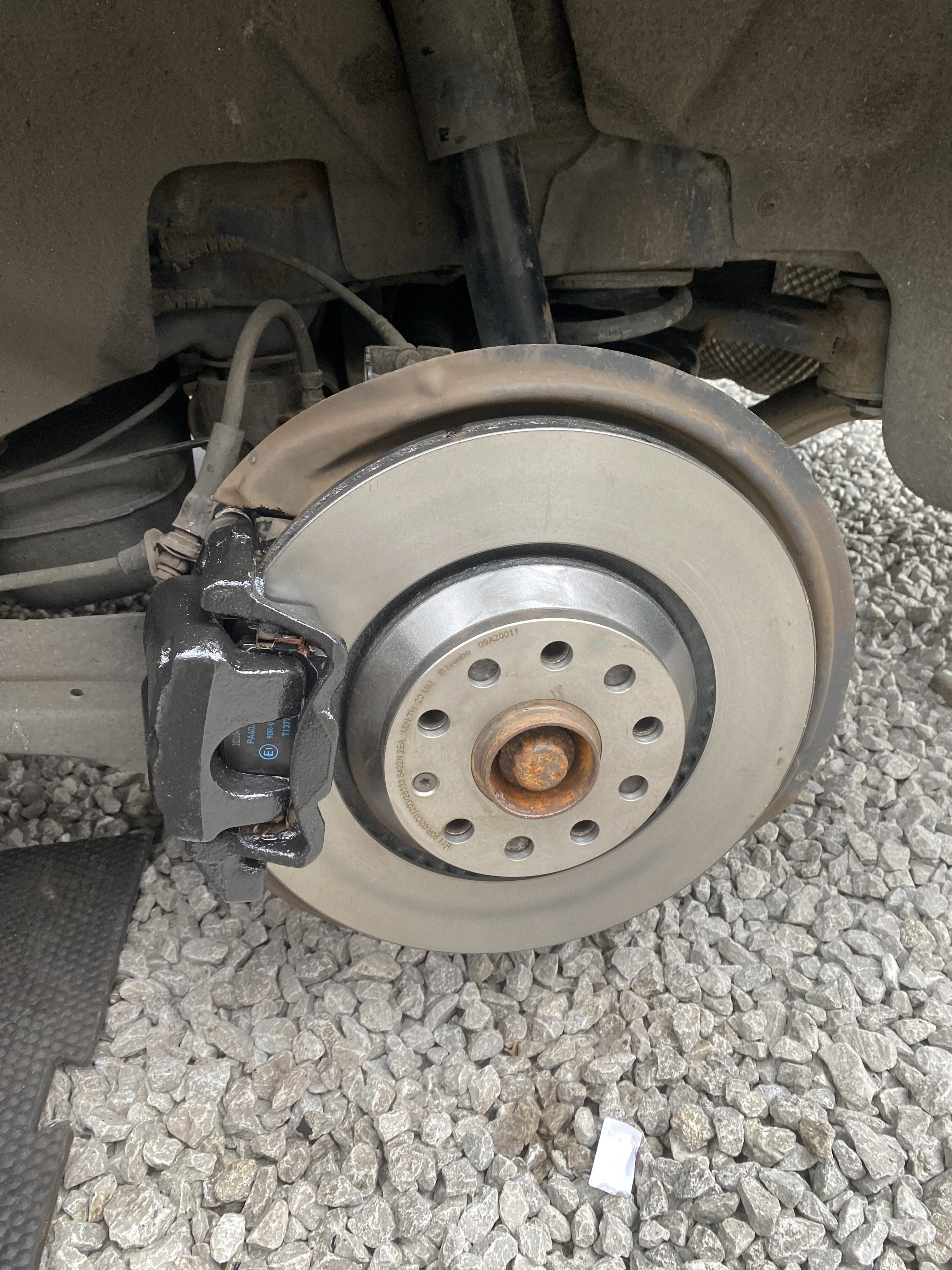
2 pointsSome new Brembo rear discs and pagid pads and a little tidy up of the Calipers and carriers, painted them a nice stealth Black. Got the original alloys on just need tyres soon now.
 2 points
 -
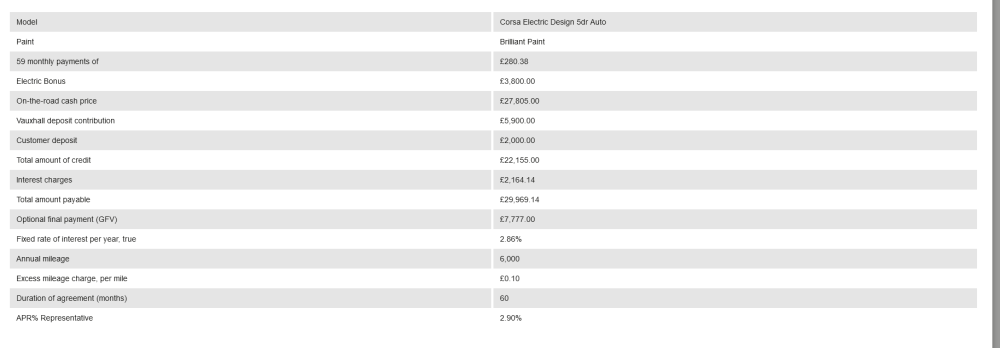
2 pointsAfter 5 years both own a 5 year old car, but the BEV owner has paid 25% more to own the BEV than the ICE owner has paid to own the ICE.2 points
-
2 pointsCurrent Vauxhall radio advert stresses that the monthly repayments on PCP are the same for ICEand BEV versions, BUT quietly says that the repayment period is 4 years for ICE and 5 years for BEV version - so 25% more in reality!2 points
-
Many years ago some colleagues and I had a challenge when on work trips - who could get the lowest instantaneous mpg figure. I won with a figure of 1.9mpg (158L/100km) on a 2.0L vauxhall Astra GTE.2 points
-
2 pointsThat number will actually be increasing at the moment too - as parking provision for residential properties is being reduced through Local Authorities' Supplementary Planning Guidance and many city centre residential developments / blocks of flats currently being built have little or no parking provision.2 points
-
2 points10,000 miles a year drivers so 200 miles a week drivers public charging and with no home charging might do the odd short charge or a once a week sticking the car for an hour or 2 on a charger. Plenty EV drivers might be more like 5,000 miles a year of local driving and the occasional long run. They might not even need 1 hour a week on a public 50 kW charger. But that 100 miles of a Rapid charge at a PodPoint is going to be £15.50 & maybe even more. Not much cheaper if they are charging longer on a 7 or 11 kW charger or on a 22 kW AC maybe just the same.2 points
-
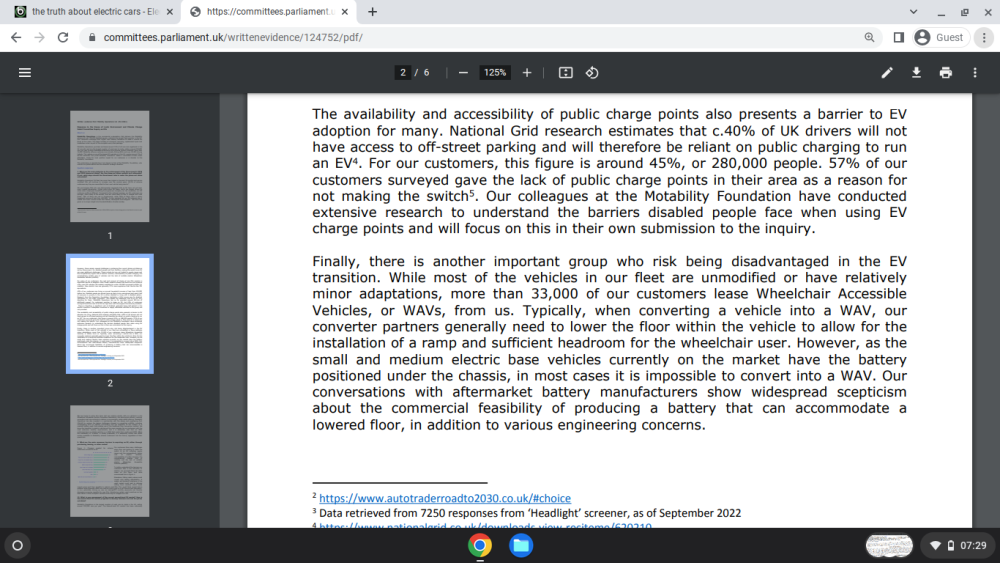
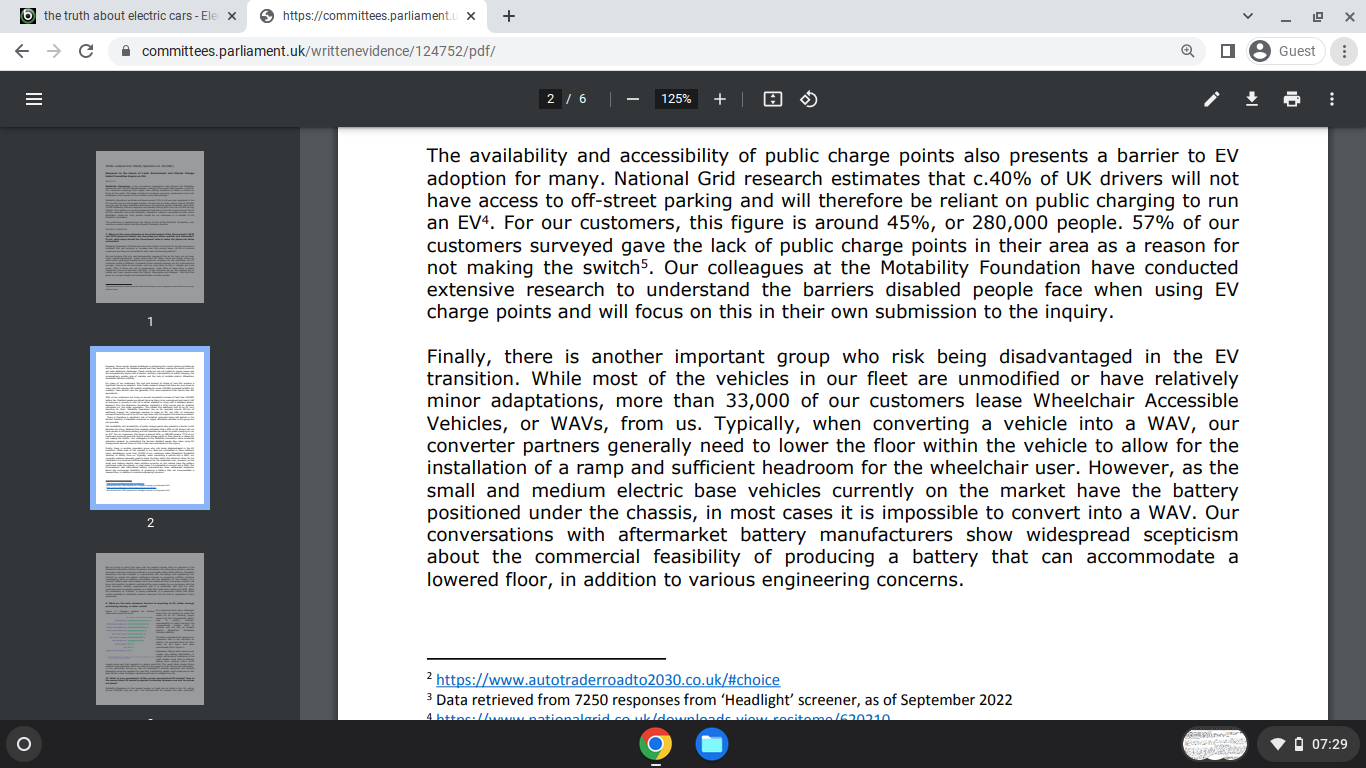
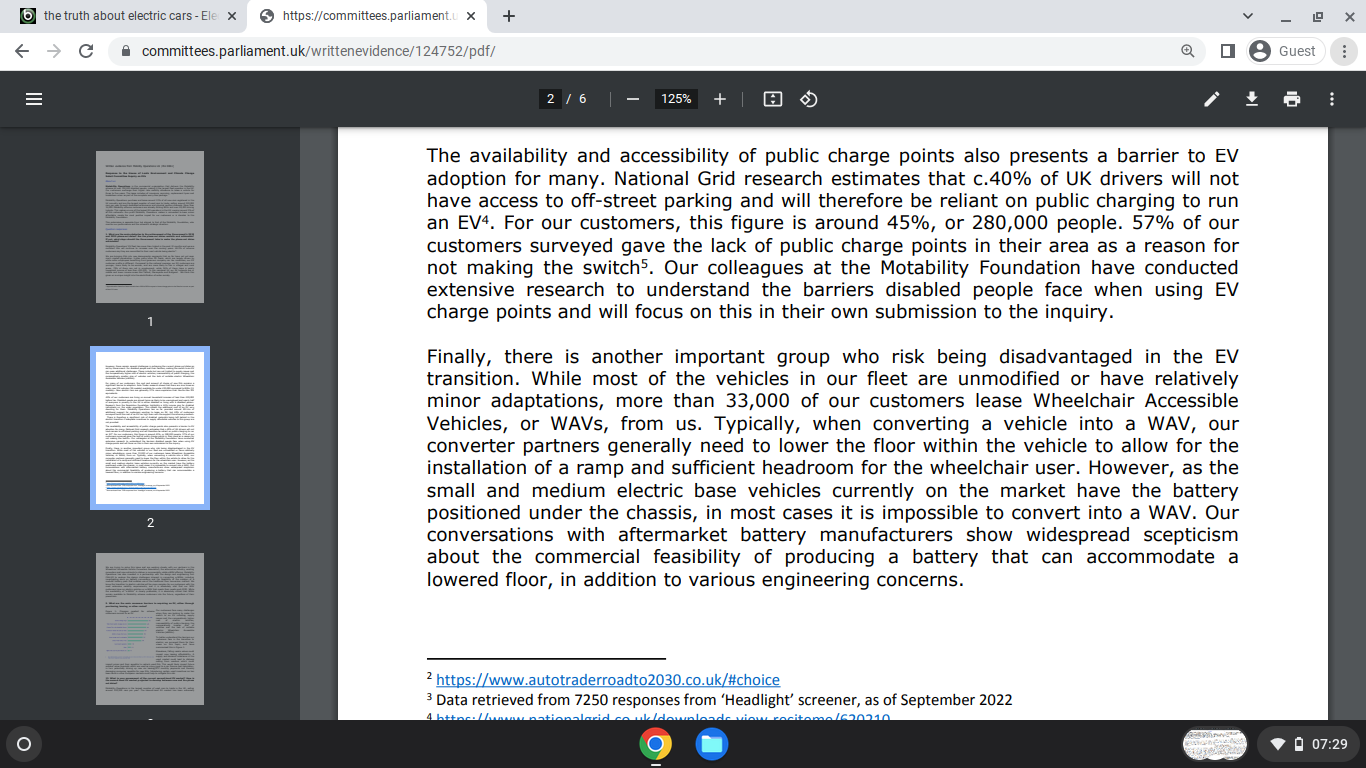
2 pointsI just do not believe that it is only 40% of UK drivers that do not have access to a driveway or offroad parking. I know they say drivers and it is not about properties, but there are a lot of drivers living in hi-rise building,s, flats, blocks of 4 etc etc. EDIT. Posted the wrong page. sorry.
 2 points
 -
2 pointsWell I was reacting, at that time, to your conclusive statement that for people with driveways "... EV should be the default first consideration now". Obviously, that is not a true statement. I agree with your later qualification that states that this is not actually a true statement. EVs are an alternative to ICE cars, but they are not an automatic improvement for many people and I would argue they are not an improvement for the majority of people. The EV owners I see, are all financially pretty secure people, or they are at the time of purchase/PCP/Lease. It feels like there is a financial divide between ownership of EVs rather than ICE in general, imho.2 points
-
2 pointsFor reference it also uses other sensors within the device such as accelerometers etc. so it can decipher, for example, whether driving, on Public Transport, cycling or walking - which, granted, I should have mentioned - so not just GPS and not necessarily a GPS inaccuracy problem. Regardless it demonstrates that the systems are not infallible and never will be for various environmental / other reasons.2 points
-
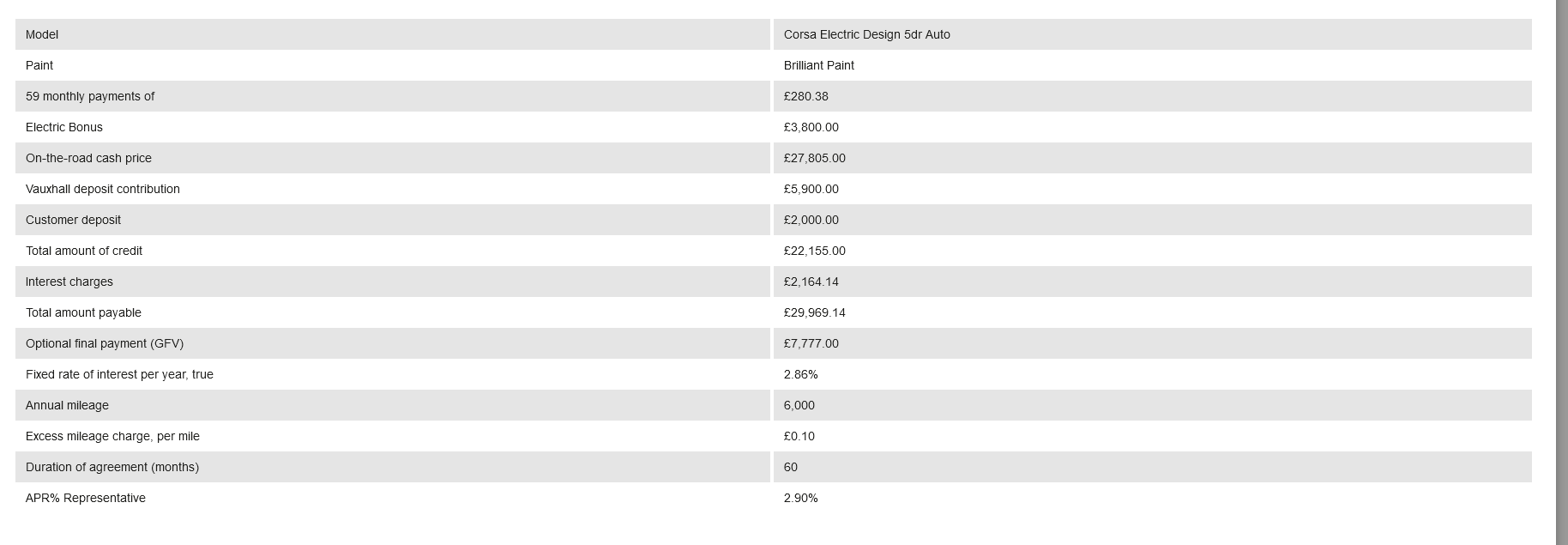
2 points2 points@PetrolDave they allow you to floor the accelerator and over-ride the system. Let you accelerate and pick up speed into an accident allowing you to then blame the driver of the Red Ferrari that you did not consider was going to do an overtake as well.2 pointsAs usual though the trouble is that the bureaucrats making up these daft rules and laws don't actually live in the real world, or understand the limitations of the technology available... Nor the wider implications of what they propose. They have a blinkered view and usually only looks at one set of data to justify their thoughts... That data being the one that fits their narrative. Call me cynical but these are the people and the stuff I deal with on a regular basis in my line of work.2 pointsI had a little prod about in Google. It looks like different manufacturers can take different approaches. The first prominent hit was Ford, who clearly say their system does indeed regulate your speed automatically. So I looked for the EU legislation. An article here seems to say there is in fact a choice between "just warn" and the "actively intervene" for the manufacturer. So which Skoda have done we will know for sure when someone with a spanking new one posts in this thread I guess Article is: https://etsc.eu/opinion-will-intelligent-speed-assistance-isa-live-up-to-its-promise/2 points1 pointHello everyone! I will be doing a Favorit swap with an 1.8T AGU engine from my Golf 4 GTI. I need a full pinout of original Felicia 1.6 (1997, pre-facelift) gauge cluster plugs (Black, yellow and a white one). I have already swapped in a 1.6 AFH/AVY engine hybrid, but its just still too slow for me and I always wanted a Favorit with 1.8 Turbo engine. I am going the legal route, I have all documentation from Golf 4 for TUV. So basically I have Favorit Silver line with Felicia dashboard, Felicia wiring harness (whole car), hybrid Polo engine, Felicia Power steering and Felicia AC system. Thats why I need pinouts for those 3 plugs for the Felicia 1.6 cluster I mentioned above in this post. Feel free to ask any questions!1 point1 pointDriving at 'realistic' motorway speeds (I don't hang around), my PHEV does around 38mpg on pure petrol and maybe 45-50mpg with Hybrid Sat Nav mode engaged (it's not an actual mode, but you get my drift). If you consider that the real world range on battery alone in stop start traffic could be as high as 24 miles per full charge, you would think that it would give, roughly, a 10% help to a 240 mile trip. But the reality is, you get more like a 30+% lift. These are rough figures as it depends on the route used and average speed undertaken. The 3008 I have only has a 42 litre tank, so it's worth doing before I set off on a long trip.1 point1 pointPetrol £280.43 Total £24,833.36 to own Electric £280.38 £29,969.14 to own 20% dearer?

 1 point1 pointEh?? I'm retired and have been for 8 years now, I was talking about the last company car I had, which at that time we all had ICE. Just as I retired, the company removed the car policy instead making it the employees job to source their own cars but within strict guidelines, making it become a millstone around the workers necks and many others also left around that time because they could see all kinds of problems on the horizon.1 point1 pointI've been saying this for many times, driveway owners default choice if situations allow, etc etc. A lot of the times, it pays to have foresight Without full calculation of the offer in question, it's difficult to say BEV costs 25% more. We need to know the final balloon/down payment. At 4th year, ICE owner has option to hand the car back or pay down payment to own outright. But if down payment isn't made, the ICE owner does not own a car anymore. At end of PCP, you'd need to pay the down payment. It does not belong to you. Without that information, it is impossible to compare true cost of the car.1 pointTalking to the supplying dealer/or the one that is doing the maintenance on Motability's behalf, about a price wouldn't hurt. You know the car you have and for them it would be a quick flip so might be an excellent deal that will be possibly less than what they would sell the car for to someone else.1 pointIndeed. Henry's is pick which one and luck of the draw. Depends who might be working there at the time. And not much choice is Glasgow, and near there are some best avoided, Arnold Clark & Park's.1 point1 pointA Record of Servicing or Inspections at a TESLA Service Station might give buyers a feeling of security. The same at an ARNOLD CLARK Service Centre where it might just be the Brakes that were supposedly given a Brake Fluid change and a Look See and report and a Wash and Vacuum if they bothered to might be a warning. 'Buyer beware'. & not only with BEV,s.1 point1 pointThere is also issue with warranty. Would VAG honour an engine problem if the car hadn't had oil change in the last 2.8 years? Tesla would honour battery warranty or drivetrain if no service were carried out. This is the biggest difference that affects running cost. We need to follow what was put into user manual to have valid warranty claim, ICE car manuals say must do regular oil changes. Tesla manual does not have such service intervals on battery/drivetrain: https://www.tesla.com/ownersmanual/model3/en_us/GUID-E95DAAD9-646E-4249-9930-B109ED7B1D91.html Do you think Tesla can reasonably deny warranty work on battery/drivetrain if cabin filter wasn't changed as per interval? Well, the public's view of vehicles now need to change. EV doesn't need as much regular interval servicing. This is part of the reason dealerships don't like EV's and manufacturers with dealership model (all of them except EV only ones) still require regular busy-work.1 pointI saw this video last night, very well presented. It gives a very good explanation why Taycan are deprecating so much, there is a much better EV in a shape with more mass market appeal coming out, at cheaper price. There is also an oversupply of used Taycan's vs similarly rare i3. As mentioned in the video, there had been a correction in EV prices after 2022 due to difference in fuel costs, before there were unrealistic inflated EV price. Now, overall used EV depreciation is on-par with ICE cars of similar age.1 pointI've just checked the app the app this morning and it has reverted to the stupid US Mpg stats AGAIN..
 1 point1 point1 pointMy only concern about speed limiters, on any car not just BEVs, is that it will prevent the ability to avoid an accident by reducing the TED (Time Exposed to Danger) when an overtaking manoeuvre that seemed safe becomes high risk due to the actions of another driver. My same concern applies to black boxes required by some insurance companies - what's better, hard braking or acceleration to avoid an accident or an accident? My suggestion it that there should be a short period (a few seconds) when exceeding the limiter is allowed.1 pointMine isn't new, being a 2020. I have enabled the connection between the throttle and the speed limits as read by camera or internal map. Mostly this is a joy. But fairly often it's a blinking nuisance and gets it wrong. Even in my own village there is a long stretch of 40. At two points, always the same, the car sets itself to 30. As there are no 30 roadsigns, the internal map must be wrong. I investigated and thought I found the maps were from Here mapping. But this road in Here is marked correctly as 40 throughout. My maps update OTA regularly so it's not that. There are bits of the A1 where the car suddenly decides it's 50 or 60 and then 70 again, which annoys me and probably the car behind. There are chunks of road where the car ignores the NSL after leaving a 30 and insists it's 30 all the way to the next village. All in all, as long as I can override these things manually I can live with it. If the car was more determined I should abide by its mistakes, I'd be miffed.1 point1 pointActually, the article seems to indicate that it would be just a warning. However, there is always the chance that it could at some point in time actually be used to set the maximum speed the car could go to and if that were to the case, it could potentially lead to some nasty accidents.1 pointUpdate!problem solved by adding a pin in position n1 in door module! Works perfectly!1 pointI've just updated my "Essentails" app, and it's now working... ...but unless the function has been moved to a different screen, it doesn't currently provide a way of either seeing the charge in the battery (it does give me the current "cruising range" in miles, but so does the MySkoda app, with the charge) or a way of switching the charging on or off. (This may or may not be because I've been controlling that -- it's charging now -- using the MySkoda app.) With regard to the MySkoda app, I can set the units used to 1) Metric, 2) Imperial (UK) and 3) imperial (US) and I've changed it from (1) to (2) but in the status for fuel consumption per distance, it only shows US gallons per mile. (Okay, I can work out what that means in miles per UK gallon in my head, but it seems odd to offer both imperial units as options while only displaying one of them.)1 pointAll done and working using a set of yeti buttons in existing wheel.1 point1 pointMy wife's 90hp hatch has 15" alloys and 185/60 R15 88H not running at the higher eco tyre pressure and I'd sooner have 14" (steel) wheels with more tyre sidewall rubber but most would consider 15" fine (if not "filling the wheel arch"). If you buy the correct 15" wheels and they fit I should think the shocks and springs would thank you and there'd be no more than standard fitting and checks for the tyres. One note most don't like - depends on your insurance (or provider) but changing wheels from factory fitted can be seen as a "modification" even if going to a more sensible size, others don't care but might want to know. Changing from four odd tyres to a matching set of four smaller new tyres (depending on quality) may well improve braking, steering, suspension, road holding, handling and ride comfort and noise. @Carlstonmay well soon be along with fuller details. Four odd tyres, you did check the/any previous servicing had actually been done on the car?1 point








.thumb.jpg.f83a46b9b3c0d976b9dbffbb523c9874.jpg)







Important Information
Welcome to BRISKODA. Please note the following important links Terms of Use. We have a comprehensive Privacy Policy. We have placed cookies on your device to help make this website better. You can adjust your cookie settings, otherwise we'll assume you're okay to continue.