Leaderboard
-
.jpg.3745ef413bb0c636456d024dfd5d2fd7.jpg)
Evolution13
Resident Member11Points3,201Posts -
lol-lol
FREEDOM7Points16,146Posts -
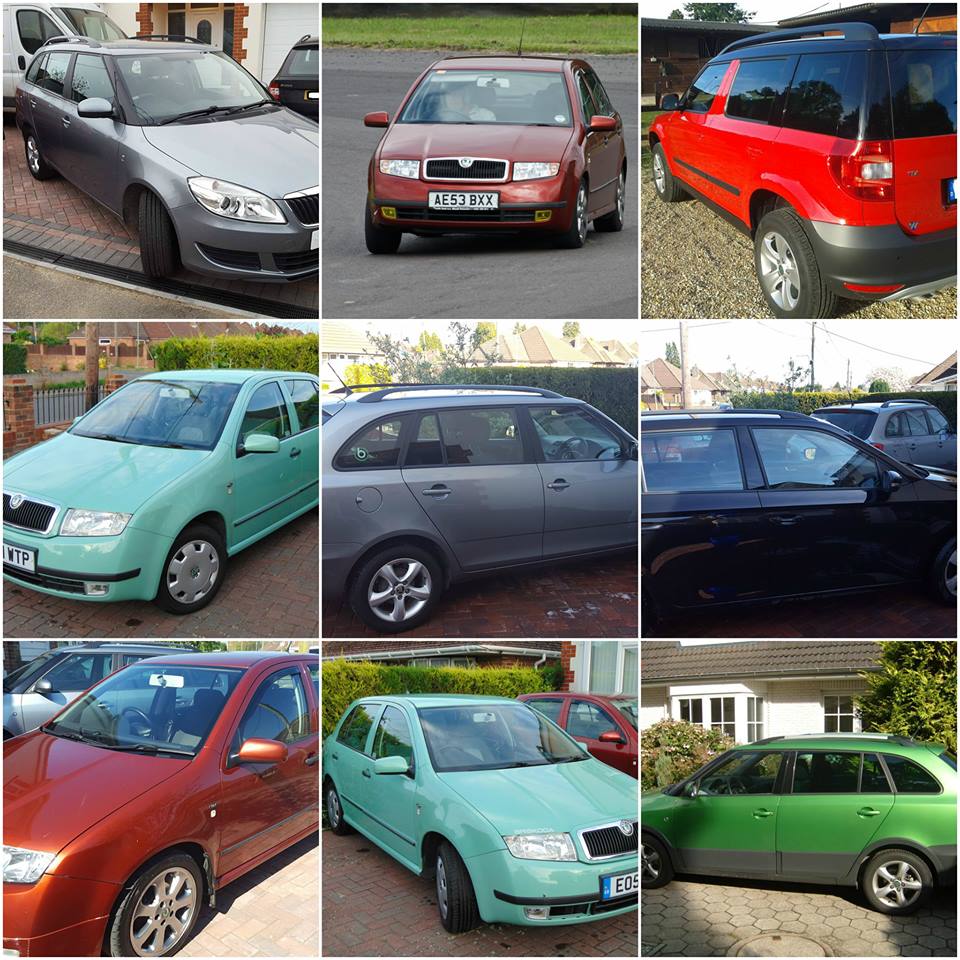
Lee01
FREEDOM5Points36,937Posts -

mac11irl
FREEDOM5Points16,806Posts


.thumb.jpg.9dd3f612ba7f13d10be5c518d3c8d255.jpg)

Popular Content
Showing content with the highest reputation on 07/05/26 in Posts
-
3 pointsYou Guys are amazing! Thank You for all. Everything Works perfect! Keep up the good work3 points
-
2 pointsI cancelled one of mine - but it was before any services had been done. At first they just said they would stop taking the payments but I pushed for a refund - they hummed and harred then agreed to refund the 4 months I'd paid as goodwill. I don't know what would happen if any servicing work had been carried out - I think (but I'm guessing here) they'd figure out how much it cost and ask you to pay that (if you hadn't already paid enough). The T's and C's say if you want to transfer it then you can, but it has to be fully paid first. When I took over my daughter's Ateca I just got her to keep paying it - had a breakdown and it wasn't queried.2 points
-
2 pointsYou need to reset to factory settings, just SmartLink settings or complete unit, depends which option you have. Path is something like Setup>Factory reset... I dont remember exactly, but it is self intuitive. Then you will get CarPlay.2 points
-
2 pointsFor your own peace of mind, maybe just open up the key body - no doubt Google will show you how, and check what is written on the exposed face of the battery - you should not need to remove it from this version of the key fob, so no need to worry about anything going wrong. Unlike the 2 guides that I've just watched, I prefer to use a kitchen-table knife to prise open the key body, I'd rather use that than damage/bend the other key's blade! Now, VW Group always only fit Panasonic batteries, so I've always only ever bought and fitted Panasonic batteries bought online from sources that seem to sell genuine batteries and always show a picture so that you know the "use by" date of what you are buying.2 points
-
Sure does. Changing the effective energy available in the fuel that much stretches credence well beyond breaking point. Something else going on here, probably driver behaviour, since the testing wasn't blind.2 points
-
Hi everyone, I haven't posted on Briskoda meaningfully in a long time. I used to be very active in the Superb sub-forums over the ~15 years I've had Škodas. I've read with interest the many MPG threads on here over those years, and always wondered about my own cars, too. So, I decided to actually put the matter to bed. In my previous Superb (2.0 TSI 220ps DSG) I felt 99 RON gave a power and MPG edge over 95 RON fuel. The BMW X2 20i xDrive that followed it, definitely so! When it came to my 2024 Mk I Kodiaq 1.5 TSI EVO ACT DPCA 150ps DSG SE-L Executive (7 seats, 19" wheels), though? I wasn't so sure. The car 'felt' sharper, but MPG didn't seem much different. I'd never actually tested it, just gone off 'feel' and transient leg/tank MPGs. I decided to log every fill and every single journey(!) over 11 tanks of fuel and 4,000 plus driven miles. I have tested 95 RON, 97 RON, 98 RON (blended) and 99 RON — as well as various additives like Miller's Petrol Power ECOMAX (no difference), Redex Petrol System Cleaner (smoother drive, mild MPG uplift), Archoil AR6900-P Max (large MPG uplift, dull/flat drive), Oilsyn Petrol Power DNA (strong PEA detergent, lubricious — raised MPG floors but introduced a lot of ECU adaptation and 'unsettled' feel, somewhat capped MPG ceilings). Then, finally, I came across Oilsyn Hybrogen Road. Hybrogen is an interesting one, and as soon as I read about it I knew I just had to test it. It is the only additive I've come across that clearly advertises a positive MPG gain. That is, dosed at only 1:3000 (1ml per 3 litres of fuel) it claims to increase torque, power and MPG above and beyond an identical factory-clean engine when used in either petrol or diesel road fuels. Not 'cleans back to factory and restores lost MPG', but actually physically raises MPG, period. It's not a detergent (directly), nor does it affect octane or lubricity. It's a nano-colloid which basically acts as a dispersant, surfactant and combustion modifier. It removes water from fuel (eg ethanol blends), cleans the fuel system, and — most importantly — aggressively homogenises the hydrocarbons in fuel (petrol or diesel) for a consistent and clean burn. That, they say, results in a higher MPG while increasing power and torque across the whole area under the curve. Sounds like woo?... Long story short, my average MPGs (mostly short, urban journeys from cold tested across pair-matched routes and drive cycles) ended up at: Fuel mix Tank average MPG Uplift over baseline Unadditised 95 RON ~30.0 - Unadditised 99 RON ~30 - 95 RON + Hybrogen 37.4 24.67 % 99 RON + Hybrogen 34.5 15 % Hybrogen long term average 36.0 20 % I should add that the 95 RON + Hybrogen tank includes a return trip from Devon to Liverpool. As such, the 99 RON + Hybrogen tank (~35 mpg) and its 15% uplift is more representative overall of the realistic tank average of this fuel/additive mix day-to-day. For example, if you read the full dataset, tank 7 (95 RON + Hybrogen) closed at 35.2 mpg and didn't include a longer motorway leg. However, the long term average (30 -> 36 MPG) includes a fully representative mix of driving in both cases, and the overall average increase of 20% over unadditised baseline stands validated. Fuel mix Urban MPG Pence per mile Unadditised 99 RON ~30 24.0 Unadditised 95 RON ~30 22.7 99 RON + Hybrogen 34.5 20.8 95 RON + Hybrogen 37.4 17.9 I tested by running a tank of X mix first, then took the uplift measurement from the second subsequent tank of the same octane/additive mix, to allow time for ECU adaptation and fuel trims to settle etc. Interestingly, withdrawing Hybrogen (diluting it out of efficacy) caused MPG to regress back to the same ~30 MPG baseline tank average, restoring back to mid-30s MPG once reintroduced on subsequent tanks. I also ran paired matched-route analysis and various other statistical tests on the (large!) dataset, and the winning fuel for this engine in my mixed driving cycle is unequivocally 95 RON + Hybrogen. There was no benefit in 97–99 RON fuels at all (this engine is not knock-limited in regular driving), and in fact they were harder to extract good economy from because the higher octane shortened the torque response vs throttle travel, resulting in a 'hair trigger' and more transient fuelling events. While the numbers might seem outlandishly large, please remember that (1) independent testing — including university testing — on the Oilsyn website shows similar numbers across various engines and regimes, and (2) my uplift came unambiguously from both the additive's direct effect on fuel, and the secondary effects such as the broader torque curve allowing gentler throttle at cruising speed, prolonged ACT engagement etc. Combined, the uplift is what you see above, and it's repeatable. The full (mildly anonymised) dataset and all my notes throughout can be read on Github as a Gist if you're interested. GistŠkoda Kodiaq 1.5 TSI fuel economy: Oilsyn Hybrogen additi...Škoda Kodiaq 1.5 TSI fuel economy: Oilsyn Hybrogen additive test - fuel-test-anonymised.md TL,DR: If your car says Min. 95 RON then — unless you're lapping the Nurburgring at three figures and ten tenths — just save money and use 95 RON (and Hybrogen!). No matter the scenario, from urban short hops from cold, through fully-loaded fast ~300 mile motorway runs up Devonshire hills with 7 people on board while pulling a roof box and hundreds of KG of luggage, 95 RON worked out both most economical (MPG) and cheapest at the pump. Please note I made no money from this testing, I wasn't paid for it, I'm unrelated to Oilsyn or any other fuel additive seller, and I'm just a long-term member here who decided to answer my own question as best I could. This is what resulted from that! Take from it what you will. Personally, I'd never go without using Hybrogen again. Not only does its modest cost (~1 ppl extra) pay for itself and then some, but the annual savings as detailed in the full report are huge (up to ~£500/year at 10,000 miles of mixed driving). Full fuel costs, pence per mile and other metrics are included in the full report/dataset if you're interested. Cheers!1 point
-
Hi all, I'm looking to upgrade my 2014 Fabia with a better instrument cluster that sports the maxidot display as well as the additional coolant temp/fuel analogue gauges. Also for the maxidot, I believe the steering wheel needs the upgrade to the multifunctional version to control the display, so I would be interested with having that done as well. I've already phoned a couple places like Cartronix in which I thought that their term "replace" would also describe what I'm looking to have done but so far I've had no luck with services that I have googled. Either I'm looking in the wrong places or perhaps it's a rare job to do, I'm not sure, but if anyone could help point me in the right direction that would be really helpful. I've heard of the guy known as Eddie-NL on this forum before who has fitted these but it seems that he is no longer online or available as of a couple years now. I am able to source the parts and just need a service to help fit and recode the cluster properly. Thank you for any help.1 point
-
I find Spotify does this on my 2016 MIB2 using wireless CarPlay dongle from time to time. Only thing I have found is press pause before it disconnects. Not sure if it’s an iPhone issue or MIB issue but it seems to be intermittent as to when it does it.1 point
-
1 pointThanks. I had suspected a pro rata deal. Was advised that the fourth service was an expensive one, and 12 monthly payments wouldn’t cover it 😱. As I have only covered just over 8000 miles, in three years, will probably not bother (🤞). I managed to renew my licence, which arrived after 5 months of waiting, having been referred to the Medical Assessment Unit of DVLA, but have some work to be done on a heart problem, so medics could strike me off at any time, if they think I am not fit!1 point
-
Thanks for the comments. I now have the car and have done some checks and test drives. So far I'm quite impressed with it. The only thing I've found so far is that the ASR warning light sometimes comes on (and the triangle warning light stays on until restart). I've checked the threads on here and can see that there might be several causes (loose/broken wire, MAF needs cleaning). Not enough to reject it I don't think. FWIW I had Kwik Fit do their free 'vehicle safety check', which didn't find anything. Will be doing a longer, motorway drive on Saturday, and hoping for some heavy rain before I have to accept/reject.1 point
-
1 pointGet the GPS antenna tested, it is not uncommon for water to damage PCB in antenna base.1 point
-
1 pointUpdate guys, just been told by my mechanic that there are traces of metal in the oil…possibly big-ends gone. New engine/refurb time. 😩1 point
-
Don’t worry too much about the tyres - I’ve yet to see a used dealer car under 400bhp that comes with nice tyres.1 point
-
1 pointAD1 The process is perfectly the same, there are even dimensions of the keys to remove it, I made them myself out of plastic.1 point
-
1 pointEDIT: solved by changing USB port to 3.0 -> not enough voltage on 2.0, going to install the thing, wish me luck! Rapid Liftback1 point
-
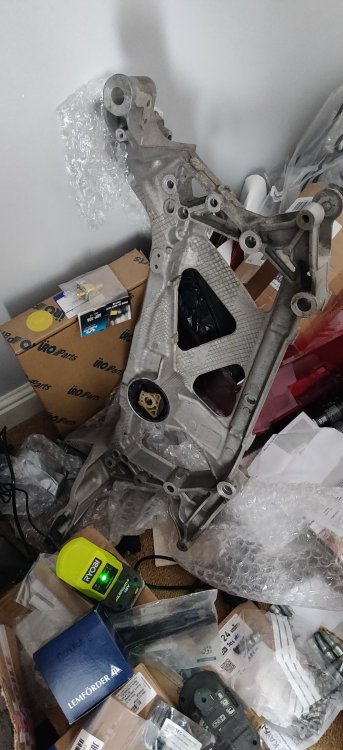
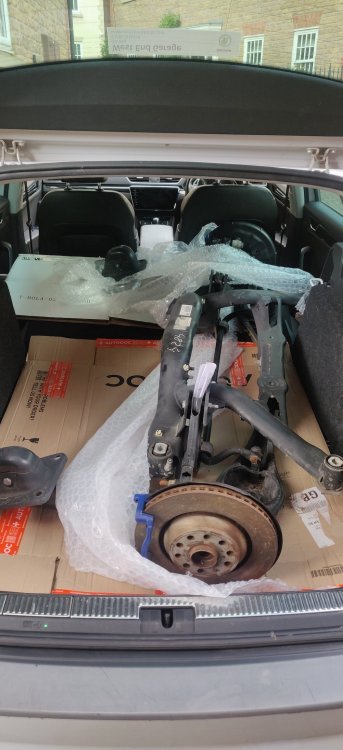
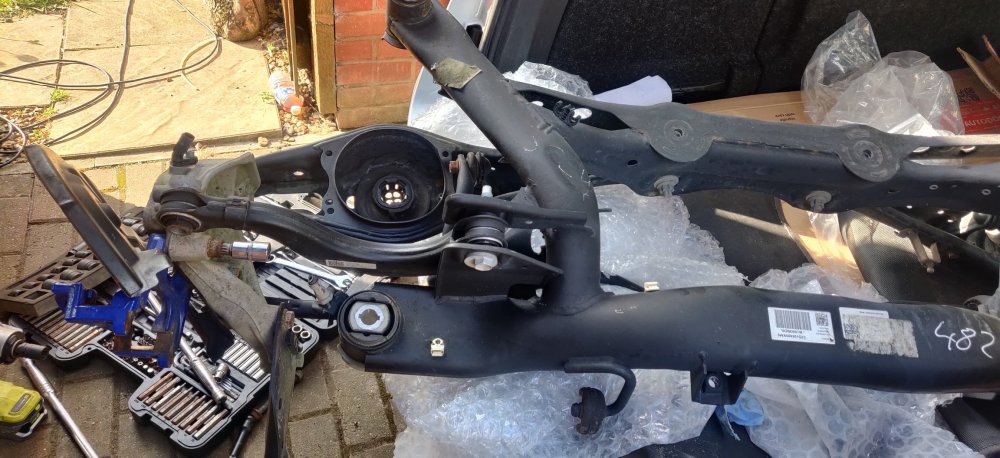
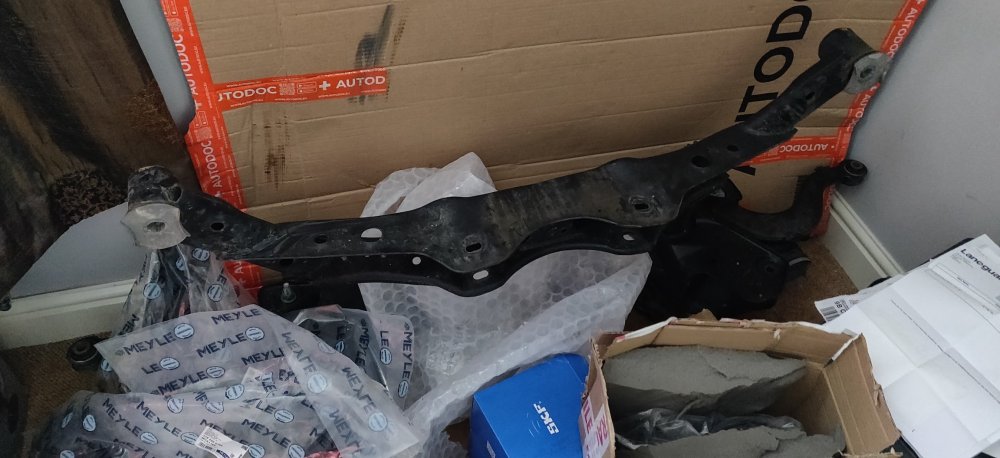
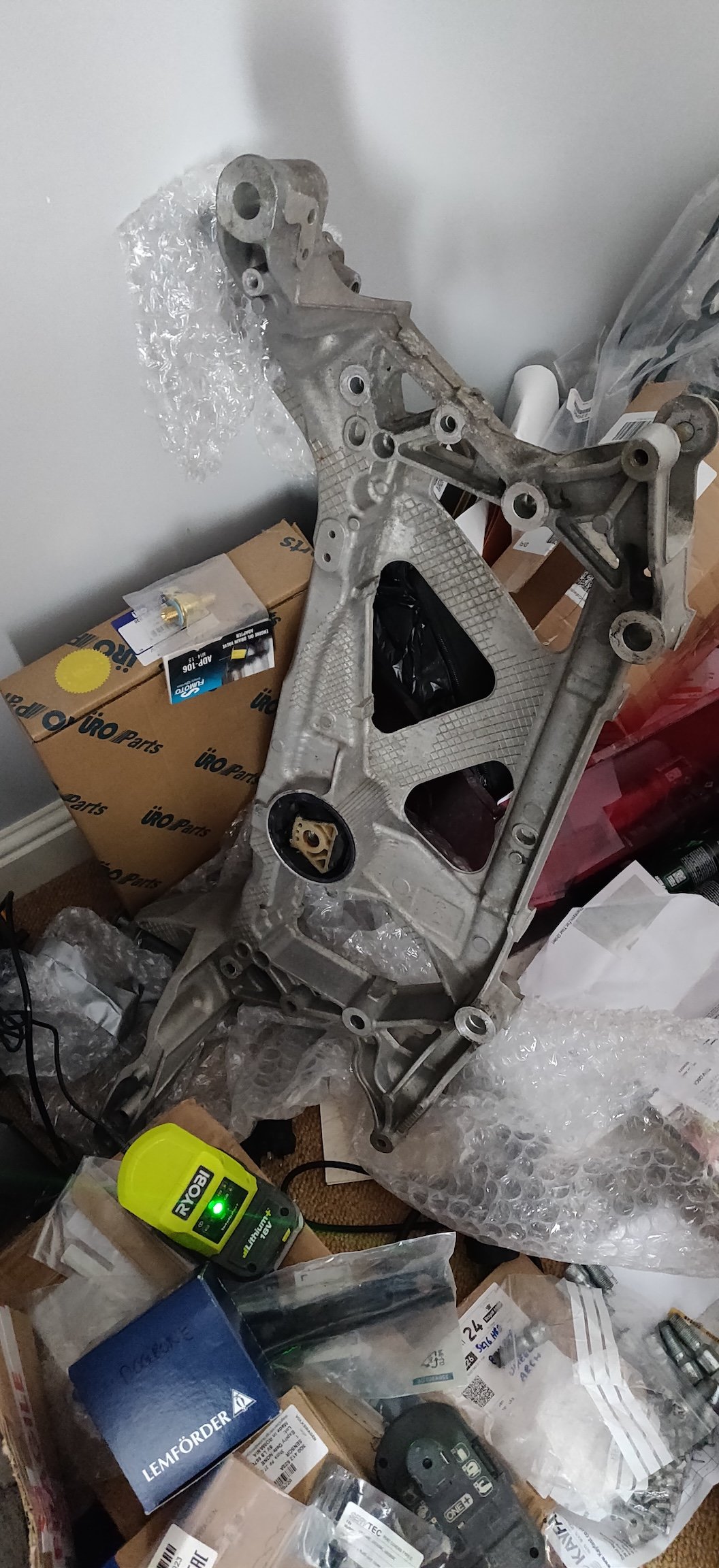
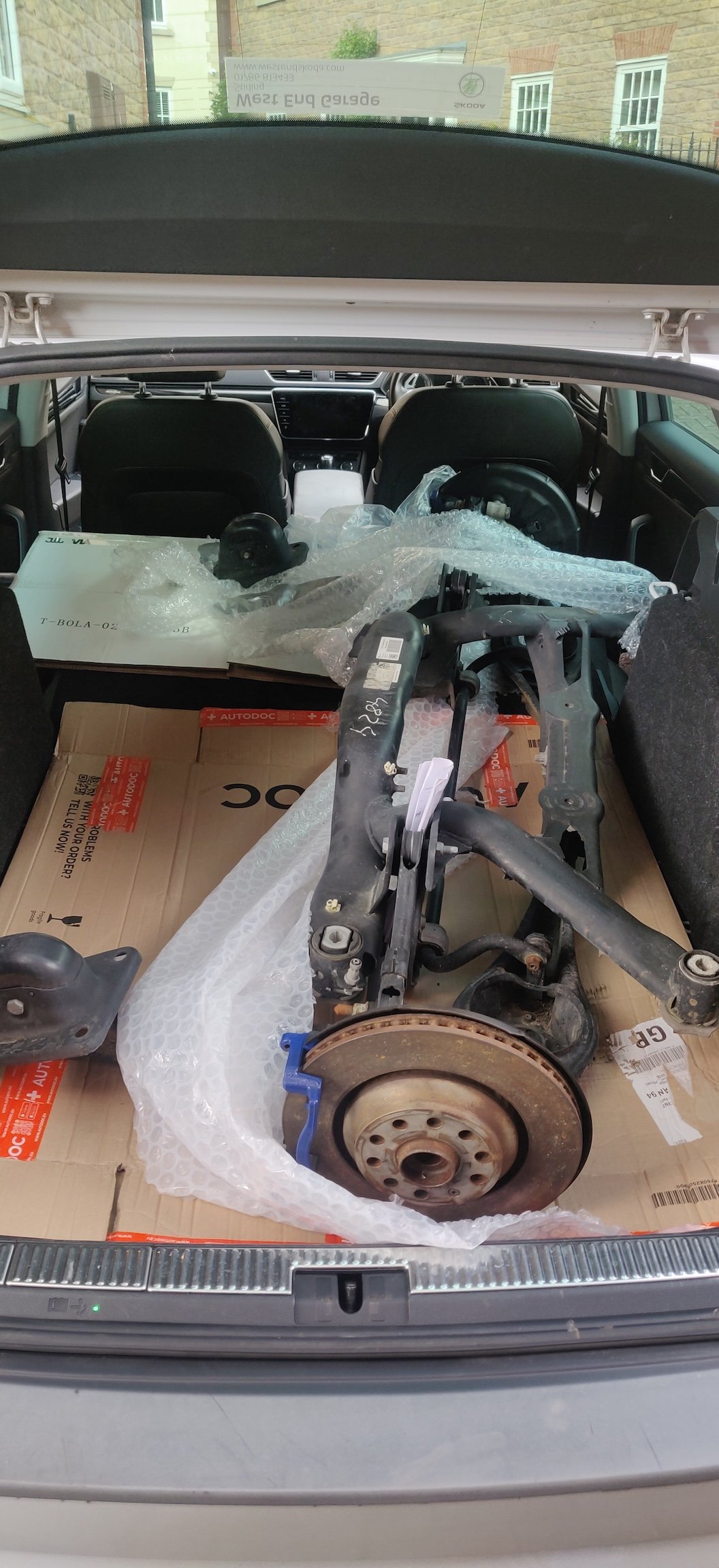
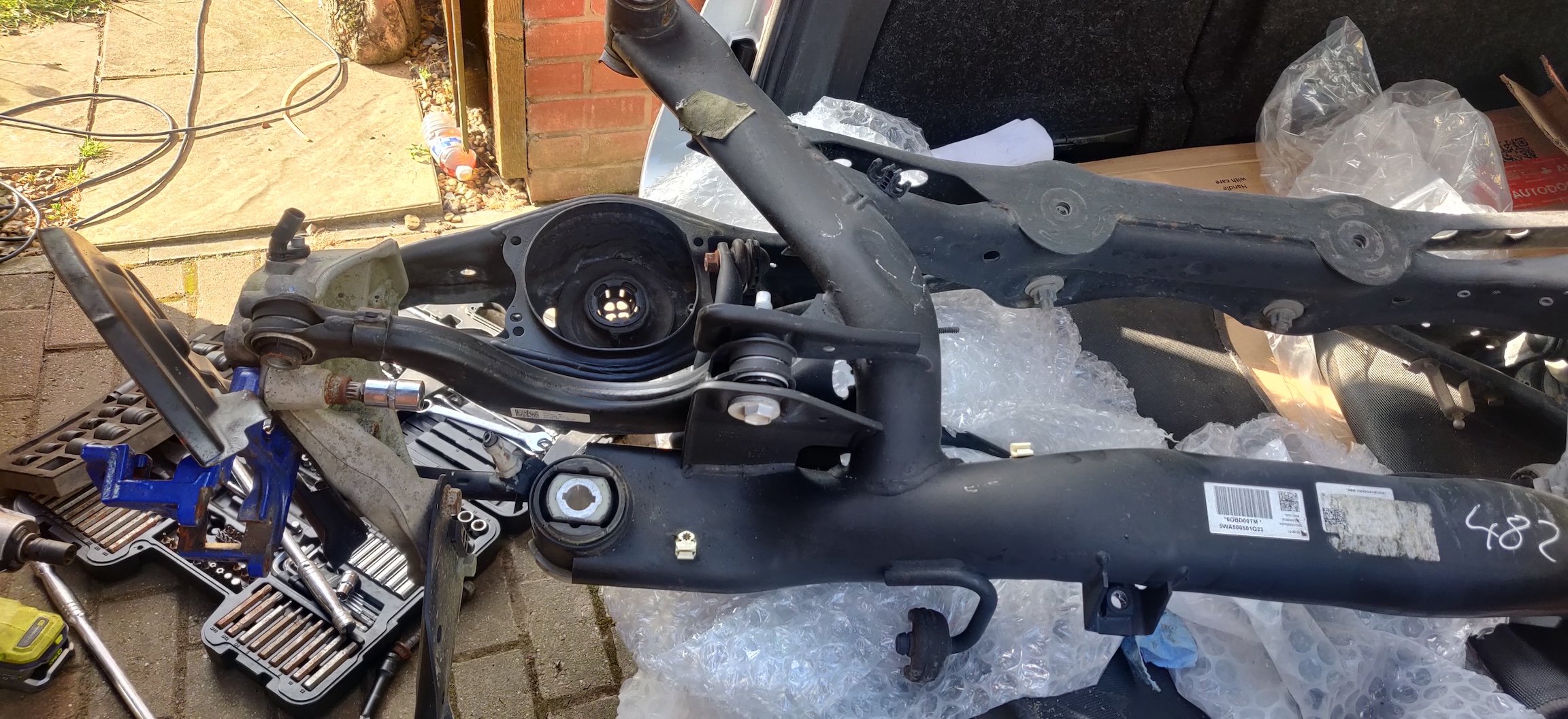
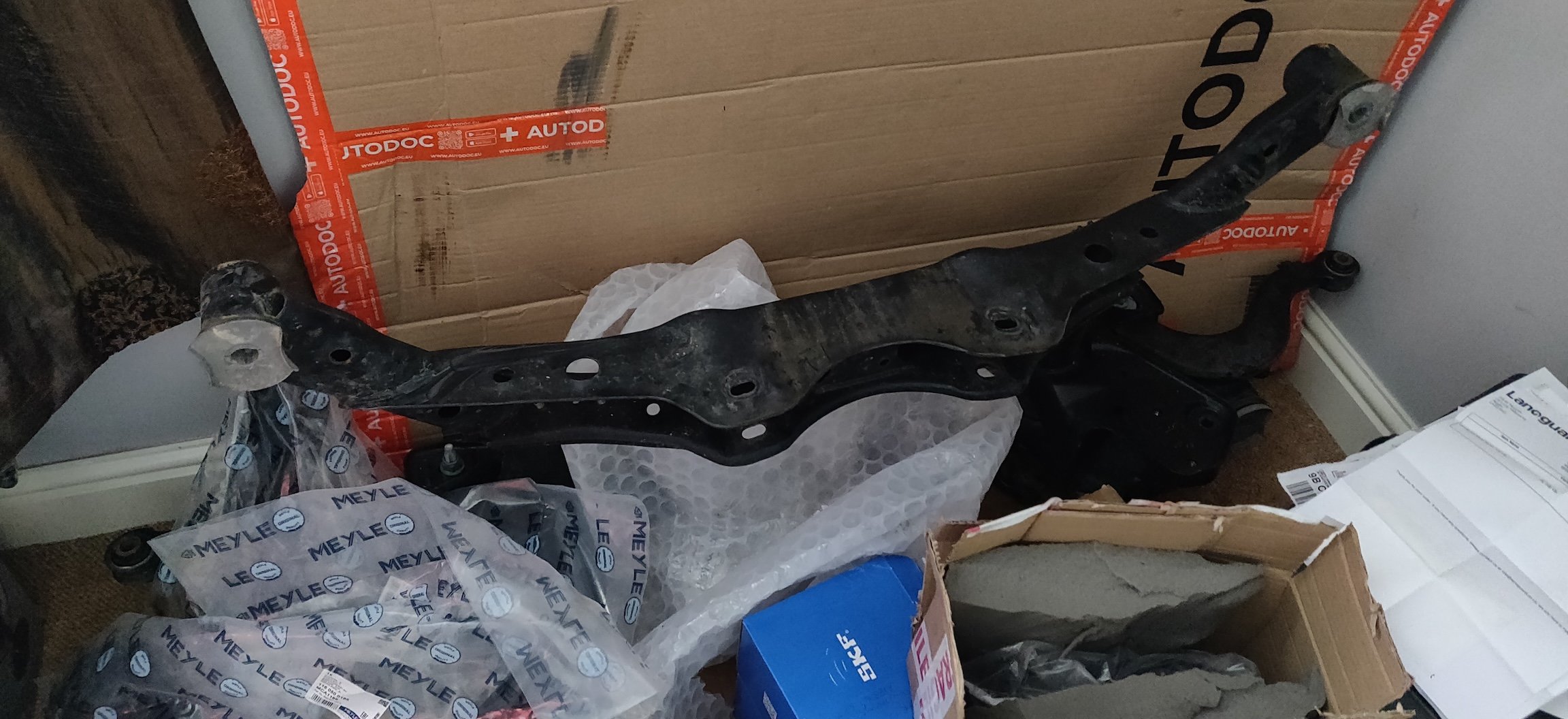
MoT all passed, so all good on that front! Gonna post some stuff I've collected randomly as part of long term planning and hoarding. That way, I can add them to the cost tally before I totally forget! So I've had this tucked away for a while now: An aluminium subframe. Got it for £100 from eBay more than a year ago! The ad said its from an Audi RS3, but to be honest, but be from anything from Golf R to anything related. Because it's aluminium, I've pretty much left it out in the garden come rain or shine, but I've given it a quick rinse and wipe over, as I'm planning for this probably end of summer or early autumn. I should probably price up the other related bits, but I'll leave that for when I start tackling this in earnest, as essentially every bolt is replaced, let alone other bits like wishbones and ball joints, etc. I also found this on eBay that I couldn't resist: Virtually an entire rear axle. This was £165.75, and as you can see, even has the rear pad carriers and discs attached. The ad said it was from a Golf R, and given the colour of the rear pad carriers, didn't have much reason to argue against this. It's not immaculate, but only has a few bits of rust around the subframe and arms, nothing that a slathering of hammerite or somesuch would help with. Took three of us to hoist this into the rear boot, and with just myself at home once back, didn't have much choice but to start disassembling it to make it less bulky: Was a case of slowly attacking the bolts with impacts and whatnot until arms, hubs and other bits were all separated out. It's a lot easier with a free floating subframe and parts that haven't rusted to buggery! Once it was virtually the subframe after a hour or so, plonked it into the house: Wife isn't particularly chuffed with this arrangement, so I'll probably have to consider giving it a quick clean and then probably buy some shrink wrap or something and wrap it up so it can be left outside or something. Complete madness on my part, but given replacement arms are a few hundred pounds, let alone a subframe in good condition, I couldn't resist. Whether I genuinely brave disassembling the rear of the car, and the all the inevitable chassis/body clean up as a result of that, I don't know, but having this around hopefully simplifies the reassembly stage, and if not, I can probably sell it on. Got some other bits I could probably start doing this evening, mainly as this looks like the last nice sunny day before the weather turns for the weekend. Maintenance: £3285.99 (+£165.75) Upgrades: £4717.27 (+£100) Miscellaneous: £827.47
 1 point
 -
It is really amazing (not!) that Fuel Producers do not use these additives in their fuels & maybe just charge an additional pence or 3.1 point
-
How many snakes are in it per litre?1 point
-
1 pointWhen there were Service Books up to about 2010/11 in the UK there was a page after the Service Page for the Body Inspection, and that Was Minor & Major / Annual Servicing. The Inspection was supposedly each 2 years. The Skoda Inspections have never been in the T&C,s of the Corrosion Warranty. Never stated as at any period, annual or biennial or periodic. Skoda UK often says 'Inspections not carried out'. Well if they are required a Full Main Dealer Serviced Vehicle with No Record of Inspections tells Skoda UK who it is not doing 'Inspections; and Reports, and noting Corrosion or poor body repairs. That will include 'Skoda / VW Group Approved used cars.1 point
-
1 pointOver 2 million BEV,s now registered in the UK. Lots sitting new or used and not on the road. There will be growing numbers as there are more First Registered every month. The numbers sitting Sorned or 'In Trade' are kind of important.1 point
-
1 pointPlus more cars hitting the criteria to get the full EV grant of £3750 and battery packs continuing to get cheaper. Battery packs being made up in France, Germany abd Polabd as well as UK is helping companies tick the boxes for getting full grant.1 point
-
I have been badgering Skoda Customer Services since last June about the lack of this feature … they keep promising it will be delivered but are unable to say when. In my view, if they can’t provide a date, it’s likely because they don’t think they will ever deliver the feature.1 point
-
1 pointI'm glad Skoda sorted it out. The end result is of course correct but the route taken by the dealership in requiring extended scope servicing is completely wrong. Even an oil service has a body inspection for example. It stands to reason that, whether or not you have had your air filter replaced at the appropriate time, has no affect whatsoever on rust coming from the inside of the body. Other manufacturers do require specific body warranty inspections, but even now the Skoda policy hasn't changed regards the body protection warranty. For the paint to be bubbling on the outside, this means the rust has penetrated the full way through the sheet metal, so this didn't happen since the last inspection. You did take every single service you could have and still they didn't spot it early. This is despite the fact that it has been a known issue for years.1 point
-
1 pointI took delivery of my L&K 193 ps Tdi Estate in February. It replaced a 2023 Kodiaq L&K so it is difficult not to draw comparisons. To answer your four questions… Software has been fine. My iPhone hooks up every time and CarPlay runs perfectly. I tend to use Waze for navigation, but the Skoda version is fine. On one occasion a few weeks ago the infotainment system shut down. Attempted the usual hard reset to no avail. Stopped the car, restarted, and all was well. No issues before or since. The system itself is over complicated, contains dozens of features that will never be used from one year to the next, but that is purely my opinion and more an observation of the world we live in rather than a criticism of the car. Massage seats ? Standard on the L&K , I would never have considered forking out for them as an extra, but three months in , wouldn’t be without them. The Canton audio doesn’t seem as good in the Superb as the Kodiaq, particularly the bottom end, but is still impressive. Bugs ? The remote parking function on the app works perfectly………. Once ! Then I have to re-pair my phone with the car. Did a bit of communicating with Skoda , which was a waste of time. If I was using the function to park in a narrow garage I would pursue the issue, but for me, it’s just a novelty to entertain the grandkids with , so not a problem. ADAS features ? The best thing about them is how easy and quick it is to turn off the ones the EU still allow us to disable. I’ve had a couple of emergency braking events, but both at parking speeds and both involving shrubbery, annoying, but you quickly learn to drive/manoeuvre around it. My first experience of Adaptive Cruise Control , in short, I like it, particularly surprised how usable it is on A roads, not just boring motorway runs. The Superb Estate has won endless towcar awards over the years and having just done a 700 trip around Scotland last month with my caravan, I’m not surprised, it certainly stands up against both the Kodiaq and the E Class estate which preceded it on my drive. Apart from ….. fuel consumption, the Superb regularly bettered 30mpg with a 1600 kilo caravan on it’s back. Excellent, and way beyond the 25 and 21 mpg that its predecessors managed. Solo, I am seeing regular 50+ mpg out of town. My Kodiaq had a real appetite for oil, which was dismissed by Skoda as ‘within tolerance’ the Superb has not used a drop in its first 3000 miles. It doesn’t like potholes or ropey road surfaces on the 19’s I optioned, but the ride is more than acceptable. The foot swipe tailgate - another first for me, has proven really useful, although it has caught me a few times when I’ve been reaching into the boot by trying to close on my head, my fault for having size 11 plates perhaps ? The benefits outweigh the risk for me. The smart dials are clever yet simple and intuitive . I miss the adjustable armrest of the Kodiaq, and after more than 50 years of gearsticks , the column mounted gearshift took some getting used to when doing hurried three point turns. I also miss the auto stop/button from the Kodiaq. Actually, I just miss buttons, and knobs and dials. Sports car ? Nope, but on the occasions ( not many Officer ) when I’ve got a bit giddy and peddled it on a touch, it steers sharply and handles very well for what is a large, family estate. Mrs Busa Boy preferred the elevated seating position of the Kodiaq, but otherwise is more than happy with the comfort of our latest Skoda. Big picture ? So far - so very good. Much trawling of this forum prior to collection, meant I had reservations - up to press, unfounded.1 point
-
Ok, this is now resolved - the hub had to be changed because the car is still under warranty and future claims for related part might not be valid otherwise. I had to pay for the hub, of course 🫠 I would think about the wheel every time I drive on the highway if the dealer used one of those tread repair kits anyway. I've talked with few colleagues what happened, and some of them said that it's not very easy to do a hub thread damage with Lidl's impact wrench which I've used. It was even set to mid-power not to max. And having in mind I had to torque all the bolts with a torque wrench after that. Anyway I've learned my lesson. I'll be more careful next time. I won't use the impact wrench for tightening the bolts, but only for loosening them. And I'll also use a positioning pin as well. Cheer guys!1 point
-
Awesome, thank you bro! Now I got it straight!1 point
-
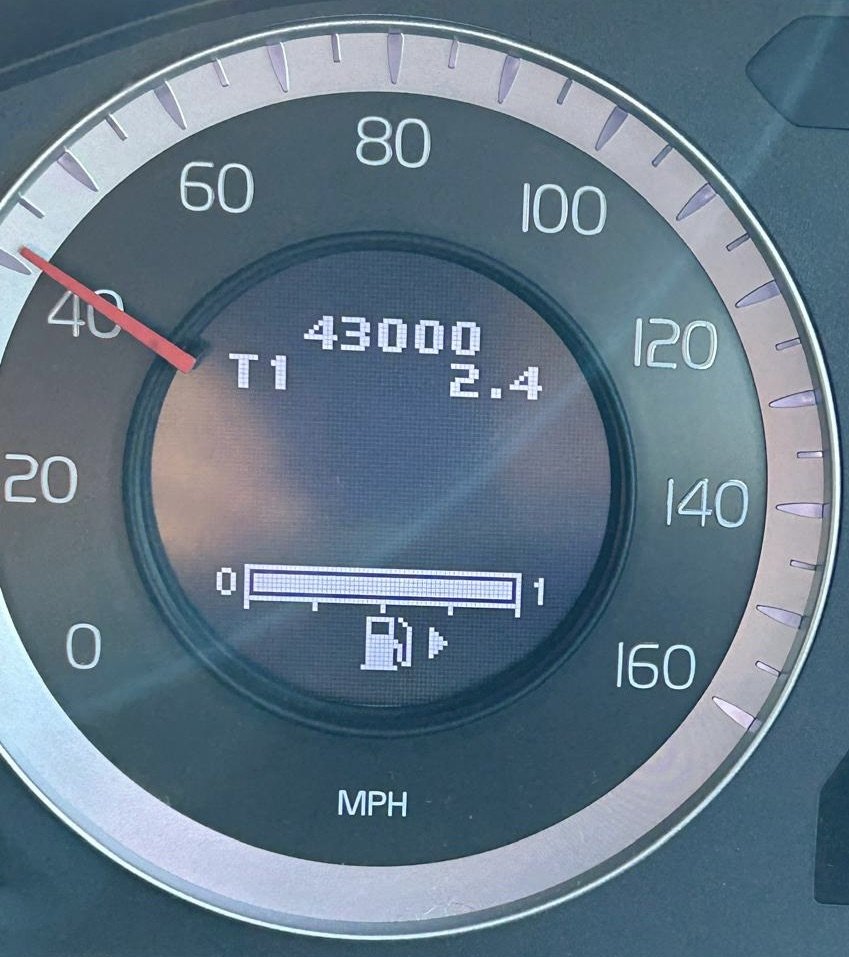
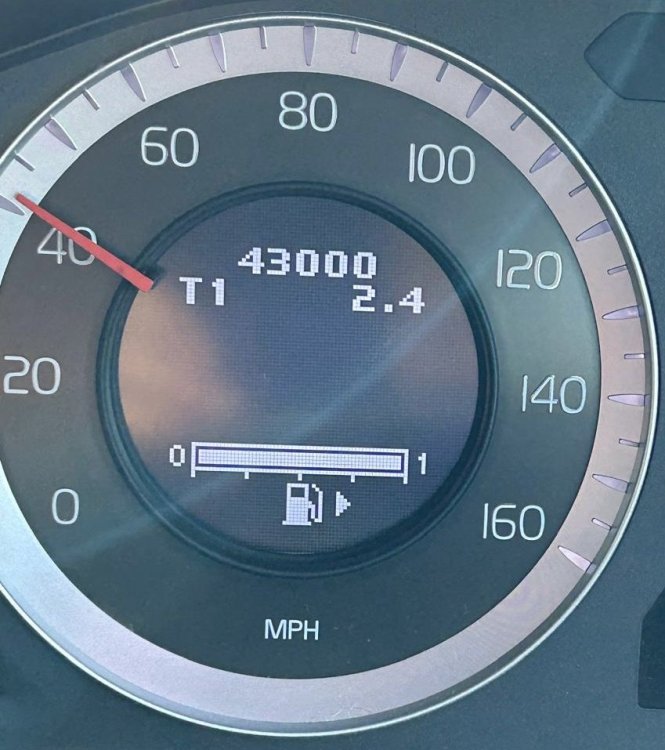
V70 on the way down to Paris last week: Gaz
 1 point
 -
1 pointIt was brought to the attention of the service advisor that there small bubbling around the fuel filler cap when the vehicle had its 11 year service, once the full service history including all the extended scope inspections had been carried out were confirmed, the dealership dealt with the issue in accordance with the Škoda TPI resulting in it being booked into a Škoda approved body shop for repair under the 12year anti perforation warranty1 point
-
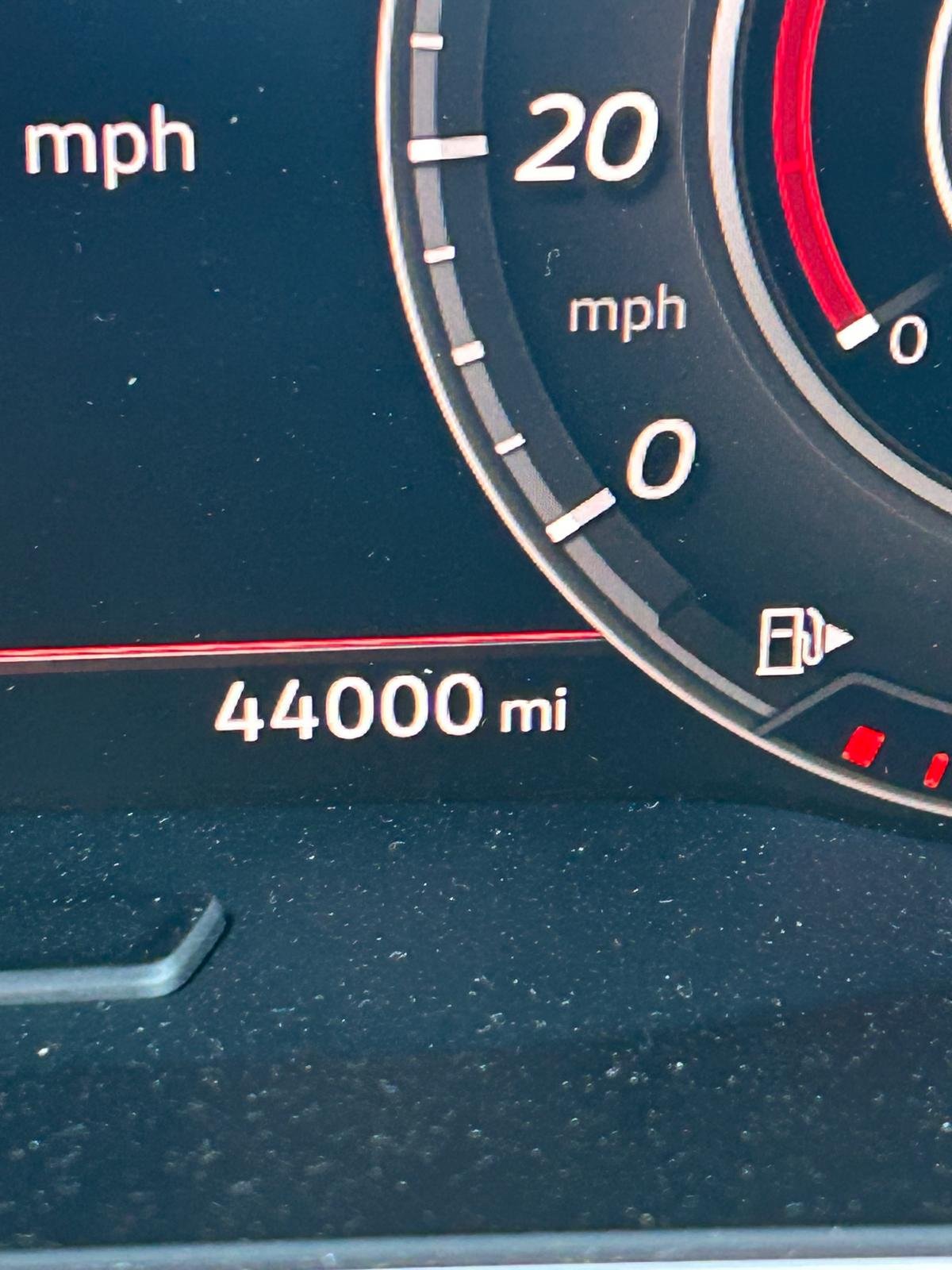
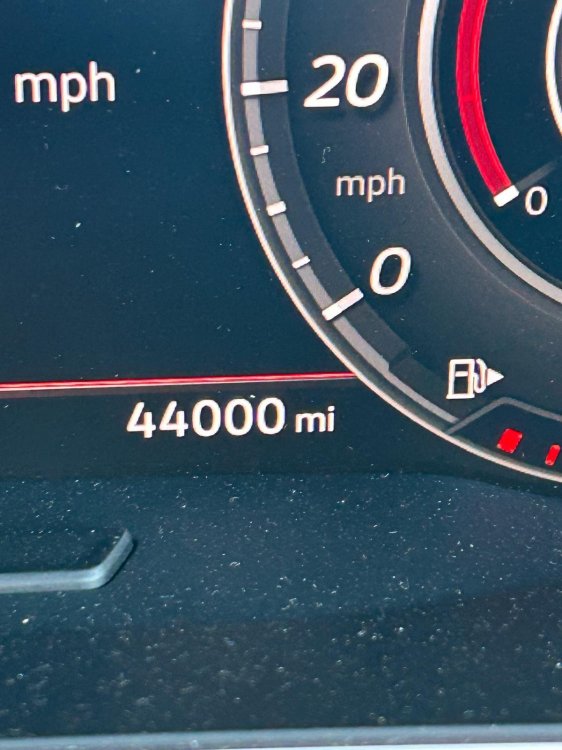
The GTI's eight years old now (that's gone quick!): Not doing too bad on it. New tyres going on the week after next. Think I've decided on PS5's. Gaz
 1 point
 -
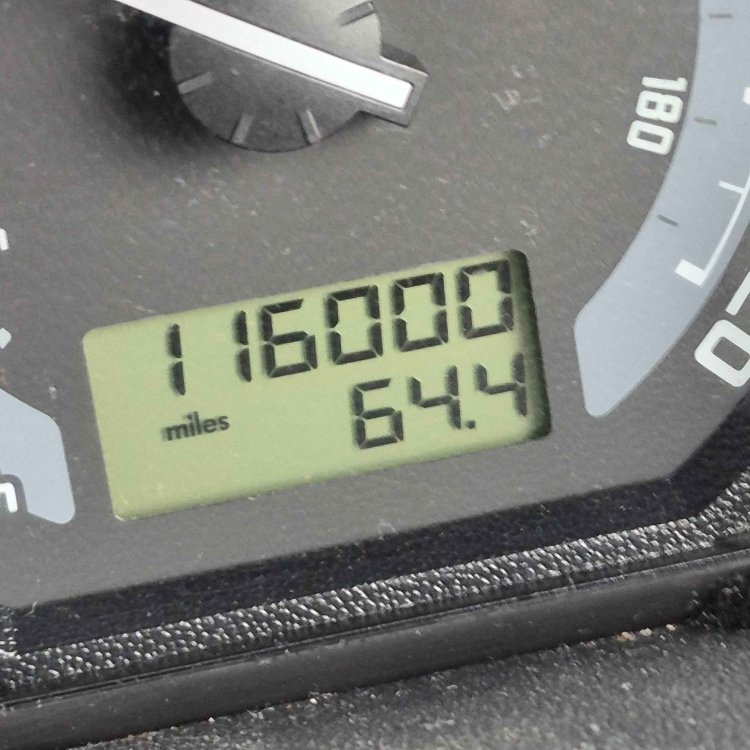
Done about 14k a year with it since buying it at 17 (in 2021). Just laps the miles up no bother at all. 56 plate and keeps going.1 point
-
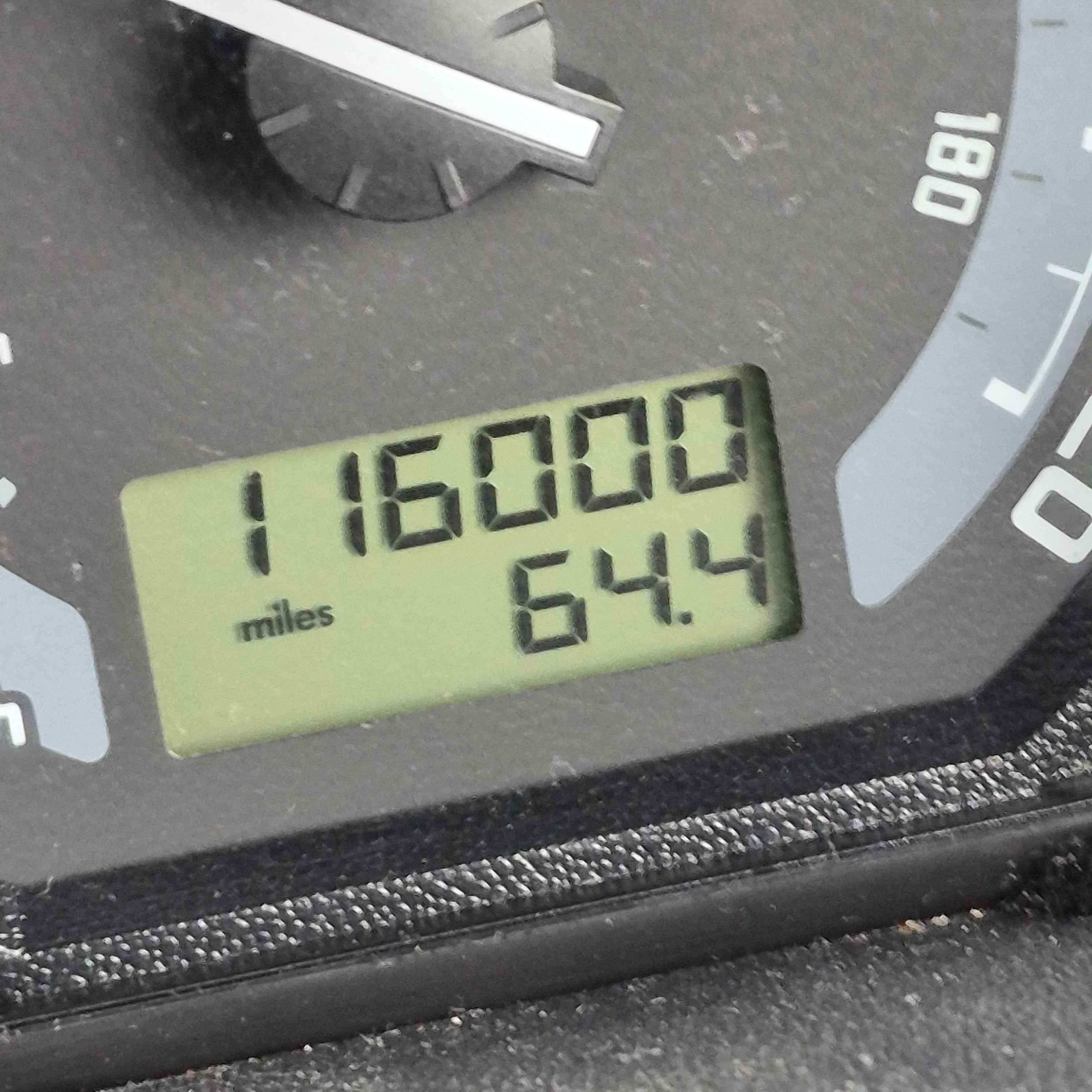
That's about 4,000 miles since the MOT test in mid-February. At this rate it'll be nudging 120,000 by June. Not bad for 20 years old this year!
 1 point
 -
1 pointSheesh - my spider sense errs on the side of caution there. It’s not illogical but there could be a myriad of factors differing your two cars which means one doesn’t need a cooling system and one could benefit from it. But that’s as much my inexperience as anything.1 point
-
@Evolution13 That poster is a little outdated. Texaco are 99 RON too these days, with their 'Techron' (at least under US branding) PEA based additive. As for Shell and Greenergy's shared facilities, that's true. Additive wise, Shell have always leant heavily on their PEA ('Nitro+'/nitrogen cleaning) content, though Tesco have been less vocal about their own additive package. Shell have also removed focus from their 'FMT' (friction modifier) recently, though the small print shows it's still present. As I'm sure you know, Greenergy (controlled by Trafigura, part-owned by Tesco) supply Tesco, Esso and others. I do have historical spec sheets for V-Power and Momentum 99 (the latest data I could find for them), and the differences are pretty stark. M99 had a higher MON than V-Power (which explains why tuners love it), but a lower olefin/aromatics content and higher oxygenate content (more power, better charge cooling but potentially lower MPG). The old Millbrook report showed injectors and cylinders/piston crowns were marginally dirtier on M99 than V-Power, suggesting Tesco may be relying more on older PIBA/PIBSA/PIBSI type additives rather than PEA. Those other additive types are decent at preventing deposit buildup, but less effective (or ineffective) at removing existing deposits. PEA specifically survives the combustion process, which allows it to remove deposits further up/downstream of the combustion chamber, which is why aftermarket additives with PEA (like Oilsyn Petrol Power DNA, Techron et al.) are so effective, and so many others are basically snake oil with an upper cylinder lubricant.0 points











(1).thumb.jpg.7d0ba3b6793e927966ab1efd55264552.jpg)