Leaderboard
-
pinkpanther
FREEDOM12Points3,969Posts -
J.R.
Resident Member12Points15,266Posts -
Lee01
FREEDOM11Points36,952Posts -
Arkaig
Members7Points1,039Posts


.thumb.jpg.9dd3f612ba7f13d10be5c518d3c8d255.jpg)

Popular Content
Showing content with the highest reputation on 24/10/23 in all areas
-
3 pointsToday I enabled lane assist memory. This means if you turn it off it stays off every time you start the car and if its on it stays on every time too. Here's what to do with any coding capable device. Access module a5. Select coding. Select Byte 09. change from 9e to 9f. My car is an octavia 2022 1.0 turbo mild hybrid.3 points
-
3 pointsUPDATE TIME So last week I decided to finally get this sorted once and for all. I bought some cerium oxide (CO) and mixed it to a fairly thick consistency. Using the small lithium DA with a soft black flat pad, I set about cleaning the screen, concentrating on the contaminated area where the OS wiper ends on its sweep on both the vertical and horizontal, using up/down and left/right motion at a medium speed. After a dozen passes or so, the screen was completely smooth, with no sign of the contamination remaining. Incidentally, the screen remained completely cool during the process. I then did the same for the NS wiper. Once all the contamination was removed, I gave the entire screen a clean with a thinner mix of CO. The screen is now completely clean and the wipers are totally silent! 👍🏻 So I can thoroughly recommend CO to remove stubborn “stuff” on a windscreen.3 points
-
3 pointsI guess you mean the Track Day Action sub forum, the forum as a whole is one of the few remaining really active forums on the net. Skoda have not made any suitable vehicles for track days for decades, its debatable even then if they were, anyone owning one now has a rare classic and is probably more interested in either keeping it on the road as a daily driver or renovating it where in most cases its desirable to remove all the visible supposed performance mods and put it back to factory standard spec.3 points
-
2 pointsHi breezy Pete just tried using my finger to push in the clip and it lifted up ,so the bottom bracket just sits in the groove,just got remove the air intake scoop fitted to front grill so l can lift the other side, got to remove the electric connection at bottom of fan assembly then and try to remove fan assembly, its always a learning curve. At least l have couple other spare cars and electric bike so l can take my time.👍2 points
-
2 pointsHave you downloaded the software from Rosstech and initialised the dongle to register it? If the software came on a CD then you have a clone but I suspect you already know that.2 points
-
Follow the Forum rules guys, that's really impolite to the other members... You can send each other private messages if you want a separate conversation.2 points
-
Agree. Easy to flick into sport mode when required and can use in manual if you want. Thought I would use manual a lot but the automatic is so good I generally only use manual to hold onto a gear going down steep hills.2 points
-
2 pointsI will pay your airfare to Ireland and give you two days free accommodation if you do mine for the same! 🙂2 points
-
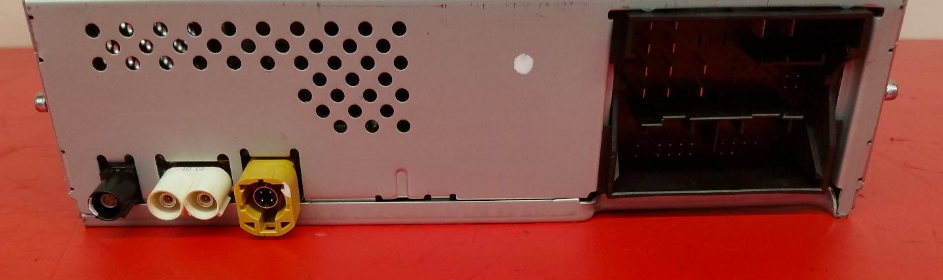
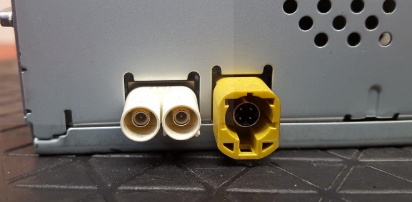
I've reached out to a couple of VAG retrofitters to see if they have any experience. One thing I noted looking at used head units on ebay though... I looked at a unit from a 2018 up with a part number of 1S0035869B. Appears to look the same as other Skoda units but the rear appears to have an extra port On the facelift Skoda units I've seen (part number 1ST035871A) It looks a bit different Wondering if the black port is for the DAB antenna and all the Skoda units I've seen thus far are FM/AM only. Confirmed by a VAG retrofitter "DAB uses a black FAKRA connection. AM/FM uses the white double FAKRA connection. The mustard coloured one is for the USB/Aux if fitted" - so you definitely need that extra port for it to be a DAB unit. I think I've found the part number for the DAB capable head unit now as well 1ST035869B (Skoda variant). Just waiting to find out two things. 1. If I can get the skoda variant of the head unit, could they code it to the car 2. Will it require an external antenna or is that likely already in place I'll let you know if i hear anything back.
 2 points
 -
2 pointsI've just never bonded with it and don't especially enjoy driving / owning it. Saying that it is averaging better MPG than my last TDi Yeti! The Karoq is complex in operation (electronic handbrake / infotainment etc) whereas the Yeti was simplicity itself and somehow more than the sum of its parts. Guess this was the reason I owned four Yetis in total! Suspect this will be the only Karoq though.2 points
-
1 pointMust say I agree with pretty much everything he says - we had 4 Yeti's in total and they are hugely impressive and undoubtedly the best car Skoda ever made. It's successor (our current Karoq) is a very poor replacement. Great to see this (famous) one is still around and in such fine fettle 👍 Petrol Ped1 point
-
1 pointCoasting means the engine is idling using fuel. With it in gear and going down a hill you're getting the benefits of engine braking and not using any fuel.1 point
-
1 pointLike me then…. Except when a **** is up my bumper as I’m in the middle lane at 75mph then it’s bye-bye time! 👋🏻1 point
-
1 point
-
1 pointHi Bexhillian, thanks so much for your input and for confirming that I am indeed a numpty 🙂. As you say, after pressing 'New Destination', on the window that then pops up (and presuming that the country is aleady set correctly), the next field underneath 'Country' is 'City'. Once you press 'City' , then on the next screen that pops up, the pstcd button is on the keyboard entry screen in the bottom left hand corner (no need to enter the actual city name). This has just made things so much easier, thanks again, much appreciated (although I feel a little silly for having missed it) ! 😎 Bazza1 point
-
The Yeti in my signature (I have two) is a 61 reg car. The front passenger window was opened one day and would not close... not using the switch on the door, nor the switch on the driver's door, nor using the remote control "hold the locking button down" method. What did work (and what completely cured it) was locking the car using the key in the door and then turning and holding the key clockwise (i.e. locking again). The window shut and worked perfectly ever since in all methods. Why? I don't know. Hope this information helps someone, if too late to help the OP.1 point
-
@Stoker That wasn't me, it was MarineBoy. As for coasting and dabbing brakes, I prefer as I suggested to use manual mode so engine braking holds the car at the correct speed.1 point
-
1 point
-
1 pointI studied this question for a long time, but never found an answer. I know for sure that the Skoda Enyaq has this from the factory. We need to get a scan of block 9.1 point
-
1 point
-
1 pointMany forums I visited around y2k are mostly abandoned or offline today thanks to social media. I also think the average attention span of many people can't manage anything longer than a twitter post or tiktok video. I run a german fan forum for the sisters of mercy myself, we also lost many active members over the years but luckily it's fairly active thanks to the people who stick with us. @intital question: I don't track my car since it's a company car and with 115ps I would probably end up as the joke of the day^^ I do a little sim racing though. Your vRS looks in great shape though, must be fun to do some laps.1 point
-
1 point
-
No, a 'refurbed looms exchange system' was more where I'm heading.1 point
-
1 pointOr any vehicle manufactured in the last 30 years. Whilst the statement may be technically correct at the moment of coasting the fuel saving is made through the vehicle gaining speed and momentum with the engine braking removed and how much further the vehicle will coast without engine assistance along the flat or up the oncoming hill. Its a balancing act, to save fuel a hill has to be steep enough, the driver willing to perhaps exceed the speed limit and crucially the terrain beyond the hill, for example coasting down a very steep hill with a Stop junction at the bottom will not only use more fuel but needlessly work the brakes, coasting down the steeper motorway gradients definitely saves fuel.1 point
-
Mine was ok but maybe it was an oddity and I only had it a couple of years1 point
-
1 pointIt would on an Octavia 1 diesel, because there was an overrun cutoff that worked when the car was in gear and revving over about 1_200, but when it was in neutral it was injecting idle fuel.1 point
-
1 pointThere are a lot of clones. If it was used there should be a change of ownership fee to pay also, there is also a vin limit. If you paid less than £200 even used, you’ve got a cheap clone and chances are that is your issue.1 point
-
Dear System Administrator! I apologize! Your comment is completely valid. I recently found this forum and learned a lot of useful information. Sincerely, HeRee791 point
-
Lower yes but still need the brakes whereas manual allows you to force the correct gear so no braking required1 point
-
I find that going down a steep hill the DSG holds onto a lower gear even in auto.1 point
-
DSG gearbox, my first auto and it’s fantastic especially on the twisty hills of North Devon.1 point
-
1 pointIn Obd Eleven there is app option called throttle pedal responce. You can change from standard mode to responsive , maybe that will help, . Maybe that can1 point
-
I've probably got some of Clarkson's other musings on the Vauxhall Vectra in one of his many books I have on the shelf. I might have a look tomorrow. In the meantime @AnnoyingPentium here's one from the Sunday Times in 2002. https://www.driving.co.uk/30-years-clarkson/clarkson-reed-warbler-vauxhall-vectra-review-2002/1 point
-
1 pointAnything even with disposable batteries will start rapid galvanic corrosion if immersed in salt water, I have had dive lights fail at 40m and when opened up afterwards there was little but black sludge remaining inside, same with a cheap headtorch I foolishly tried to use when snorkelling in the dark. By comparison I had a Nokia telephone vibrate off my countertop into a bowl of washing up, it happened while I was out and somebody rang, I returned home hours later looked for the phone and saw it looking up at me, the display was still showing the missed call. After removing the battery and drying ot out it worked fine for another couple of years before finally failing probably due to the immersion. In the video he talks about submarine mode failing, there is no such thing as submarine mode and anyone who uses an EV to launch a boat is a fool, you can extend that to any vehicle other than perhaps a ratty 4x4 pick up truck. He also describes the battery box ventilation which disabuses the nonsense you posted earlier that the battery boxes should be sealed and suffer no water ingress when submerged, a shame he didn't expand on it and explain the partial vacuum generated by the rapid cooling which would suck the water in even faster.1 point
-
1 pointI do as I have a tester checked back to back with a calibrated garage one, I'm only doing so to see if there is even the slightest measurable degradation which based on my previous experience of multiple vehicles I dont expect. To explain I was a teaching assistant and benevole at a Lycée pro for motor vehicle technicians, every winter for the Téléthon we would open up the workshops to recieve the publics cars for a multi-point checkover plus wash and valet. I because of my age was tasked with driving the vehicles through the various stations manned and womanned by the students, retired people were less anxious with me driving their pride and joy than a student even though many were training to be HGV drivers. Out of the hundreds if not thousands of the vehicles I drove through only one failed the brake fluid test done on a very expensive fixed test bench, it was a poor area with very few new and well maintained vehicles. My vehicle went through as well so I could contribute so over a decade I kept a close eye on my brake fluid, after 12 years in my ownership (15 years old) it was moisture content wise slightly down on the day it left the factory still at the top of the scale but had become very dark so I flushed the system and replaced it, otherwise it would have gone to the scrapyard with the original fluid like most vehicles do. The only risk these days with the well sealed master cylinders is leaving a top up tin open on the shed shelfor to owners of MK1 Ford Galaxies (RHD only) which had not been recalled where water would drain from the scuttle onto the faulty master cylinder reservour caps, enter the brake system and sink to the front calipers. The problem were any water to be present which is only through wilfull or negligant contamination is absolutely with the fluid boiling under heavy braking having experienced it myself first hand, in the bad old days brake lines were frequently replaced after MOT failure through external rust but that also thankfully is a thing of the past. I have never ever heard of anyone replacing a brake line through internal corrosion unless it had been left open for years during a rebuild, fuel lines yes as ethanol fuels are highly hygroscopic and the tank venting and filler cap sealing not to the same degree but even that will change. Garages and mechanics will continue to replace perfectly serviceable brake fluid because its a money earner and they can play to peoples emotions.1 point
-
For 14k extra, on a car that is the same same with a lower powered engine and all the potential issues that comes with diesel if you don't use it as intended... ... I cannot see an upside. Don't forget the new MK4 is coming out. You'll have a lot more depreciation on the new car too.1 point
-
There’s also a copy of the MIB2 High maps on mibsolution.one https://mibsolution.one/#/1/15/MHIG - MHI2(Q) P350_N60S5MIBH3_EU_2024 02300034 (only MIB2High).zip1 point
-
Just fit a proper system. One that turns off the rear fog light on the car to prevent dazzle / reflection from off the front of the trailer, that deactivates the reverse parking sensors, that triggers the alarm if the electrical plug is pulled whilst the car is locked, that tells the cars braking system that it’s towing, shows the status of the trailers indicators on the dash, facilitates the use of LED trailer lights and enables additional features in the sat nav. The days of splicing into the rear lights are long gone.1 point
-
Not anywhere near my car ! I use zipwax, a sponge and plenty elbow grease The car is normally taken on a run for a few miles after cleaning just to dry things off. The calipers are fine. Now if you were to say I'm guilty of overwashing the car, my neighbours would agree with you.1 point
-
Hi, also I have problems and can't connect even with cable but I don't know the multimedia software type... Samsung Galaxy S23 and wife's Xiaomi 13. I understand that there is a Skoda problem, I was with the car in the agent and they said that can't help me and have to wait for an update. Still wating....................................1 point
-
The simple answer is everything should be properly coded and not bypassed, it is not just parking sensors, if have any of reverse camera, ACC, blind spot monitors etc then they can all be affected. There is no turn off switch so has to be coded to react differently when it detects a trailer is plugged in. The days when cars had negligible safety systems and could just fit simple wiring are long gone1 point
-
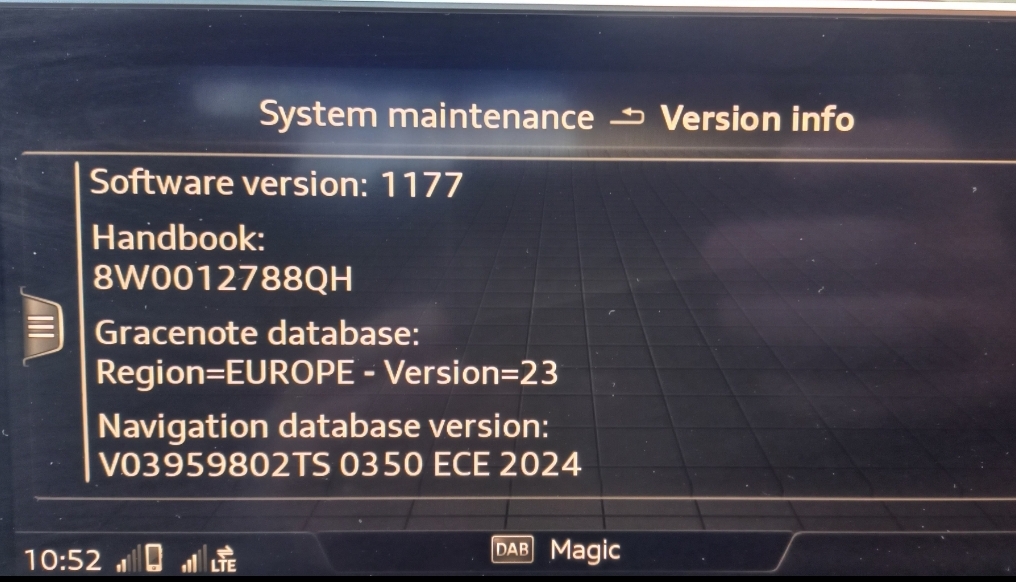
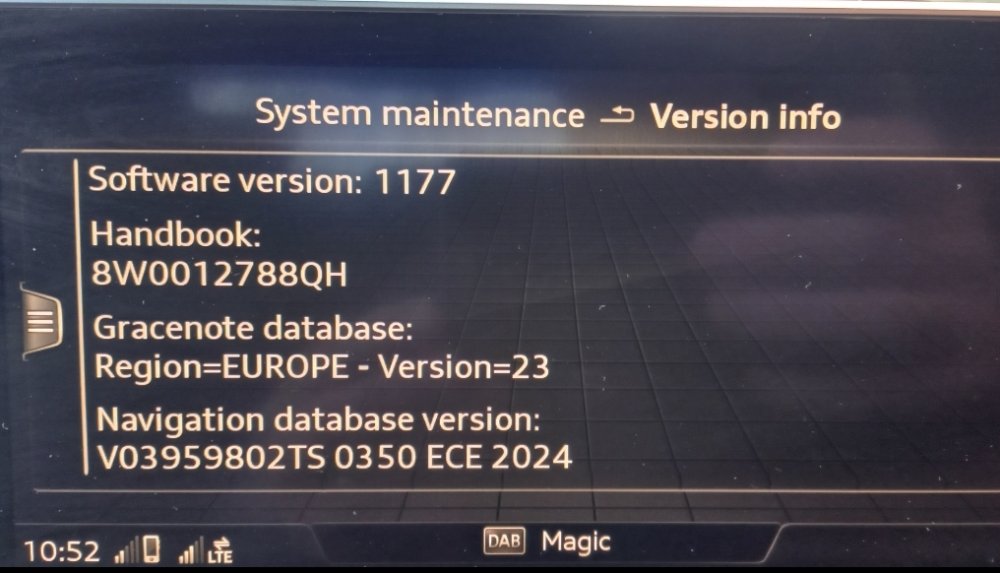
Update to 2024 was successful It took 25mins via USB
 1 point
 -
@BooBoo124 looks like, these were downloaded from Audi portal i haven't access to it or at least some direct links to previous releases to enable guess next within next few weeks these files will be available on VW's, Škoda's servers1 point
-
1 pointInteresting to know for future, as I had issues with my car alarm going off at silly o clock in the morning. Thought it was thieves but set up a camera to watch it and, nothing. For me, replacing my car battery had fixed the issue as it was the same battery from factory so 6 yr old, but if it keeps going off again (as it did once a few months after changing the car battery, but not since) ill look into this.1 point
-
thanks for info! mine brute force path guessing script were planned to start just at 15. okt due previous releases haven't been met that early1 point
-
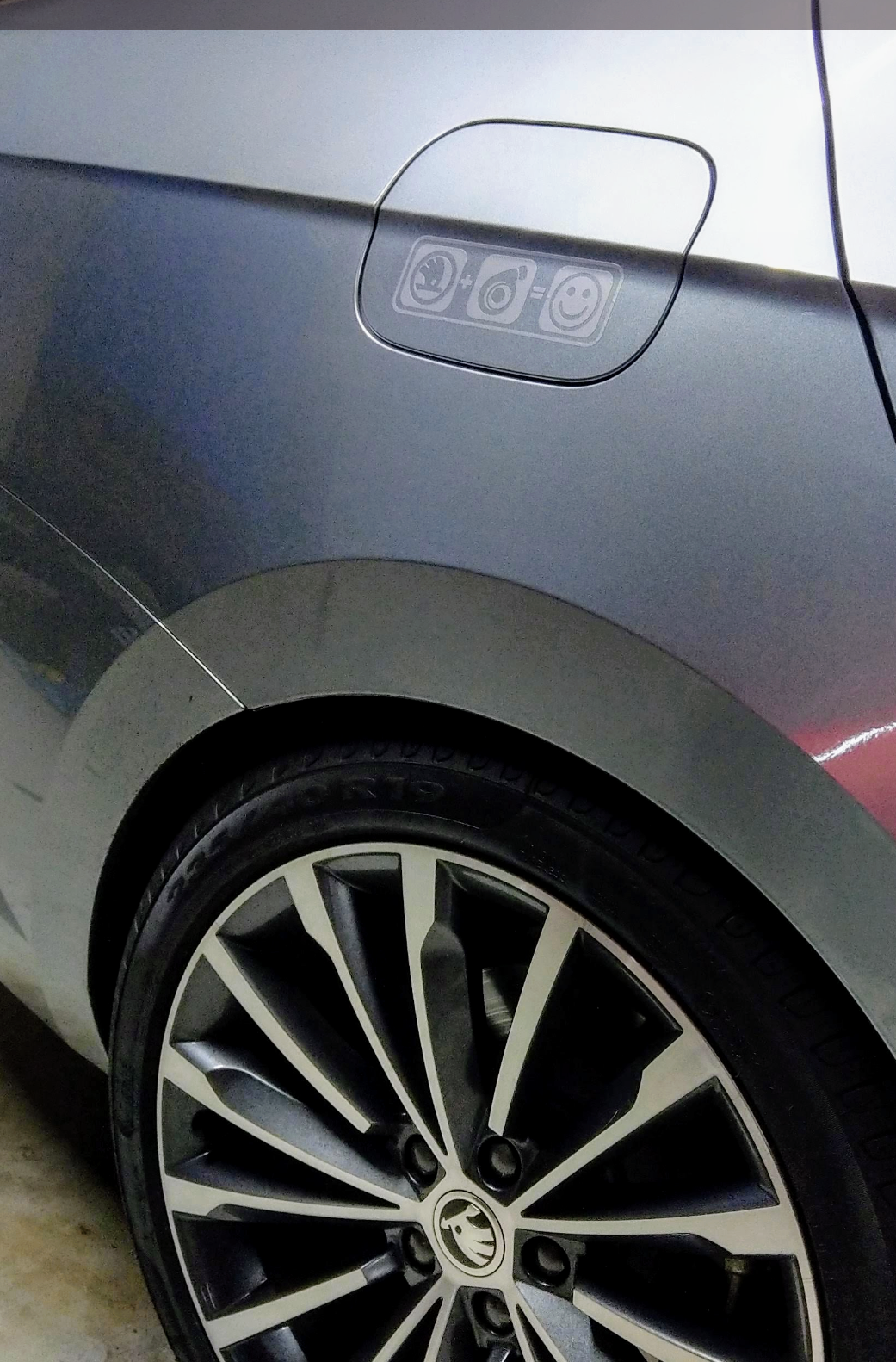
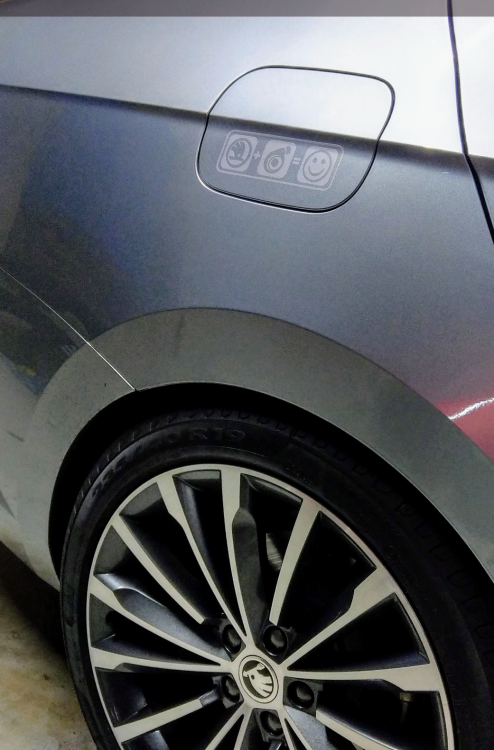
1 pointThanks. That's actually a few days after being drenched in heavy rain, so it's not so clean, but the colour helps hide it well. This is the fuel flap sticker. Skoda + Turbo = 😁 Gives me an extra 2kW 😛
 1 point
 -
1 point
-
1 pointIs the contamination visible at all? The Brillo pad sound test was horrific. I'm sure you're being careful, but it was a bit like watching someone juggling chainsaws. 😄1 point
-
1 pointThe vehicle manufacturer tells me tyre pressures for two people with no luggage, and fully loaded. There is no specification for something in between.1 point
-
Cosmetic rust, pads might need replacing, technician or service desk staff might tell you 80% worn when not even 20% worn. You might say how old the car is and how many miles, and what you consider as soon. Servicing brakes annually is an idea, and maybe post pics of the condition if told at a dealership the discs need replaced.1 point