Leaderboard
-

mac11irl
FREEDOM16Points16,808Posts -
.jpg.1006585dfe4e2977315b67c3d642e37b.jpg)
Guest_
FREEDOM16Points83,824Posts -
Colin170CR
FREEDOM15Points2,461Posts -
Gaz
FREEDOM14Points7,894Posts




Popular Content
Showing content with the highest reputation on 03/09/23 in all areas
-
Tools needed/what I used Trim Panel Removal 31pc car stereo keys (don't use the ones in the kit one of them got stuck) screwdriver bit T20 String/cable or telescopic magnetic Remove the multimedia in the glovebox, cut the cable tie at the back on the main loom to to get the unit out, Test the kit NOW before fitting it all in and then find out it does not work. then remove the trim on the floor and around the door frames to the boot. (you can go by the roof but you may block the side airbags deploy by the wire) remove the trim on the boot lid be careful of the boot light cables there will be 3 T20 screws 1 on the leather strap remove the bigger trim part and the other 2 are on the topside on the boot trim. Now I had to wire it on the offside (driver) boot grommet as the Nearside had a lot on cables already in it, to unclip the handle it from the outside of the boot then clip in your new camera in and wire it all up. the only time I use a cable/ telescopic magnetic to route the cable was on the nearside rear piler/ part of the roof liner and the boot lid and there is NO CODING just plug and play, hope that helps. I have just found out today though is when in reverse the nearside mirror is not dropping now but that not a big problem4 points
-
4 pointsThis isn’t over yet. An assumption was made by automass back in April 2022 that he needed a new battery and a new battery was fitted. A crank no start problem reoccurred this year and, via the timeline of this thread, he now has another new (albeit slightly different) battery fitted. He has also disconnected the dash cam, at least overnight. His obd thing has recorded an intermittent misfire cyl 3, and something about databus front light. Xman has advised him to measure the current draw with everything switched off. That is definitely the first thing to do to rule out something draining the battery (you need to do this test automass), possibly caused as Xman suggests by interfering with the coding of the light module. My prediction is the starting problem will reoccur and automass will eventually do that check and find there isn’t anything draining the battery.4 points
-
3 pointsTrue, and the big elephant in the room is that infrastructure is not improving fast enough to keep up with the upcoming mass adoption. But the user experience depends heavily on the car. Drive a ~100 miles range EV will be more affected by the infrastructure gaps than a 300 miles EV. Drive an EV that routes you to their reliable network will effectively be same as jumping in to petrol/diesel and take off for a long trip: zero pre-planning required. The problem isn't with the technology, it's due to government not investing enough in the infrastructure and the laggy incumbent manufacturers doing their best to delay the inevitable.3 points
-
3 points@Graham Butcheri think we got that a long time back. Horses for courses, tools for a job, tools doing jobs. Works cars / vehicles are difference from those for Social, domestic , pleasure vehicles that are for the driver, family, friends or just transport generally. The thing is some are needing the vehicles for both, work and private use. Sales reps. or as they were 'Commercial travellers' can manage just fine. Many will not, bit for those that can then they or their employers can save loads of money. So that is a few million vehicles on UK roads. Some change their routine, or routes, or work life balance, many will hate it and have to change jobs / employers. It is what it is. A car sales person, but still valid as a vlogger. Lots of EV club drivers about, and people with EV,s as hire cars. (They seem to think they must get on an Ultra Rapid Charger, or just don't know because people hiring do not explain.) 'Most people' from him is just a stupid statement.3 points
-
3 pointsKeep in mind that the best thing to prevent kerb damage is just to not drive into them in the first place.3 points
-
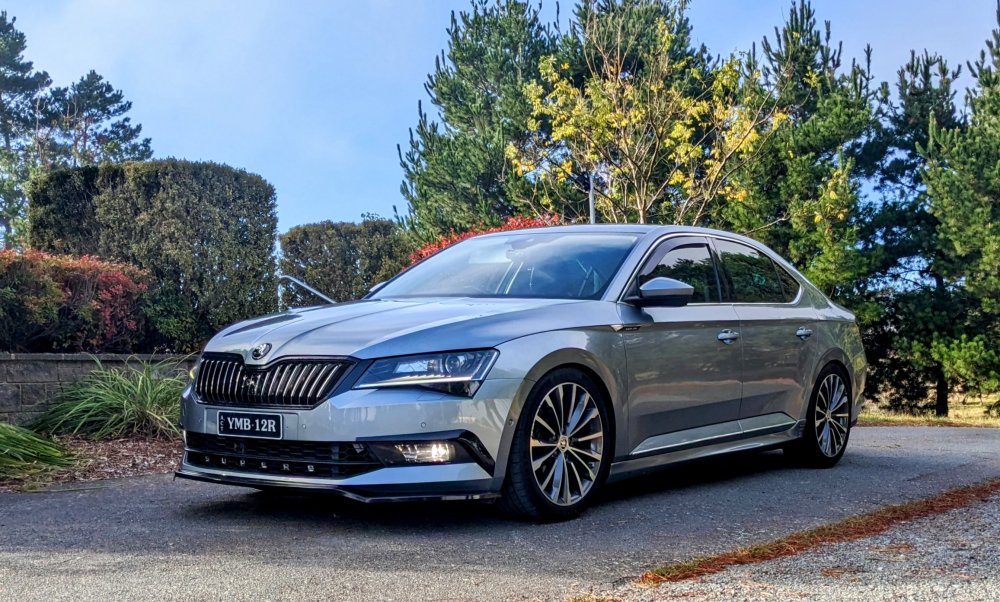
Yup - that looks Business Grey. I've got one myself. Still as shiny as when I picked it up 6 yrs plus ago.
 3 points
 -
3 pointsI really think you are chasing the wrong culprit here, it has been changed now twice and has been tested, you really do need to investigate what else is going on with the electrics on your car. It would be lovely if it was something as simple as the battery but given the above and even with the Halfords link, which you and I are not happy with their performance, on this occasion I think you rule out that they have continually made a mistake with regard to your battery. The common link here is that you still cling onto this thought and appear to be resisting seeking a thorough check of the car with some serious testing kits and skills by someone with the right tools. If you don't take that step, you're going to be having this problem happening time and time again, it has already been a real pain in the butt for you.3 points
-
2 pointsWell until we hear from experts we will not know, but on public view these people must know what they are doing. The Video guy does not know what the car is and neither do i. As to his other comments, the blind leading the blind IMO. PS We have an Ex Mariner that participates in this thread. Maybe others as well with knowledge of ships and fires and fire fighting & salvage. Under water,. not in water.2 points
-
Thank you so much! Can't wait to go in the morning and order it ...along with a new belt2 points
-
2 pointsHe also says that he loves the way the car drives, all that low down torque and sheer grunt that it gives, and all that waffle he says about not being as memorable as old ICE cars like those in the museum etc, well all of that will surely depend on what cars were around in your childhood, so a child of the 2030s is more likely to grow up with EV's, and so they will in a few years be the cars that they will have fond memories of when they reach his age, all of that is a given in my book. What I do find of interest and to a large extent agree with him is that of the range between charges does not really make EV's a direct like for like replacement and also the point that I feel he is trying to make is that currently you are unable to jump into your EV and just take off for a long trip and stick to the same route that you would with an ICE, you just know that when you are getting low on fuel and the warning bong and light etc have been activated, that you will come across a filling station a few miles. All without having to deviate away from the main road and direct route that you are on and also that when you get there, there will be more than 1 or 2 pumps for you to use, and you won't have to wait long if they are all in use. With an EV that is not the case today, that to me is really what he is saying and if they can find ways to address those issues what is going to be left for him??? I suppose, what I'm saying is that it up to the viewer to try and read between the lines a bit and decide for yourself what is the real truth.2 points
-
2 pointsMeans he can hand it back no ? Why was he so concerned about its current value then ? Or the cost of a battery if fully comp as well as under warranty ?2 points
-
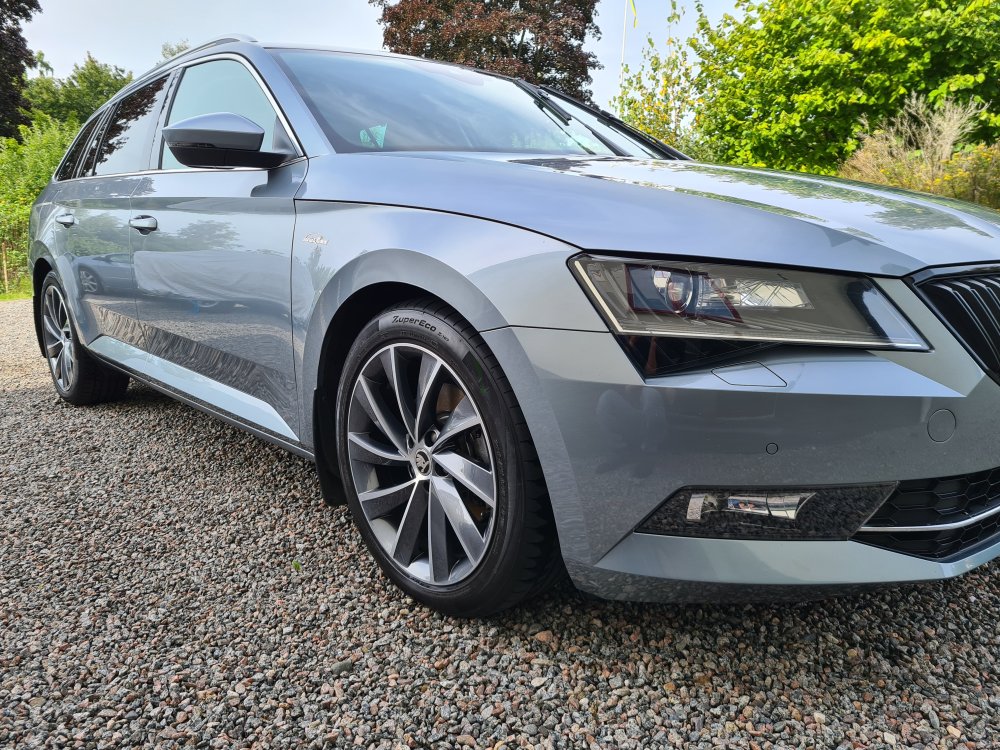
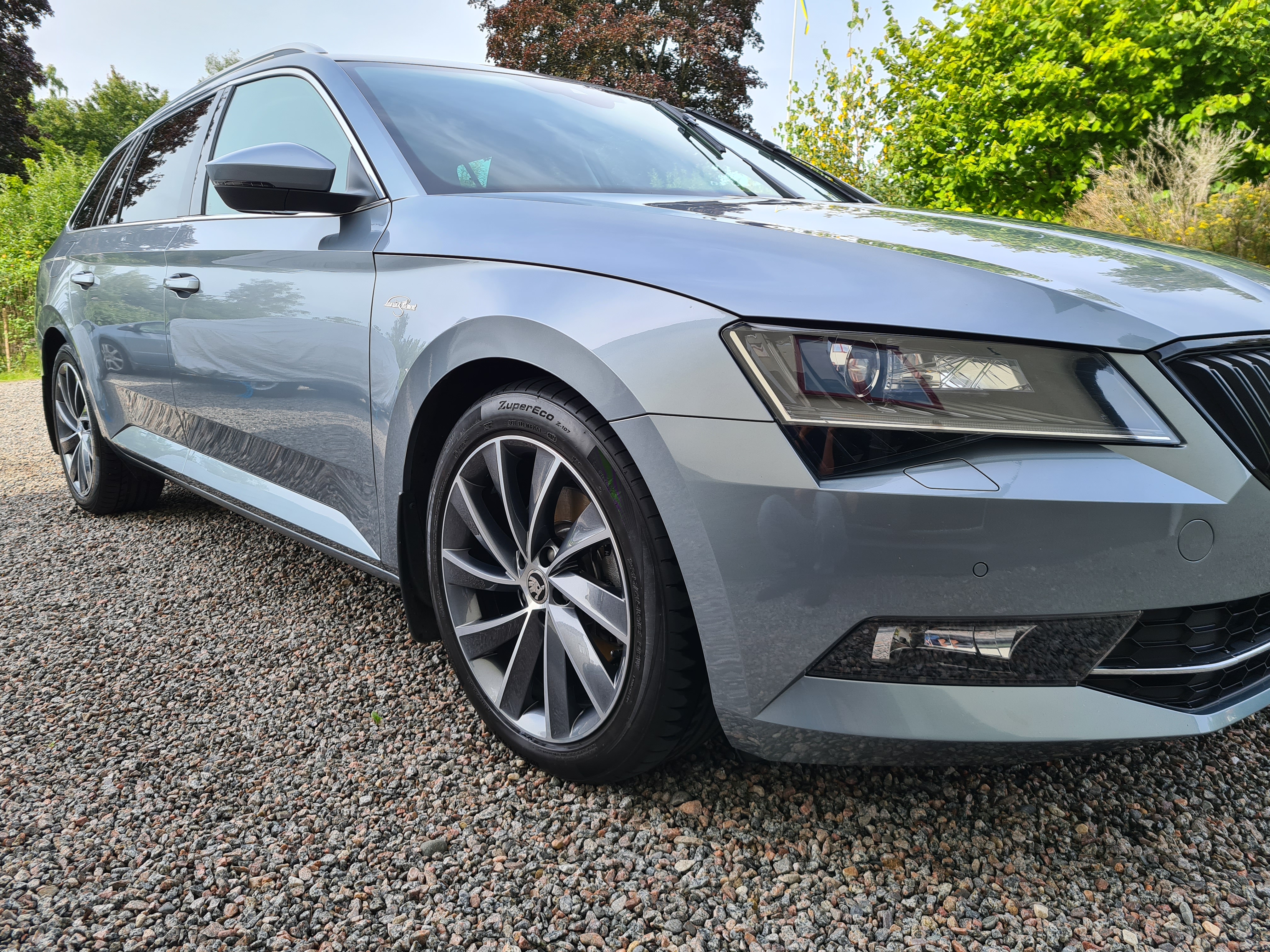
Since it's been raining every other day for the last 2 months almost i haven't done a proper wash of the car for a while, only rinsed it off a couple of times. The weather forecast for the upcoming week shows no signs of rain so today it was time for a proper wash with some ceramic detailer to top it off. And when you take some time and do a proper wash you always notice all rockchips, scratches and that kind of not so funny stuff 😏 The paint on these cars have to be really sensitive or it's maybe the color of the car 🤷♂️ Good thing it looks good on distance because up close it looks horrible in my eyes but it might just be that i am as my wife says "oversensitive" 😝
 2 points
 -
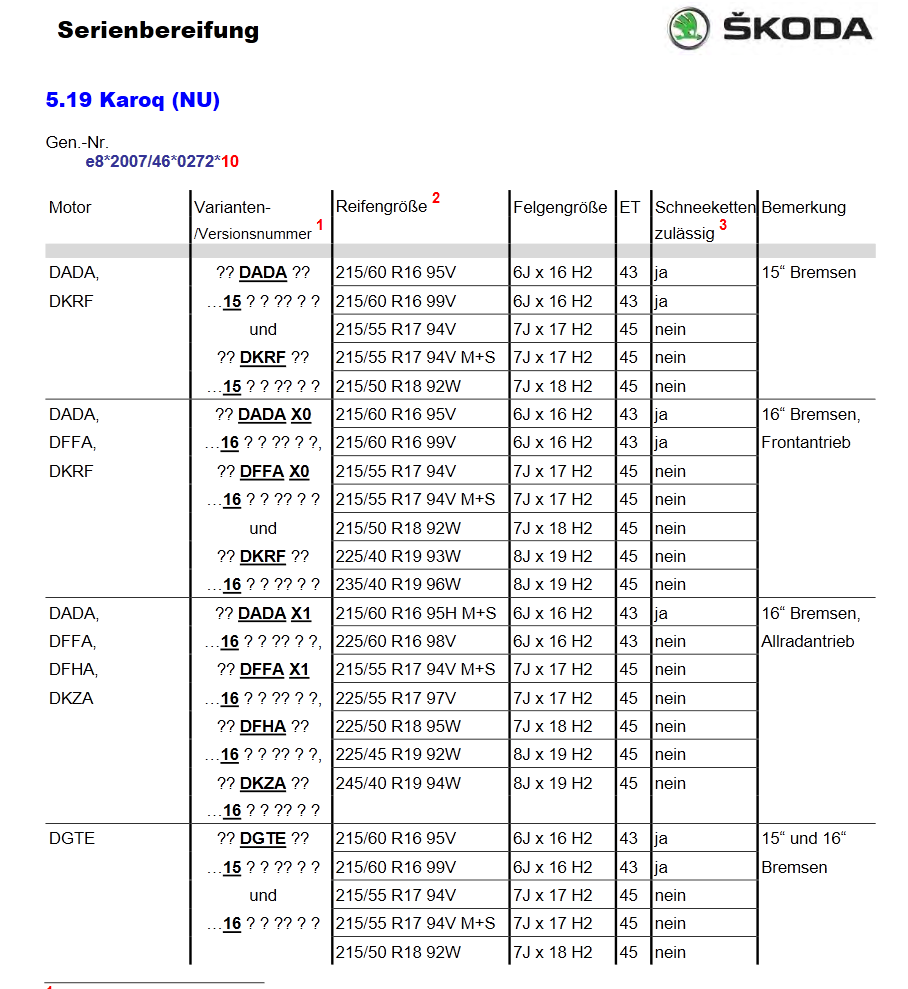
2 pointsI use the same size (225/55 R17s) for both summer and winter tyres, never felt handling was compromised in any way. 👍2 points
-
2 pointsUckfield carnival this afternoon. I got buzzed by a hot air balloon. I heard people talking, but it was coming from a 'wrong' direction. Then they were waving at me 😎 G


 2 points
 -
Just a quick update, changed the driver`s door loom today and repaired some snapped wires in the passenger door, Everything working now and my daughter is very happy. I must say that the door gaitors are not the easiest things to work with, but certainly glad it`s done, thanks for all the input and suggestions.2 points
-
2 pointsIf you have altered coding in another Module then that may be your problem. Modules not shutting down when the ignition is turned off. Its time for you to measure the current drawn from the battery when everything is turned off.2 points
-
Just fitted this rear camera from AliExpress, https://www.aliexpress.com/item/4000230897829.html?spm=a2g0o.order_list.order_list_main.11.79f21802B5duGe It just plug and play but do not use the car radio removal keys that come with it as one got stuck in the slot and was a plain to get out, Here is others that done it2 points
-
1 pointManaged to miss the Red Arrows today, but did spot the Lancaster over Calke Abbey 👍
 1 point
 -
Should your mirror not dip in reverse check that the mirror selection is set to the passenger side, if it’s set to neutral (ie ahead so not selecting either mirror) then the auto dip in reverse doesn’t function.1 point
-
1 pointThere is no VED here, you pay a one off tax for the Carte Grise (registration document) on a new or second hand imported vehicle (the tax is imposed at first registration in France) which is amortized over how long you keep the vehicle, if you buy a new polluting vehicle it can be as much as €30K but the muppets that do so wear it as a badge of pride and never tire of telling people how much they had to pay, how few miles per litre of fuel it does etc. The other end of the scale you pay very little and it halves when the vehicle is 4 years old, I paid IIRC €115 for the Octavia2 and maybe double that for the newer and higher rated in France Yeti. CT test is every 5 years after 30 years of age, no CT required for pre 1960 vehicles.1 point
-
1 pointLithium hates water. It gets angry and very hot and will boil the water.1 point
-
1 pointBeen using pretty much nothing but Costco Diesel since their pumps opened here back in Dec 2021. Zero issues with it and it's a few pennies cheaper than the rest.1 point
-
1 pointUpdate - There was in fact a metainfo2.txt file on there! I copied all my music from the sd card to my pc when I used the card to update my system a couple of weeks ago. No idea why it was still on there so when I formatted it was indeed empty and then I just copied all my music back without realising the file was there. Thanks for the help again pab567 otherwise I'd be just going round in circles!1 point
-
1 pointI enjoyed the videos, cars have got too complicated, when this one dies of natural causes or through complications that I or no-one else can diagnose I am going to go backwards several decades and buy a Toyota BJ40 diesel jeep. Just look how a tiny bit of data corruption on a Can line cost that guy over €3K in parts and lord only knows how much labour and he still has a few €K more to spend now he has the diagnosis! I have a Chinese head unit talking to the Can network, that will be deep sixed at the first sign of any trouble.1 point
-
1 pointI agree with you 100%. Only joking about diagnosedan, he’s a genius, I love his videos. Automass is thankfully taking his car to an auto electric guy he knows.1 point
-
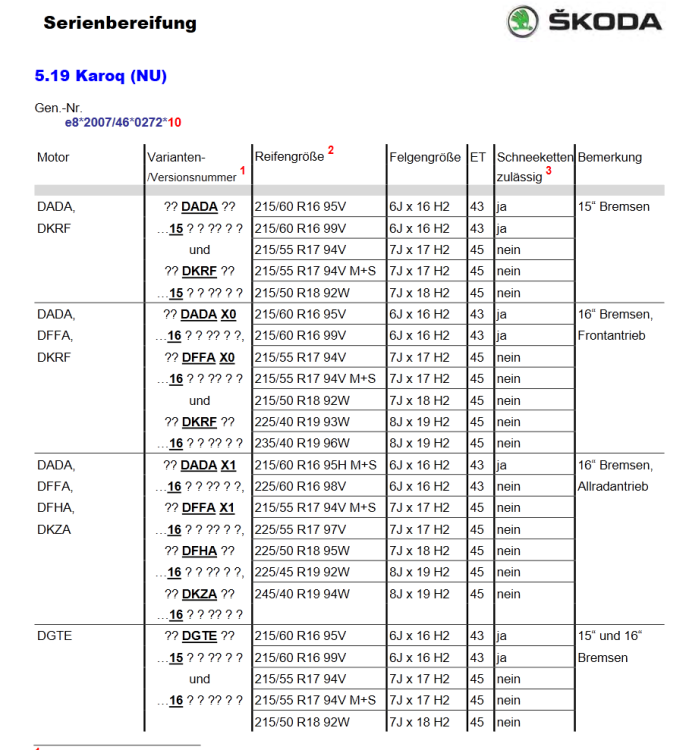
1 pointThank you @Carlston @DSL@JEFF-the-Bowman I guess I'll downsize to 16" wheels and buy 215/65 r16 Michelin CrossClimate 2 tyres. I rarely speed above 110 km/h so if it will not affect handling and cornering considerably, why not go with the highest profile that I can fit for more comfort. Our local shop told me that they have 6.5Jx16 ET45 5/112 57.1 alloy rims available, not the recommended ET43 offset. Would ET45 offset cause any problems other than the look of the tyre being tucked in by 2 mm?1 point
-
1 pointMy understanding is that the battery SOC function was disabled around 2015 - my MY16 Octavia just displays SOC----% when I attempt to read it.1 point
-
1 pointFacts, we love facts. but, I followed the link and all i found was i was scammed. By the Master ClickBaiter. Interesting 2nd vid though.1 point
-
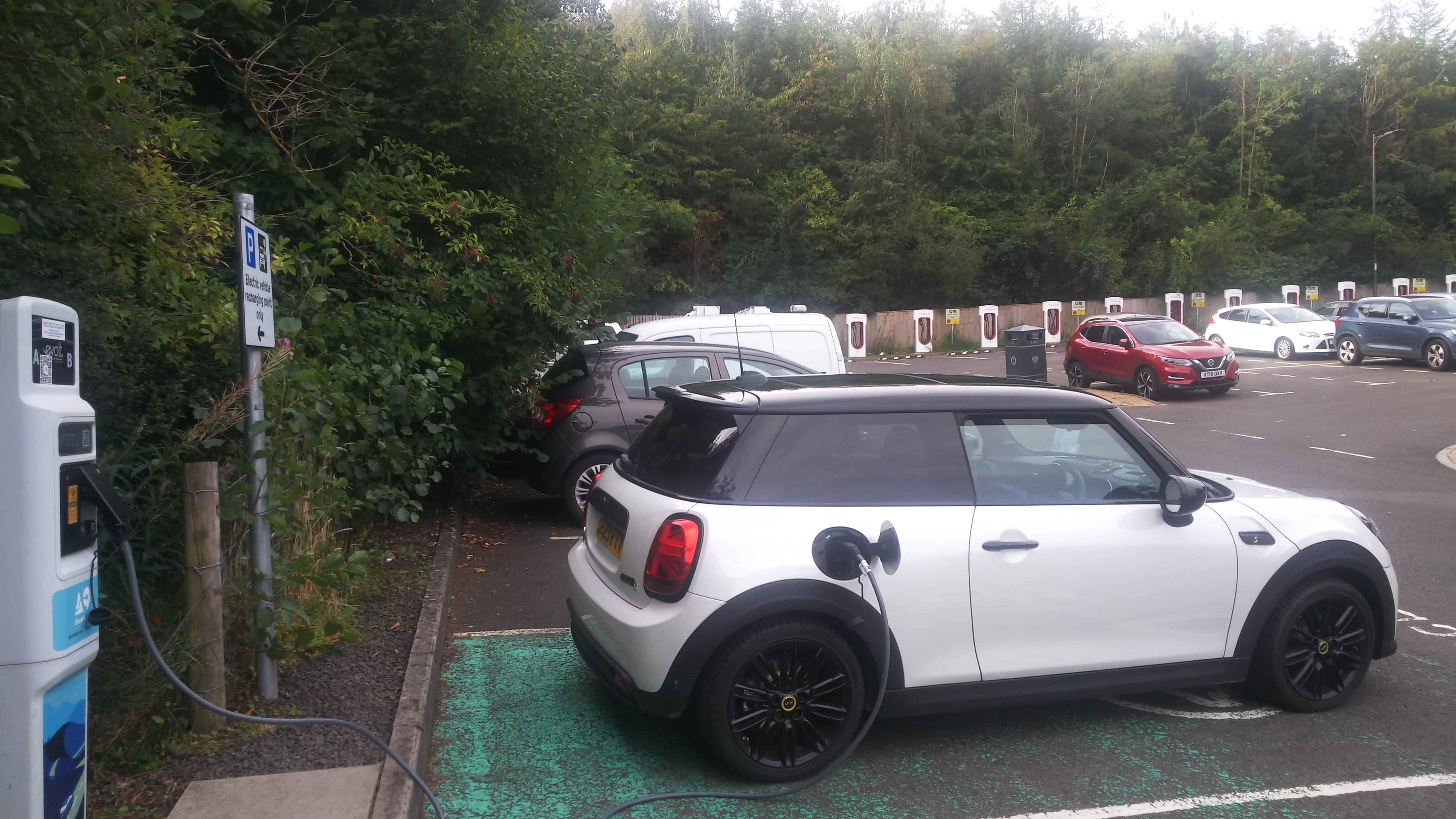
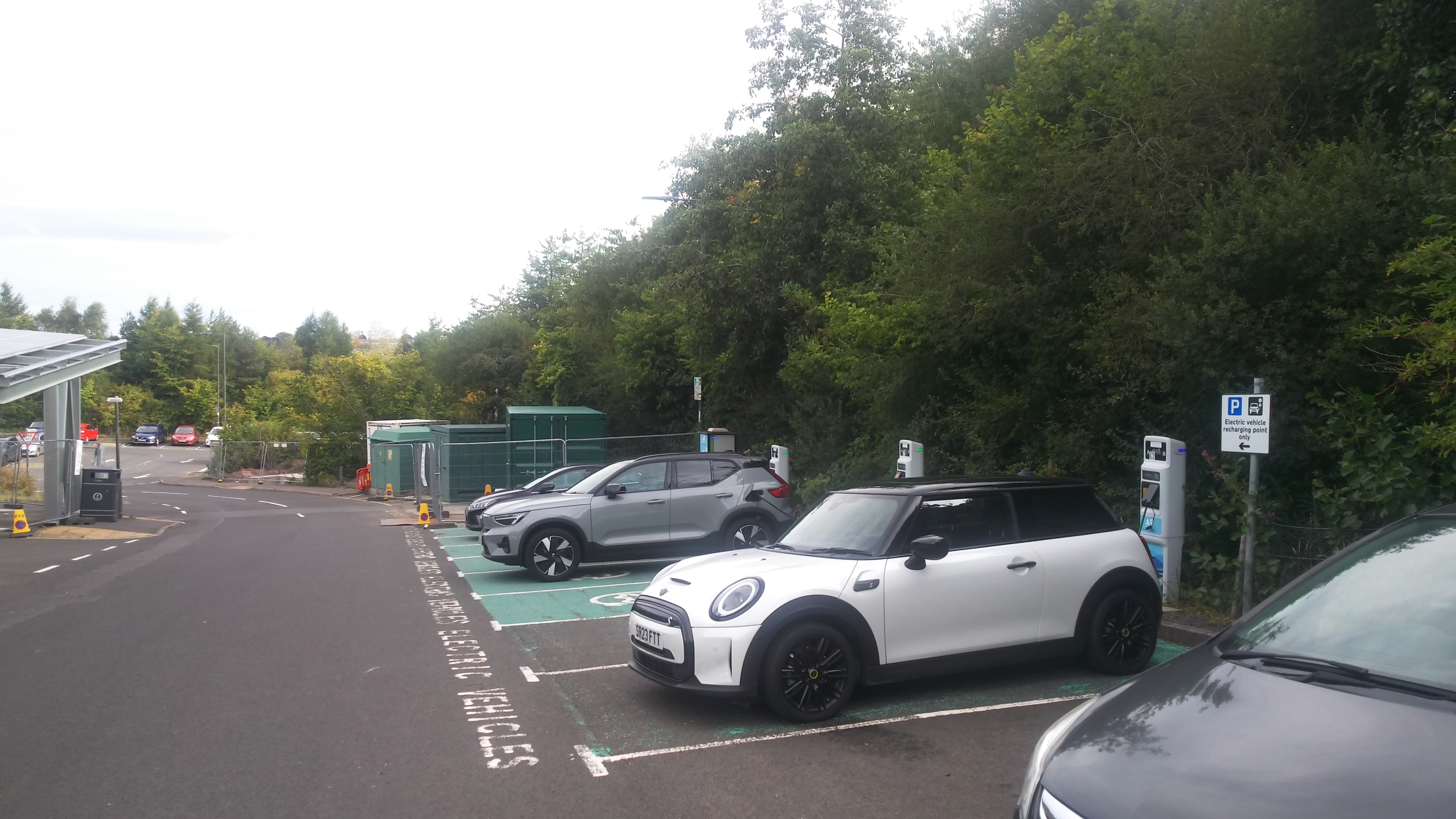
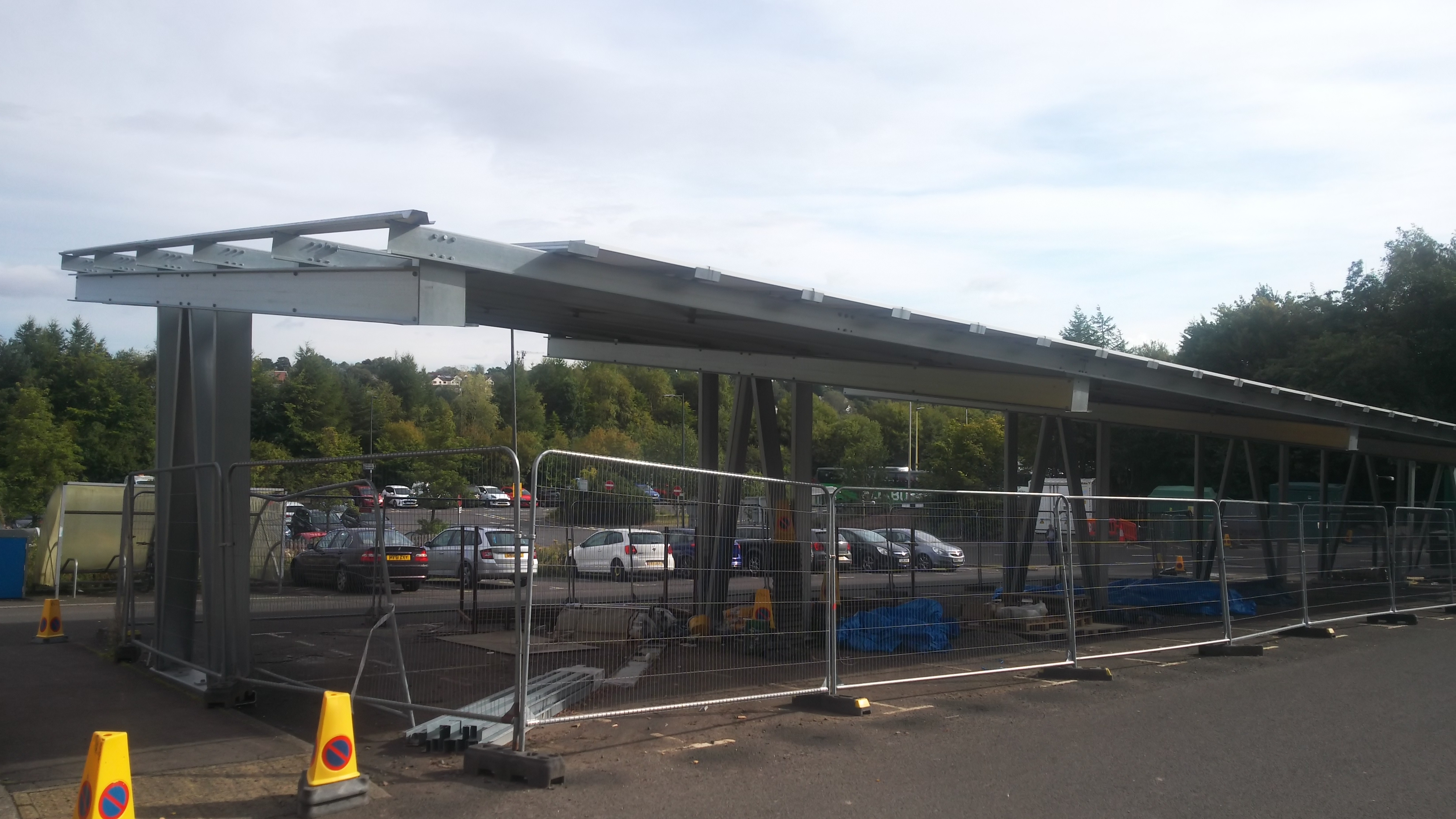
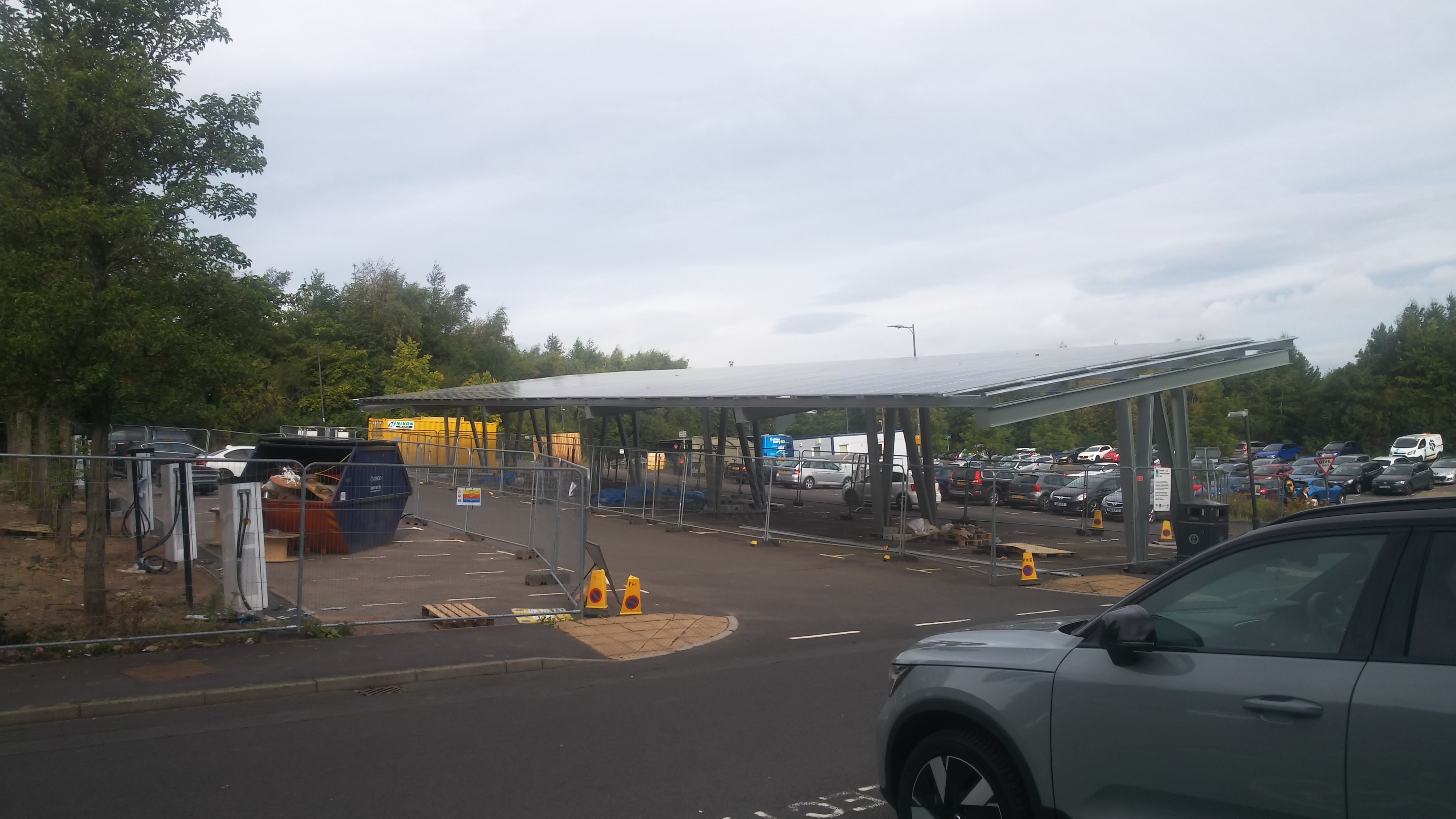
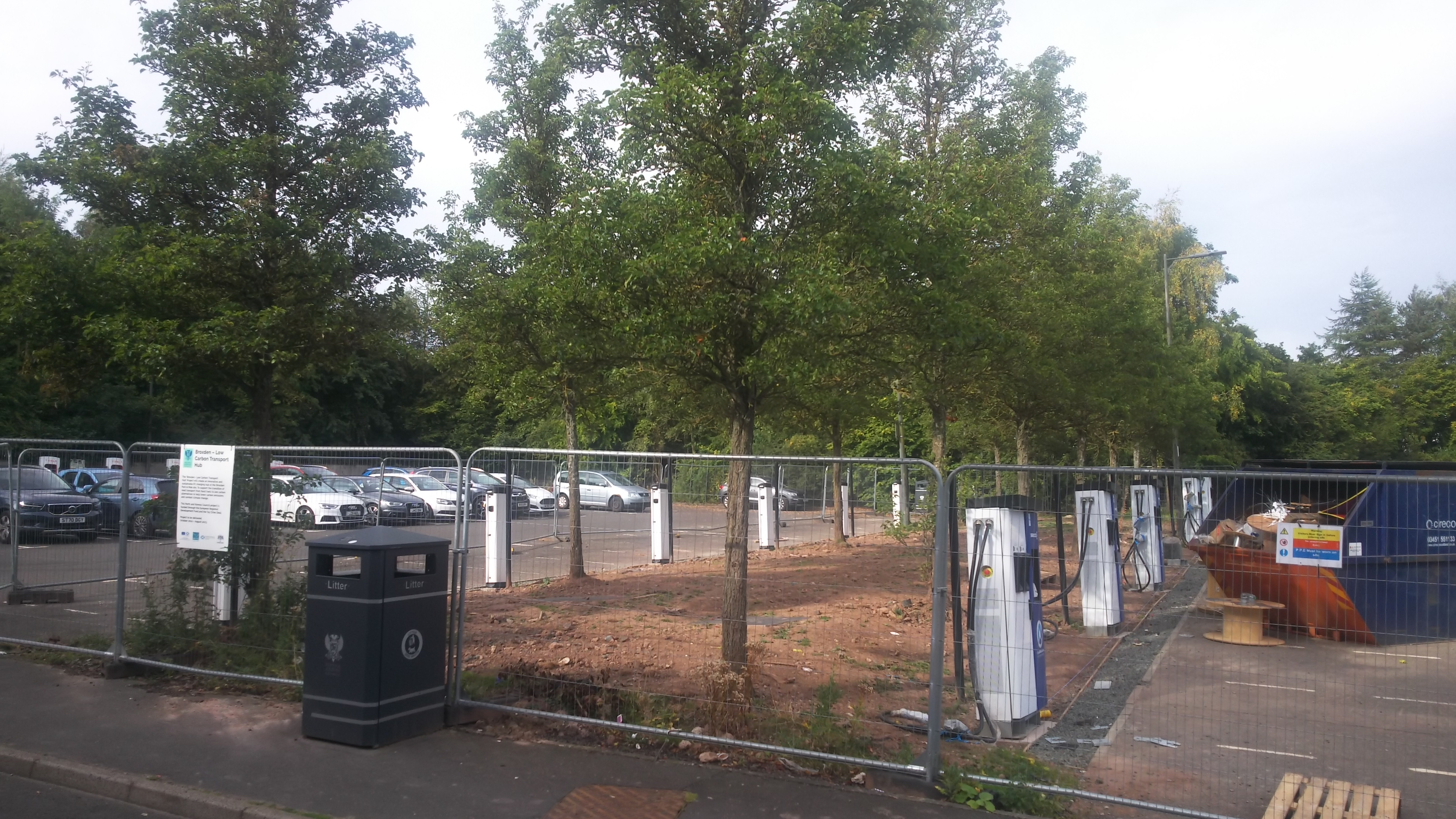
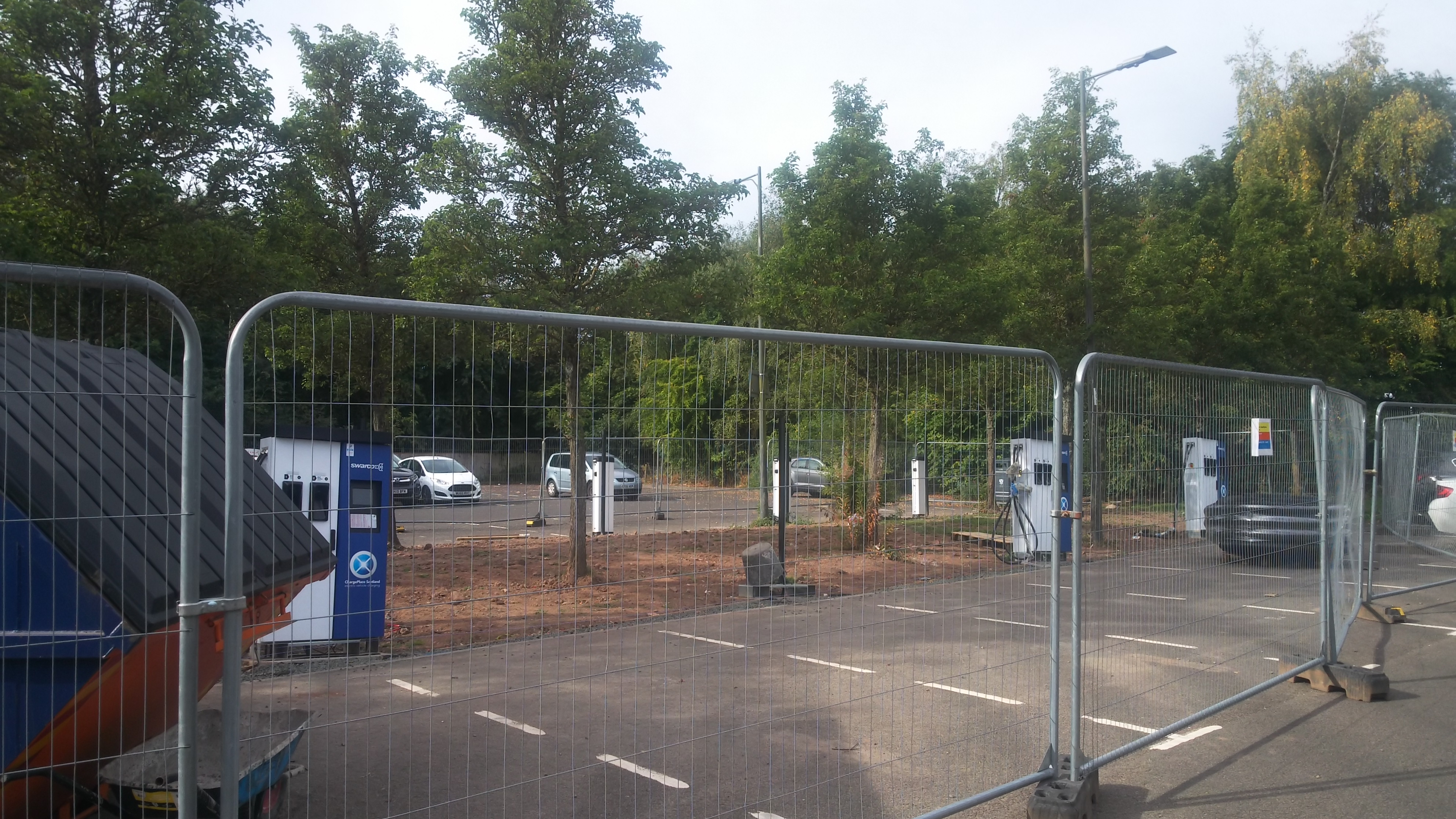
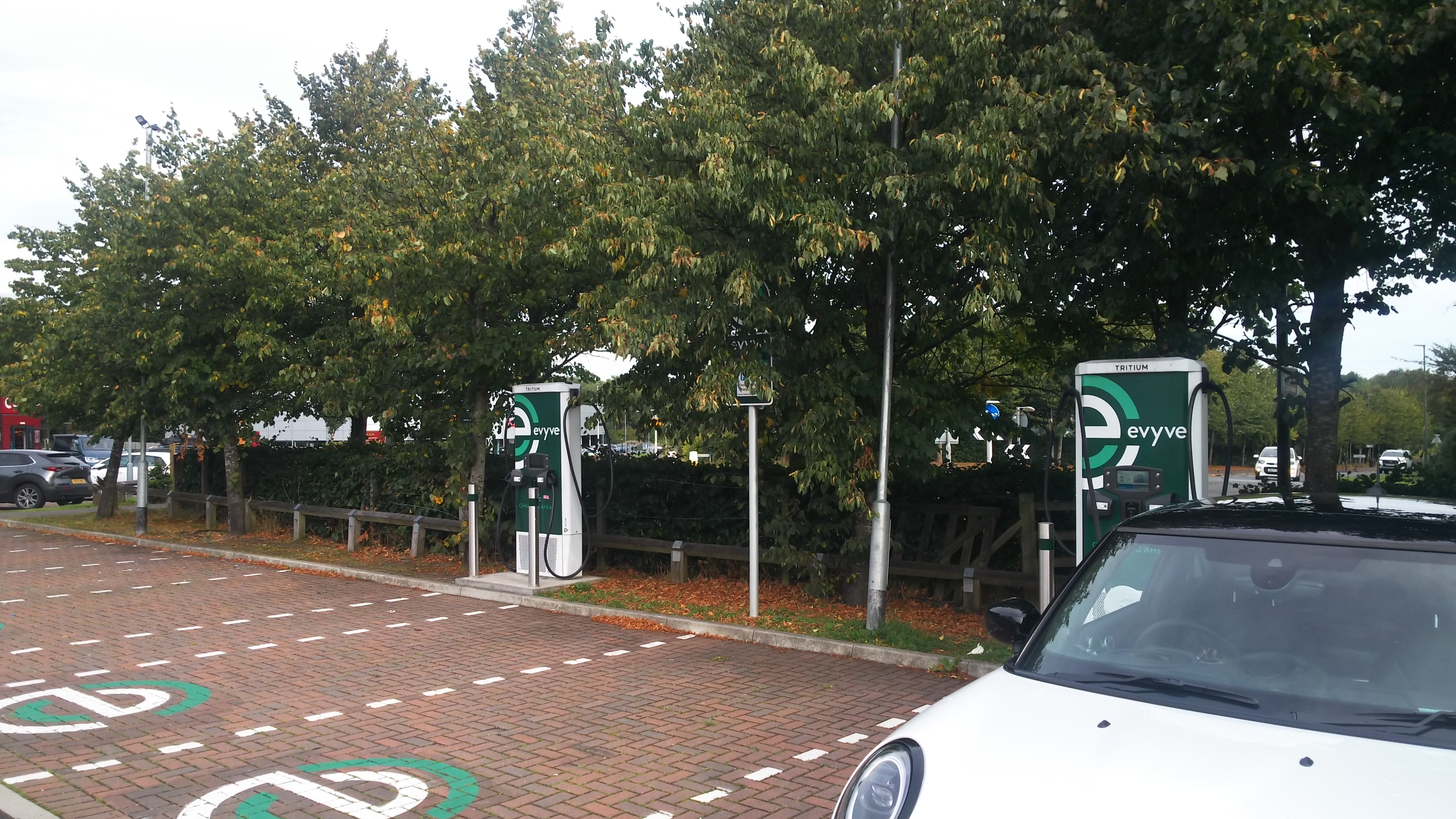
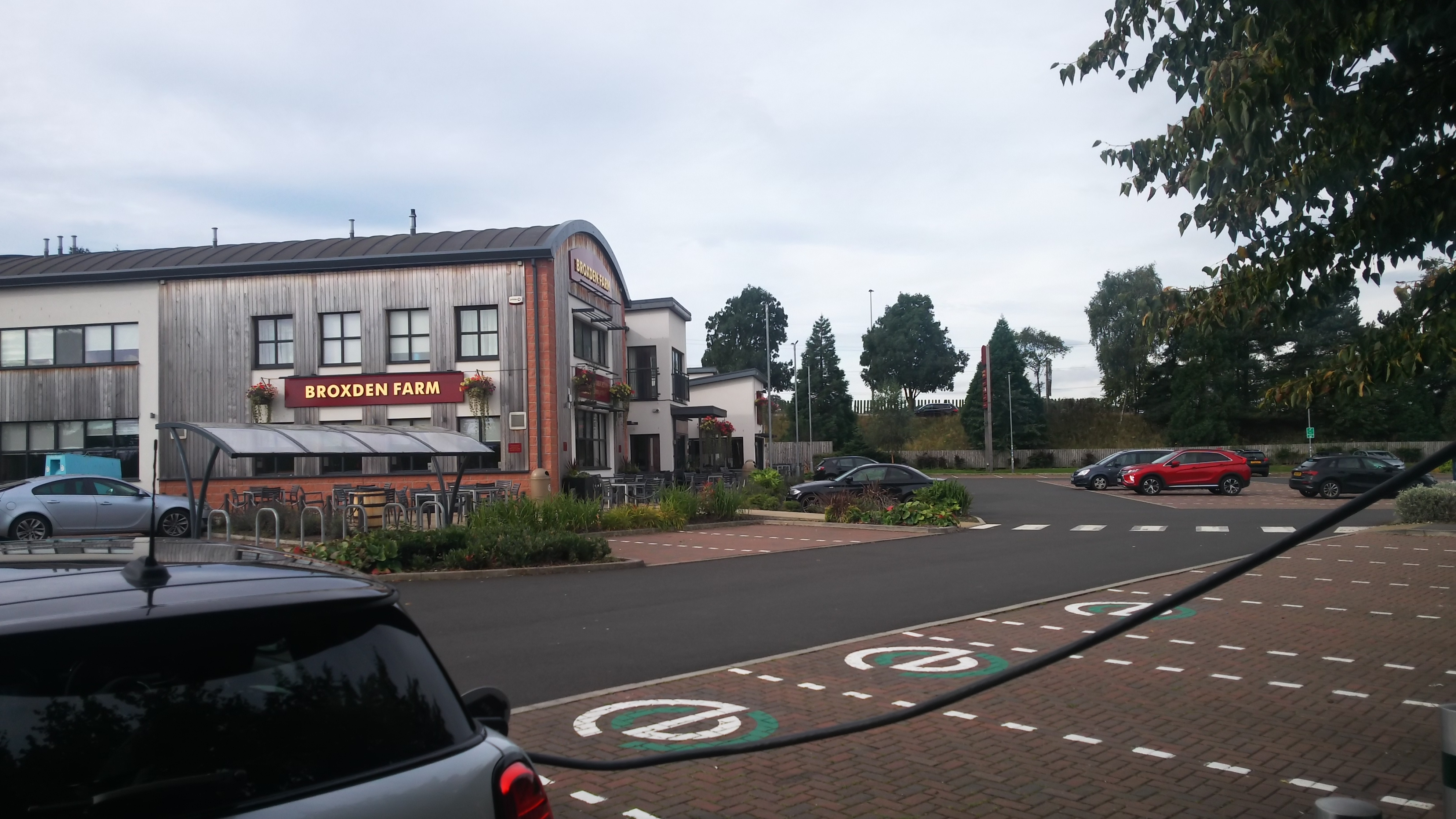
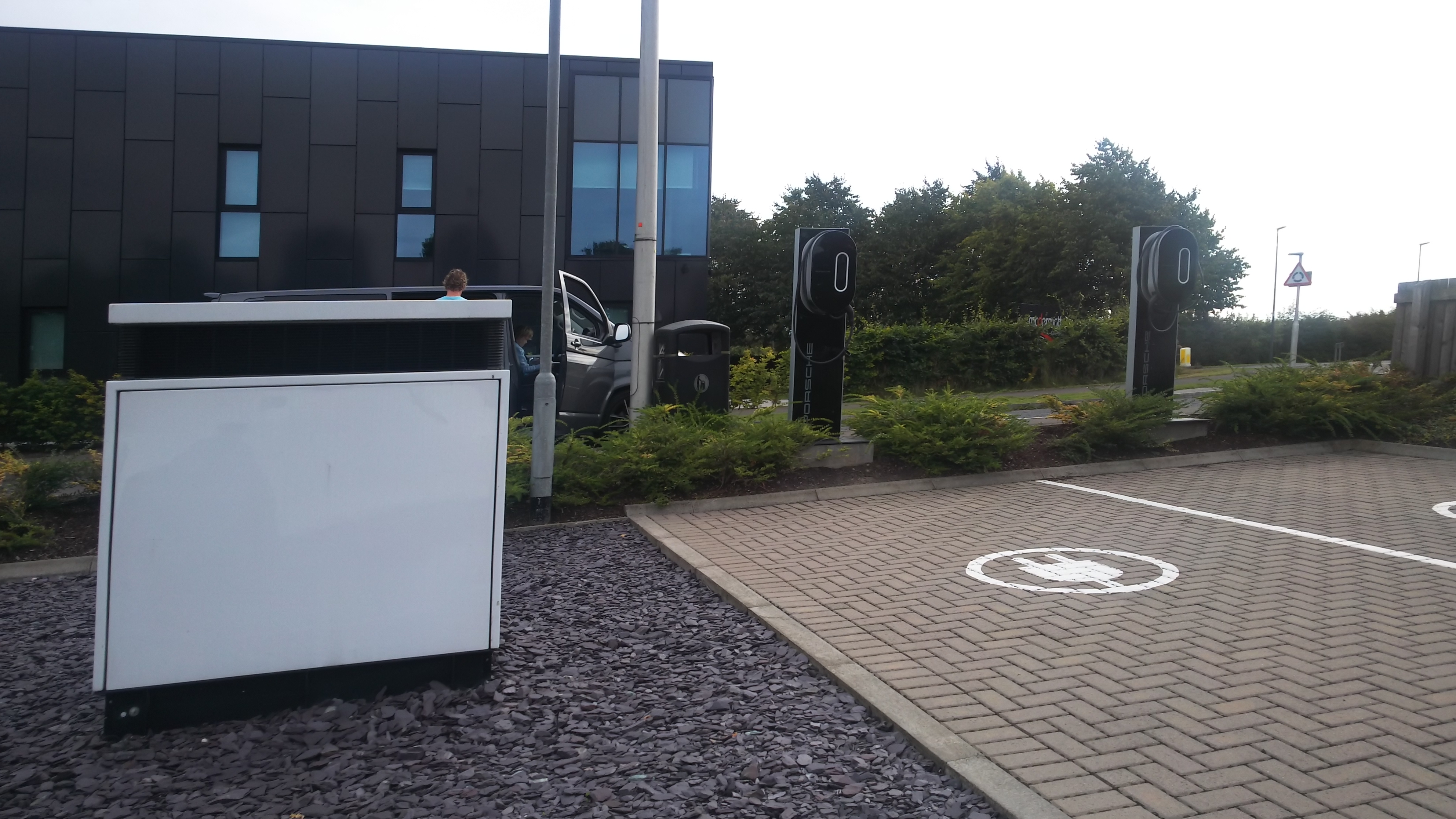
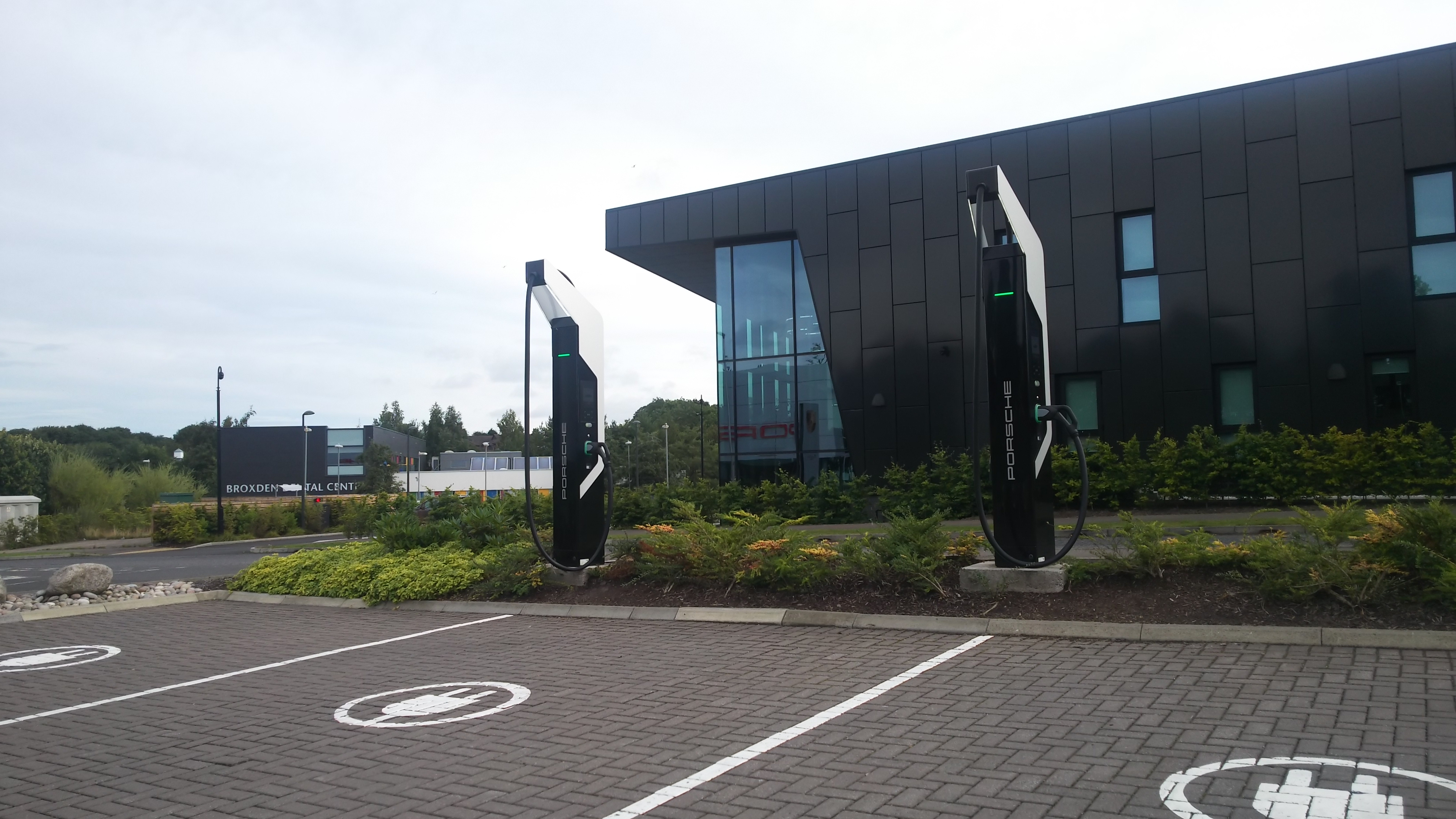
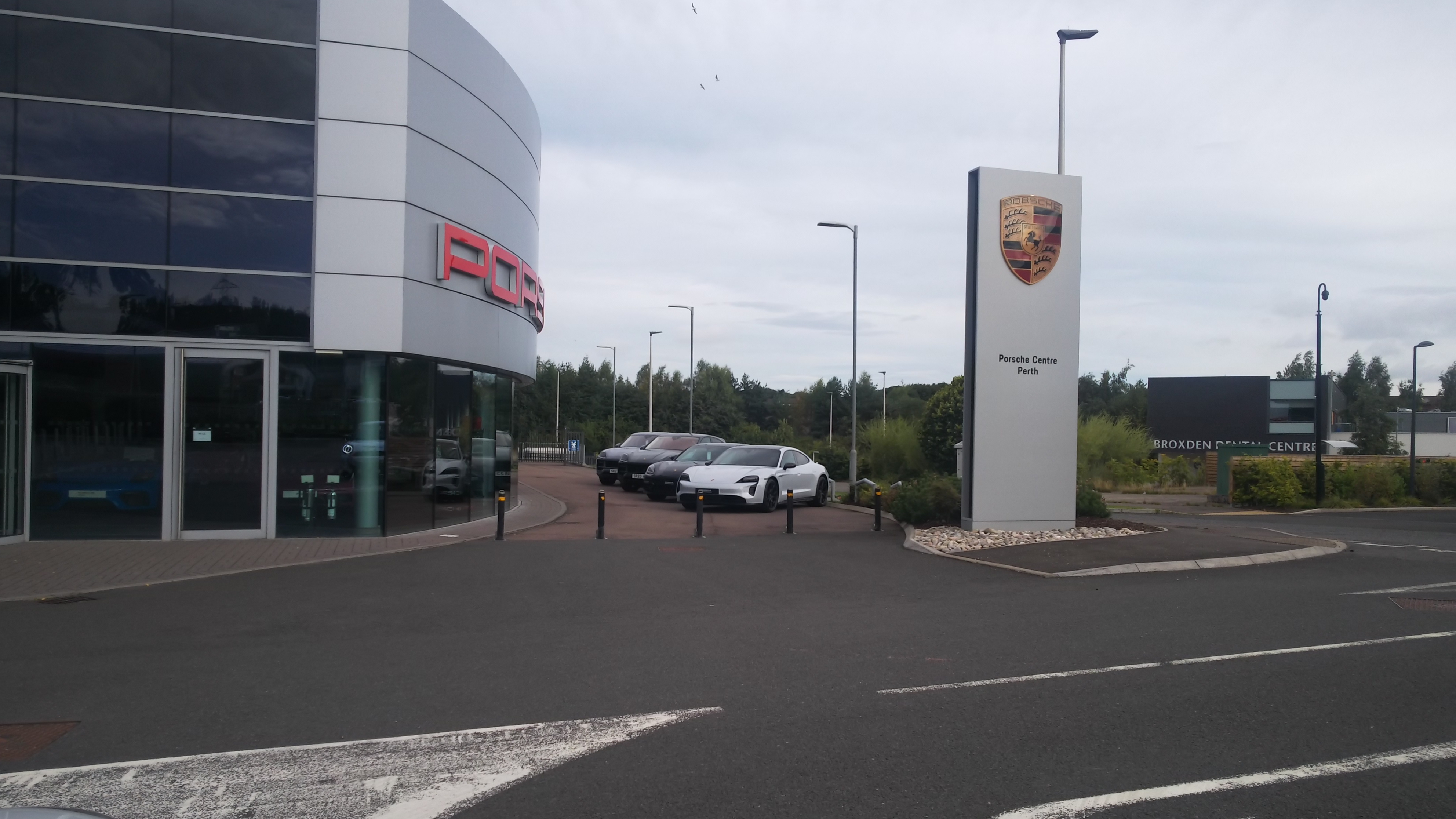
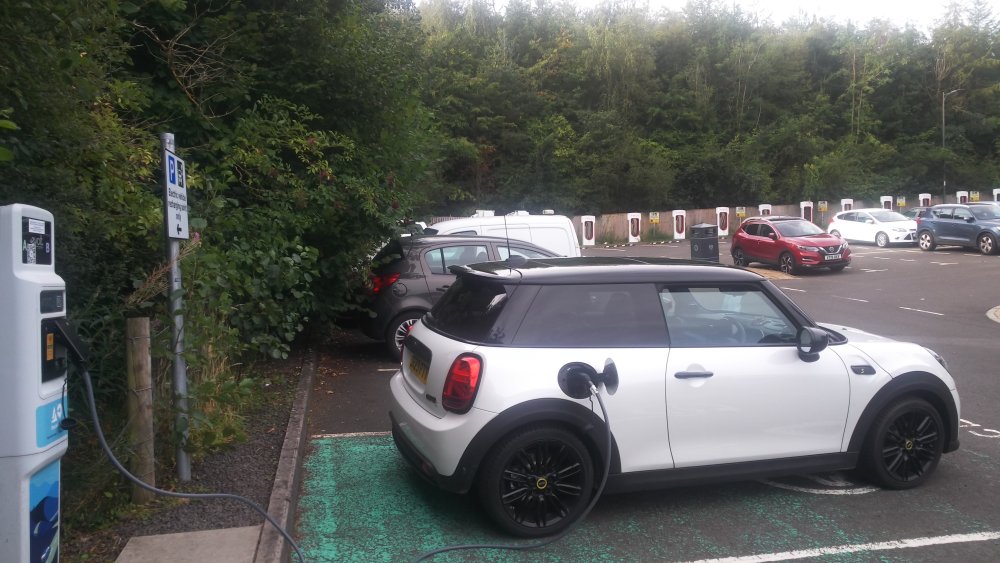
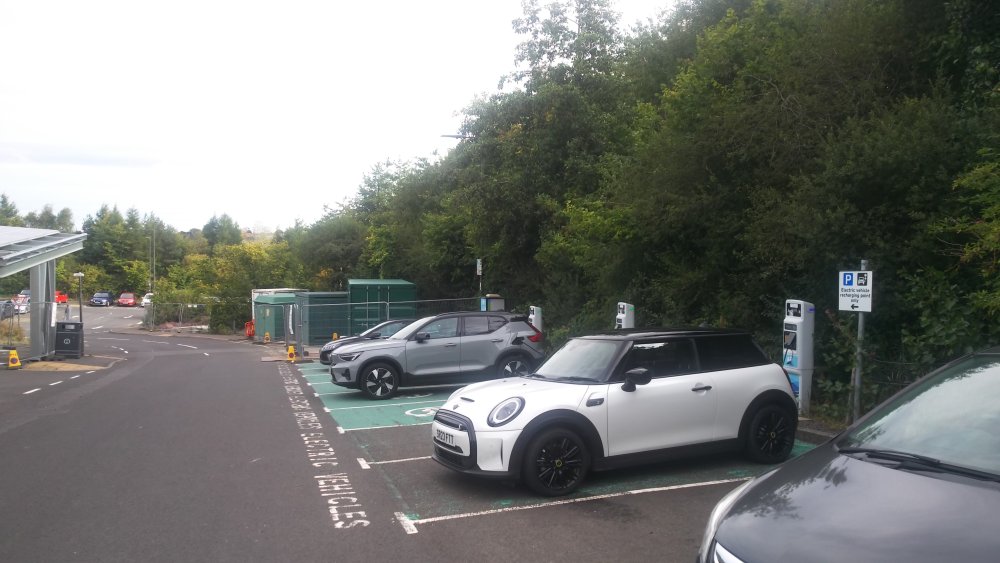
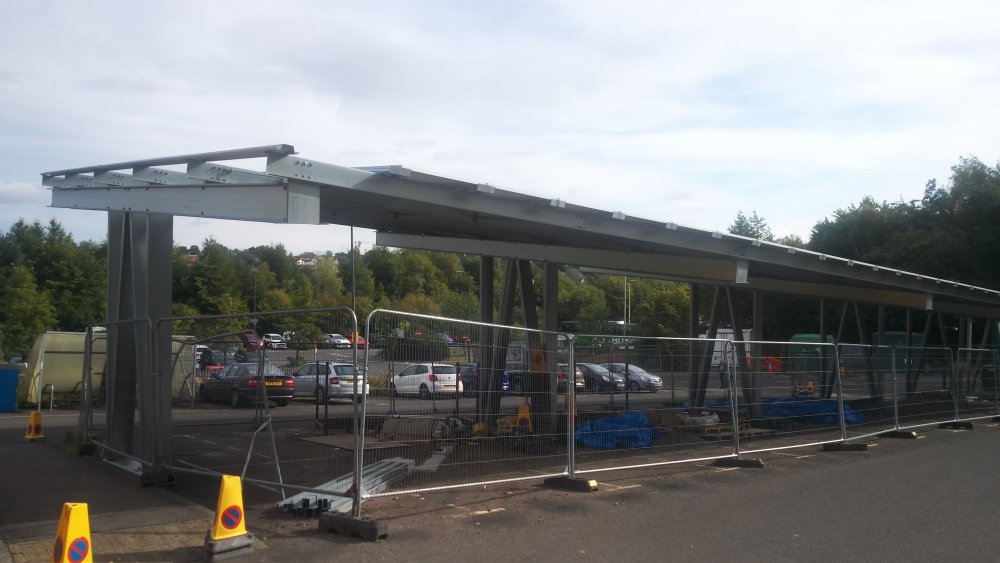
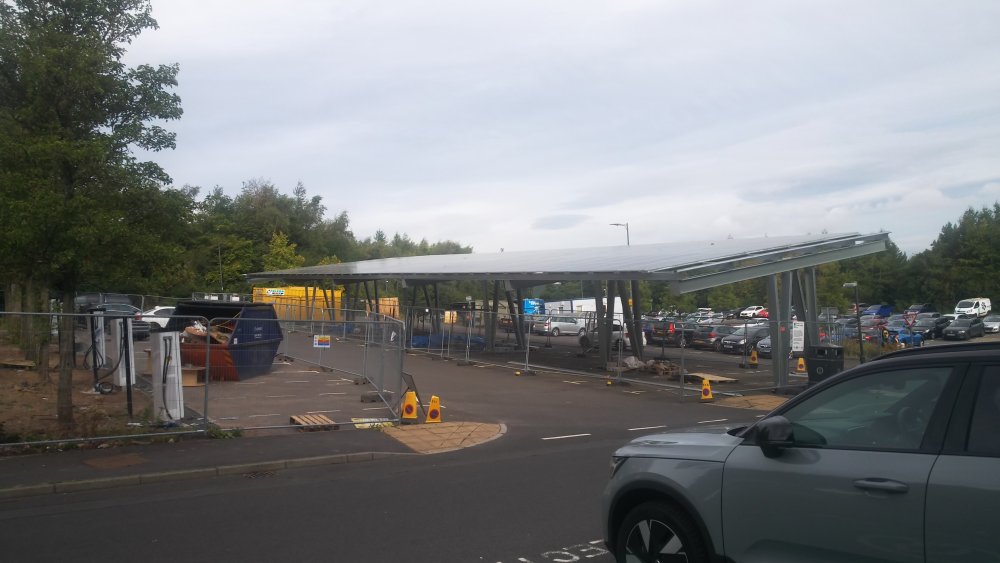
Broxden Park & Ride Perth EV Hub improvement still ongoing. Tesla Superchargers up above. Broxden Farm rapid chargers nearby and the Porsche Dealership chargers.
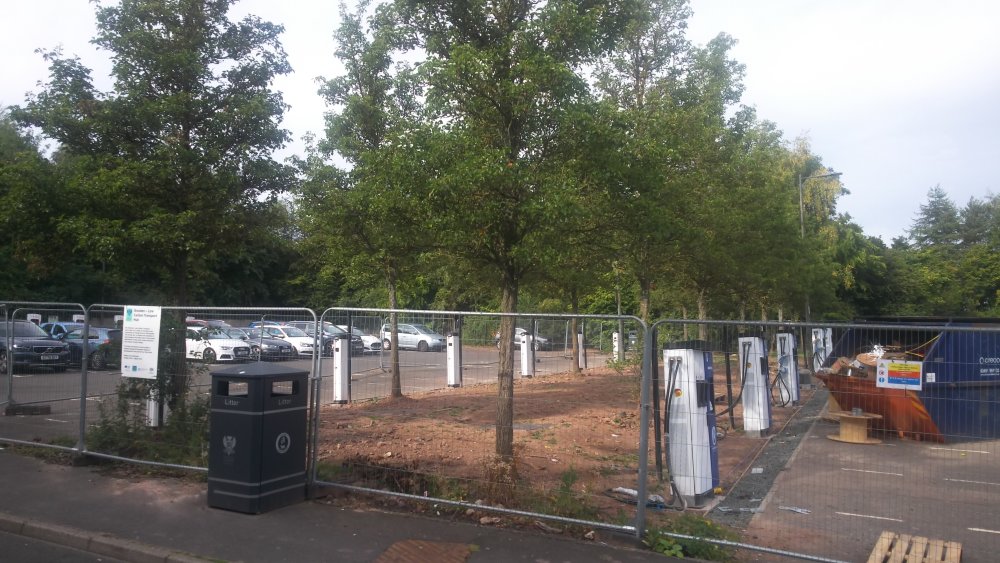
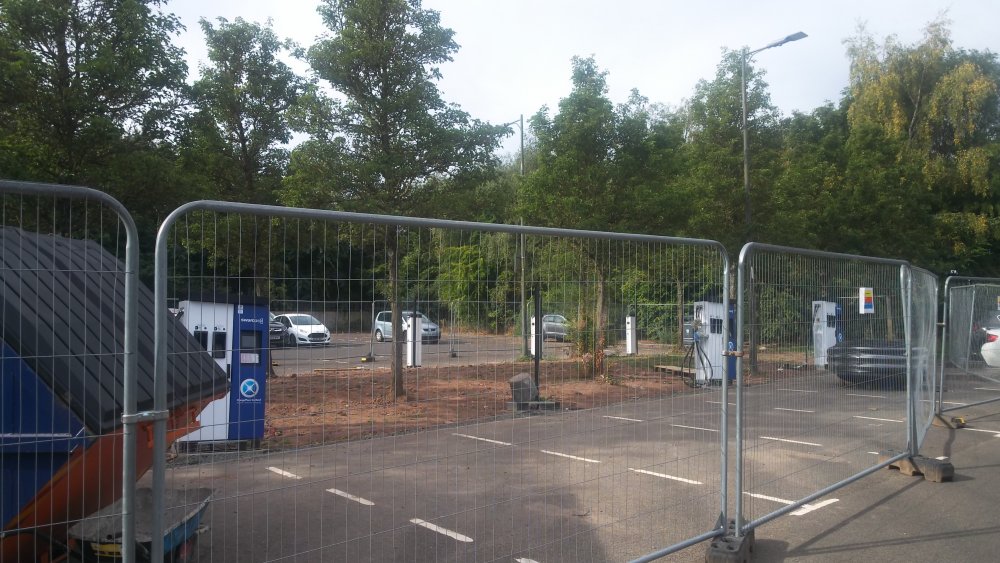
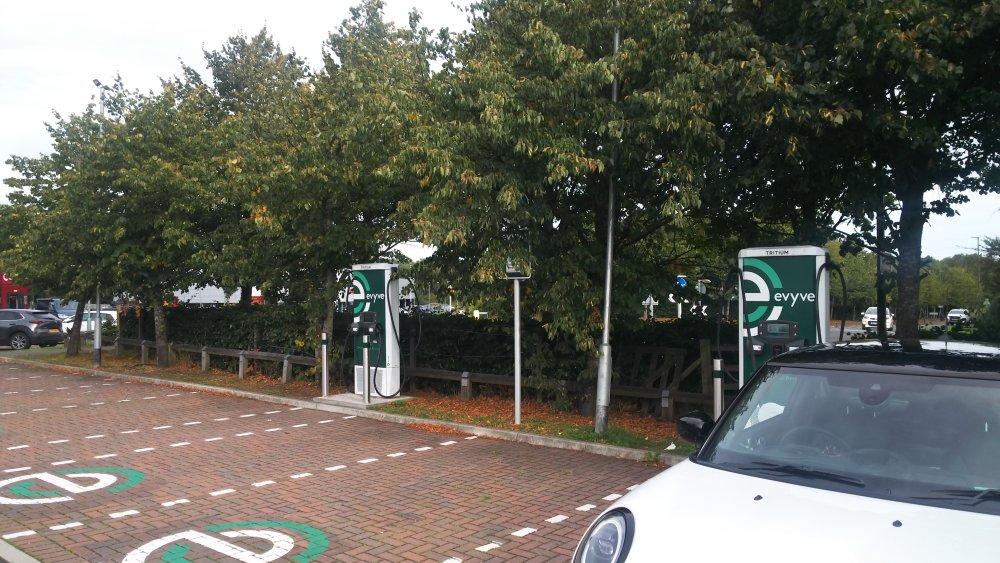
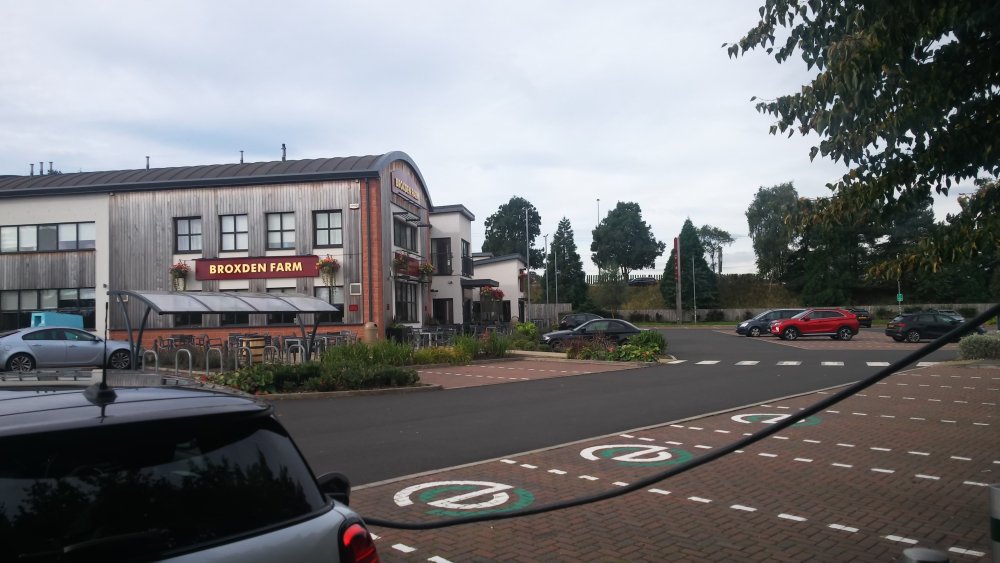
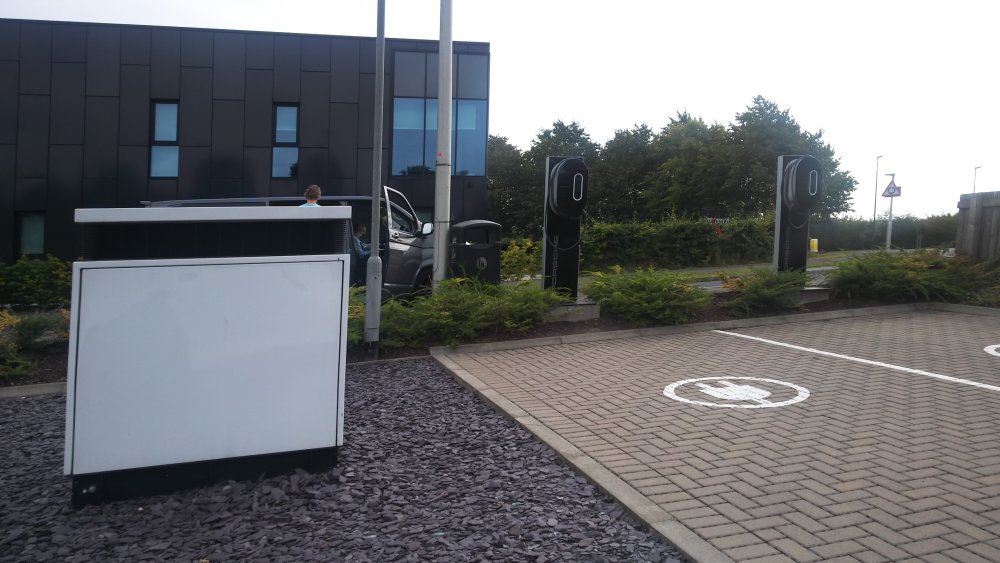
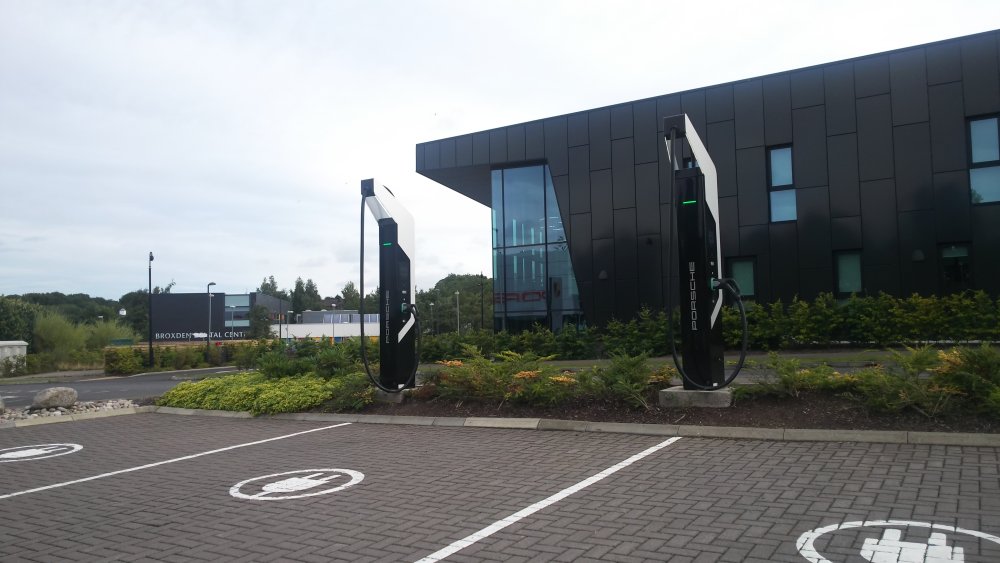
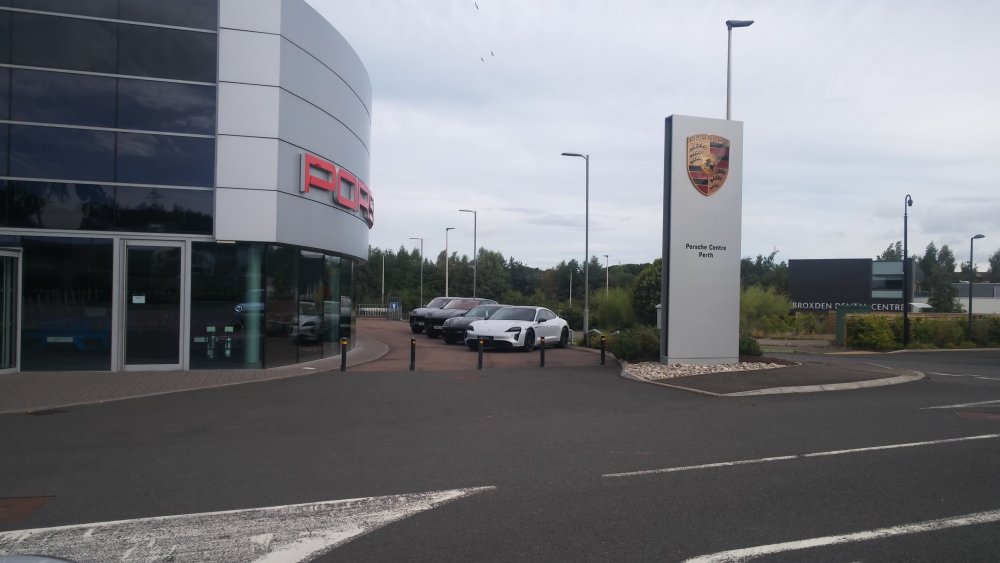 1 point
 -
1 pointYou need to get a multimeter with an amp clamp. You can use an ordinary meter but I would use an amp clamp. I’m sure you can buy them for around £20-£30 from somewhere like machine mart or screwfix. Open the bonnet click the bonnet catch closed to fool the car that everything is closed. turn everything off, unplug all accessories including your obd thing. close the doors and move the car key as far away as possible Leave it for 30 minutes connect the multimeter (refer to its instructions) check what current is being drawn. Someone more knowledgeable than me will tell you what is expected or even the actual spec for the car, but I would say 80 to 100 ma or more indicates a problem. If you can find someone with a similar known good car, test that to get a comparison.1 point
-
The power upping might be fine. Personally I would let sleeping dogs lay and just be happy if the ASG behaved it,s self.1 point
-
1 point
-
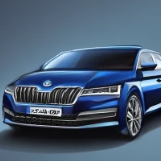
1 pointThose icons on the top left (apart from the first car one) look like they'd be configurable. The return of physical dials and user configration vs the Octavia is well welcomed - things could have been far worse (look at VW).
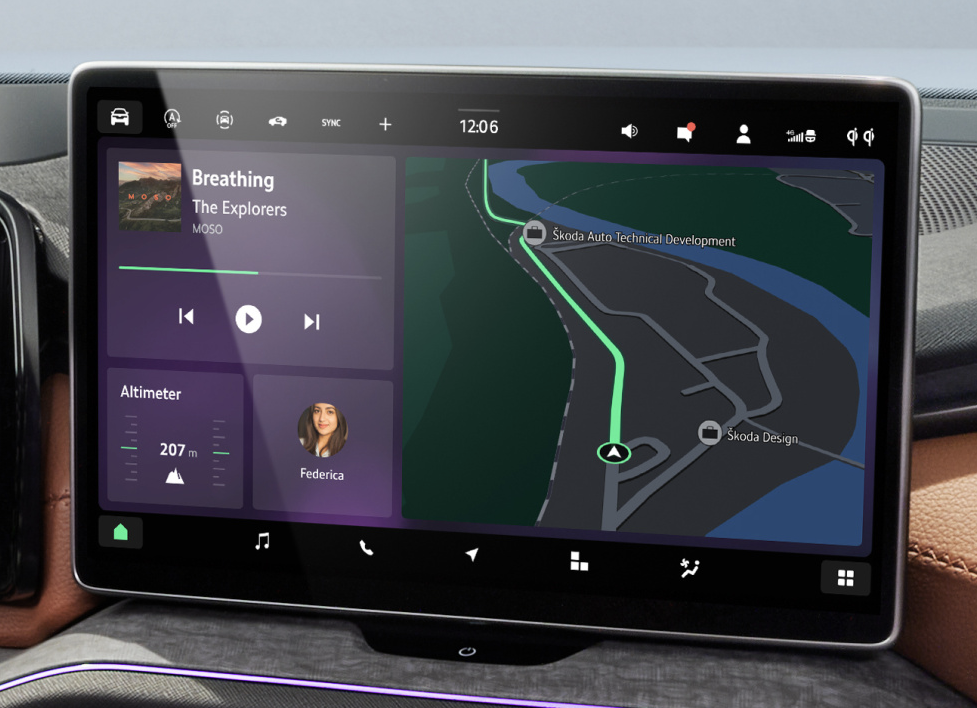 1 point
 -
1 pointHe said it on Wednesday @ 17.27. It's the last sentence of the last paragraph.1 point
-
No problem 🙂 I just used some flat rubber washers that I had lying around, I think they were tap washers. I put one on each bolt on the outer side against the back of the number plate, but I guess putting them inside the boot lid would be ok too if you wanted to. You could also double them up if there's enough plastic bolt length.1 point
-
1 pointWell, I thought you were simply referring to the post that you clicked on the "quote" tab, in which I never actually mentioned a short circuit. That was in another post to the OP a day before so confusion resolved. I still dispute that would blow the cars fuse as the 5v supply is derived from an electronic power supply consisting in basic terms of a primary 12v side connected to the car's fuse and a secondary side 5V connected to in the case of the OP, a dash cam and in my case when my car did nearly catch fire, a mobile phone. As the fault was/would be seen on the 5v portion then the 5v part of the electronics would happily continue pumping out 5V at whatever current it could muster until the electronic components in the 5v section expired as the fault current that would be seen in the 5v section would not be seen to the same magnitude on the 12v side. So using the Ohms Law, lets for the sake of discussion say that the dash cam normally takes 130mA, so thats 0.13A @ 5V = .13 x 5 = 0.65 watts on the output side and assume the whole process is 100% efficient, which it won't be, that equates .65wats / 12v =0.054A being consumed from the 12v battery and assuming the fuse is rated at 5A it is therefore going to take a lot more for that fuse to blow. Now lets assume that the 5v side suddenly sees an overload of 50 times its normal current flow due to a short circuit close to the mini USB socket on the dashcam, that means that the cable is now carrying a current of 6.5A and using ohms law, Volts times current = watts. So that's 5v x 6.5A = 32.5Watts. So 32.5 watts at 12 v = 32.5 divided by 12 = 2.708A, still way within the 5A rating of the fuse, so the fuse would still not blow. Now if we factor in the losses because no conversion process is 100% efficient, so let's say that it is only 30% efficient, and we look at the those calculations again, we get the following:- The healthy circuit's 5v side remains the same so that's 5V, .13A and .65watts and the 12v side equates to 12v, .65/.7 =.928Watts and the current then becomes .928Watts / 12v = 0.077A Under the 30% efficiency but with 50 times factor of increased current on the 5v side, the 5v side is as before 5v x 6.5A = 32.5Watts, but the 12v side now has to have the losses added to it the 32.5W becomes 46.428watts and the current is 46.428/12=3.869Amps and still within the 5A rating of the fuse so still not going to blow. Now if we could put a fuse in the 5v circuit, inside the plug along with the 12v to 5v convertor and rate the fuse at 2A then yes that fuse would blow and protect the circuit from a fire risk. Some of those 12v power plugs do have a lower fuse in the centre spring-loaded contact which is on the 12v side, but the cheaper ones don't and by the OPs own admission, the dashcam is only a cheap one, so probably does not so is therefore completely at the mercy of the cars fuse, of which I am pretty sure is a 20A rated one to handle a air compressor being plugged to inflate the tyres will have a pretty big surge current when the motor starts up.1 point
-
1 pointI use 225/55 R17 in the summer and 215/60 R16 in winter. Very good feeling with both. Even when (occasionally) I push it in manual on a windy road uphill, close to where I live.1 point
-
1 pointThe Skoda approved 17" tyre sizes for Karoq are 215/55 R17 and 225/55 R17 (for 4x4).
 1 point
 -
1 pointCant help with the dye but WD40 or similar is my go-to weapon of choice for removing tar & bitumen, try to get it to be absorbed into a cloth wetted with the WD rather than frotting it (wiping?) around as on a textile it will spread like on blotting paper.1 point
-
1 point
-
1 pointIt's too soon to say, but I sure hope so! I do see that it could still be the crank sensor though, like @thomasaspin says. Like I say, I'll keep you all informed 😋1 point
-
1 pointThe rim width and offset of those alloys on ebay is different from the Skoda approved sizes. It's also clear from their appearance, that they are non-standard rims. It's unlikely that your standard wheel bolts could be used because aftermarket alloy rims are usually machined to accept conical wheel bolts. VAG wheel bolts use a ball shaped seat (aka spherical/sphere shaped seat). You would need to inform your insurance company and they might increase your insurance premiums because if an insurance assessor saw them they would stand out like a sore thumb. From an insurance point of view, it's probably best to fit something that looks like it came out of the factory that way. If you were to sell them at some point in the future, it's likely that you would get a much better price and quicker sale with popular VAG alloy rims. With the VAG OEM part numbers, it's also much easier to search online for VAG alloy rims, compared to aftermarket rims.1 point
-
1 pointI think the et (offset) is 51. That and the width won't affect the diameter. Tyre size on top of the wheel diameter is the important bits to watch. 225/40/18 is the correct size. That's 225mm wide with a diameter of 18 inch. The 40 is a percentage of the width. If you go wider then you will get a bigger diameter tyre if you stick to 40 profile. That tyre size should fit 7-8.5 wide rims. Dammit @Carlston! I can't compete with that!!1 point
-
Hello, it depends on how far the wheels are pushed out by the spacers - and the original offset (ET) If pushed out too far, there will be a significant increase in the leverage exerted against the bearing, probably resulting in increased wear. It has been a very long time since I messed around with axles and wheel bearings - can anyone tell me if the wheel bearings are ball or tapered rollers nowadays?1 point
-
I’ve ordered the door lock and mechanism it arrives Monday so see if it will fix the problem. I’ve ordered the door lock and mechanism it arrives Monday so see if it will fix the problem1 point
-
It will be the door latch itself has failed and needs replacing. a micro controller will have failed, it could possibly be repaired if you know what you’re doing and how to strip it down, but personally replacing the latch is easier1 point
-
Thanks toot, yes I saw those threads after posting. That seems a fair conclusion! The RAC recovery driver knew what the problem was immediately and said he'd seen loads. I'll try the Skoda dealership that we bought it from, then Skoda UK, then a letter before action. I'll also report it to DVSA so they can send me one of what looks like their standard letters.1 point
-
1 point
-
1 point@JR RS I can send you mines if you want to compile them. I have some more: - Enable Ambient lights coupled with DCC Driving mode - Enable Easy Entry - Enable rain drops wiping on both front a rear wipers - Activate Emergency Brake lights flashing (on brake bulbs) - Activate Emergency Brake lights flashing (on direction bulbs) - Activate fan blowing speed in AUTO mode - Activate Off Road mode on Columbus - Disable DRLs upon hand brake activation - Adjust Autohold brake release (Early / Normal / Late) - Adjust Corner lights deactivation speed. I just need to translate them in English.1 point
-
1 point


















.thumb.jpg.9dd3f612ba7f13d10be5c518d3c8d255.jpg)