



Leaderboard
.jpg.1006585dfe4e2977315b67c3d642e37b.jpg)



.thumb.jpg.9dd3f612ba7f13d10be5c518d3c8d255.jpg)

Popular Content
Showing content with the highest reputation on 01/12/24 in all areas
-
4 pointsYou have to pull the handle out into the car as well as pulling it towards the rear, it's a delicate balance between opening the bonnet and breaking the handle.4 points
-
If want only VW then VCDS 3 vin would be £222 from UK distributor (3 Vin means you can use it fully on only three vehicles but will still allow you to do simple fault codes reads unlimited , you may think that's expensive, but I would point out main dealer will charge ~£120 to fault code read, then for every half hour on from that, about the same. Independent garages will vary in price, but probably a minimum of ~£40-60 as a "labour" charge. They have brand wide diagnostics and will likely to need subscription based systems depending on how deep they will do investigations which can ultimately get quite complicated to fault find. I have had VCDS for over 15 years, since 2019 upgraded to newest Hex V2 to deal with my current car, software updates are free once purchased so no subscription, its a powerful tool with ability to code modules measure live data from every sensor in the car. Its worth the investment3 points
-
3 pointsAlmost from new, our Skoda Yeti developed a rattle on the front end when turning left at a junction. Almost like the rattle you'd get on an older engine when the ignition timing was a degree or two out. Despite numerous visits back to our main dealer (now no longer in business) they were unable to solve the issue. I even went out with one of their technicians to replicate the noise, and although they were unable to offer a solution, they said they would, document it on the service record.... They did not. Here, for anyone else is the reason and solution given to me by our local Indie mechanic... He found it online, and it works. Even on brand new vehicles.... Obviously neither Skoda or VW were bothered about admitting to it or fixing it! Anothere reason not to buy from VW/Skoda again. Test drove it at 15mph on quiet road violently swinging the steering right and left. Sure enough, a metallic front end knock on both right and left swing of the front suspension. Anybody who has gone fault finding for front knocks will have a list to work through e.g: Broken front coil spring, bad shock absorbers, loose bolts on shock mounts, loose shock fixing nut, front strut swivel bearings, bottom suspension ball joint, engine mounts, exhaust or hangers and anti roll bar (ARB). Search the web and you find many inconclusive investigation reports for Skoda and vags. I had both front struts off a VW last year, it is tedious, but the best way to get to the bottom of that illusive knock. This time I checked the coil springs for breaks first then started with a pinch bar and the front suspension normally loaded, huffed and puffed, pulled at everything - an MOT PASS, but the knocks were still there(?) Then I decided to hack into the anti roll bar. The best way with those is to remove the tie rod connecting the ARB to the strut at one end, hang a length of 2" steel scaffold tube on the end of the ARB then test the centre mountings and far end tie rod left connected. Those centre bushes are hard to access but I found no play. Repeat for the second tie rod. I started to undo the nut on the ball joint connecting the tie rod to the ARB. I've learned that is the best one to start with! Strange the nut on the left side was tight, but the nut on the right side turned (?). It wasn't, loose but the ball joint spigot was turning. I fitted a spline key into the end of the joint and attempted to tighten the nut. If I had carried on, the spline would have been wrecked and a new tie rod would be required. As the left side tie rod was disconnected I poked my short length of scaffold tube on the ARB end and waggled it up and down. Immediate metal to metal contact from the thread of the right side lower ball joint hitting the hole in the ARB! I had to find out what was going on because so many have just replaced the tied rod (with ball joints) but my ball joints had no play. On the basis that new nuts are cheaper than tie rods, I cut a slot in the ball joint nut with a 1mm disc grinder whilst avoiding the threads on the joint end. A couple of chisel smashes later the nut could be turned with a spline key in the joint acting as the counter turn. So what is going on? These ball joints have plain M12X1.5 parallel threads and there is no taper fit on the ball joint. The hole in the end of the ARB is 12.5mm diameter which is 0.5mm oversize. They rely on the ball Hex collar nut torque giving sufficient friction to stop the thread moving around the hole in the ARB. Unfortunately, they screwed up because the 'collar' on the ball joint is narrower with a smaller contact area than the collar nut. They got the collar nut about right. but not the other half of the sandwich! I'll leave it to your imagination to decide what you can do with a short 8mm wide strip of 8 thou brass shim and a M12 penny washer. I replaced both left and right lower tie rod ball joint nuts part N015 081 6 for £2.50. Test drove Yeti and there were zero knocks from the front suspension. This fault is very hard to find and many have just replaced the tie rod and ball joint assembly. I bet the dealers do this too. I think the sequence of events is the lower ball joint nut slackens off first, then rusts on the thread. Anybody using the spline key and wrench will find the nut torque in limits when the nut has actually seized and locked. The test is to try and tighten the lower ball joint nuts. If they turn along with the thread, there is no friction to stop the thread banging around +- 0.25mm in the hole.3 points
-
3 pointsIf you're careful you can pull out the handle to clear the speaker.3 points
-
2 pointsHello there, fellow Skoda Mk III drivers. I recently had the driver's side sun visor clip break off. I know this is a common issue, and also that you can't source the clip separately from the sun visor itself – it has to be a complete replacement. The 'correct' replacement sun visor listed online for the Skoda Mk III seems to be inexplicably expensive, even on eBay (often between £40 and £80). Being of a thrifty nature, I had a hunt around and found a VW part that looked like it had an identical clip, so I took a punt on it for less than £20 and it fitted perfectly – the clip and visor dimensions were indeed exactly the same as for the Skoda, so it popped right in. It comes with a cable poking out of the middle of the clip for the illuminated mirror, so just snip the cable off and you're good to go. Just search for VW part number 5GG857552. Hope this helps someone save some wonga!2 points
-
Hmm, so the default value to be used if plated limit not readable - I wonder...2 points
-
hi guys, In my country (Bulgaria) you drive in the right lane. The car has a DSG box.The tires are currently NEXEN winter tires with a 215/60/16 tread size and are mounted on original rims. Pressure has been checked and it is the same 36 psi everywhere. It seems to me that it started to pull more after I replaced the original tires that I got the car with from the dealer (Continental). Today I swapped the rear tires with the front, but the problem remained. I apologize for the bad English2 points
-
2 points
-
I agree my octavia was absolutely disgusting. Full of black tar like gunge. The EGR valve was even worse. How it was operating I don't know. I think you can get a cleaner for in fuel but I just removed mine and soaked in kerosene and then cleaned. Made a big difference. Revs when idling were all over the place before cleaning plus got much better MPG afterwards.2 points
-
2 pointsTotally agree with this point of view, I recall that when TFL hired UCL to do a study into what benefits expanding the LEZ into the ULEZ and spreading it to cover all points with in the M25, the report from UCL was that there would be no or no discernable benefits and that the mayor's office had to put pressure on UCL to alter the wording of their report to make it more ambiguous. Presumably because, as it was, their original report was too easy for the average person to read it and decide that the proposed scheme was just a way of plugging massive gaps in their funding.2 points
-
2 pointsif you're inside, feeding it 12v via the lighter socket should give you enough to unlock the doors.2 points
-
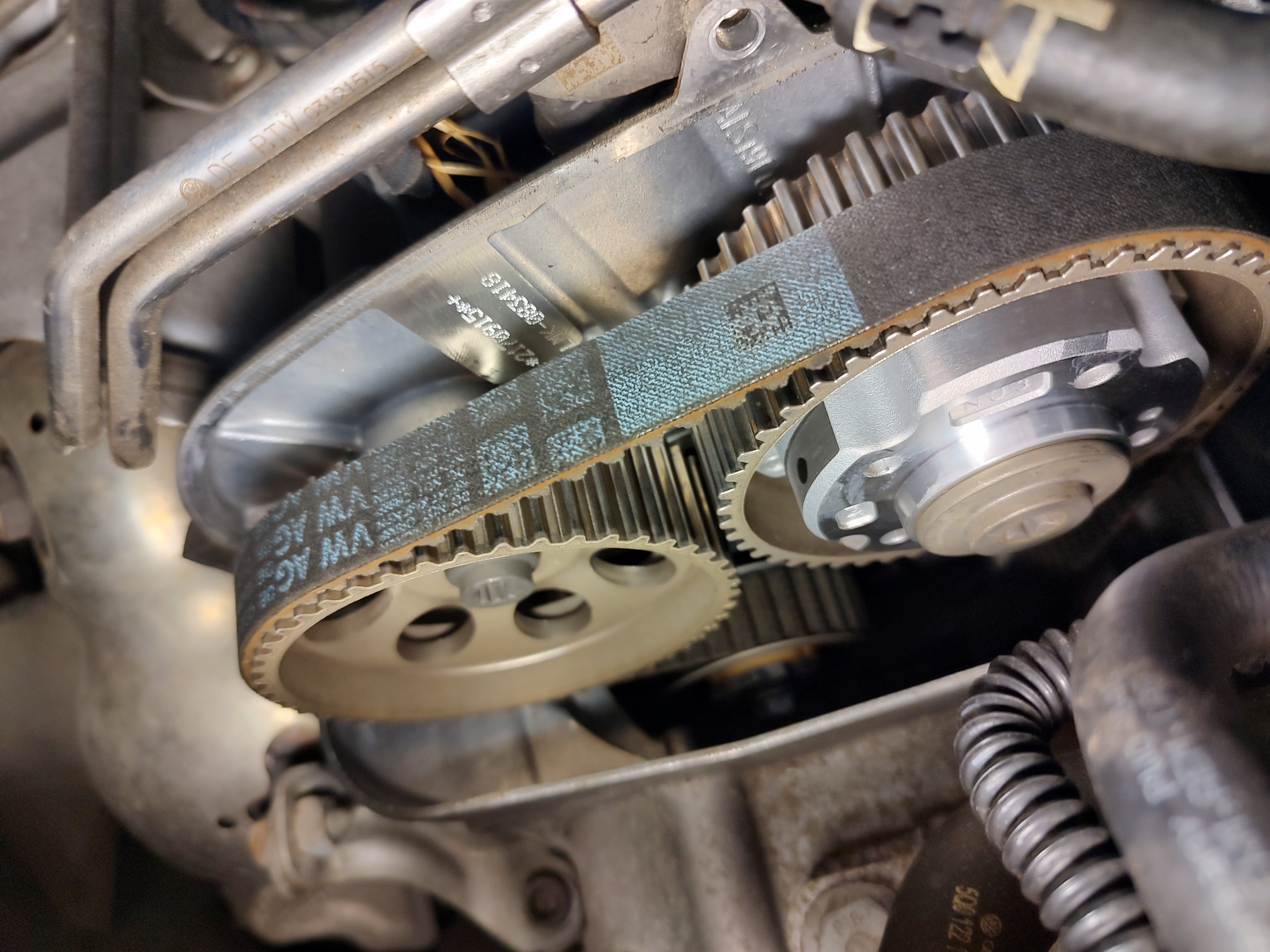
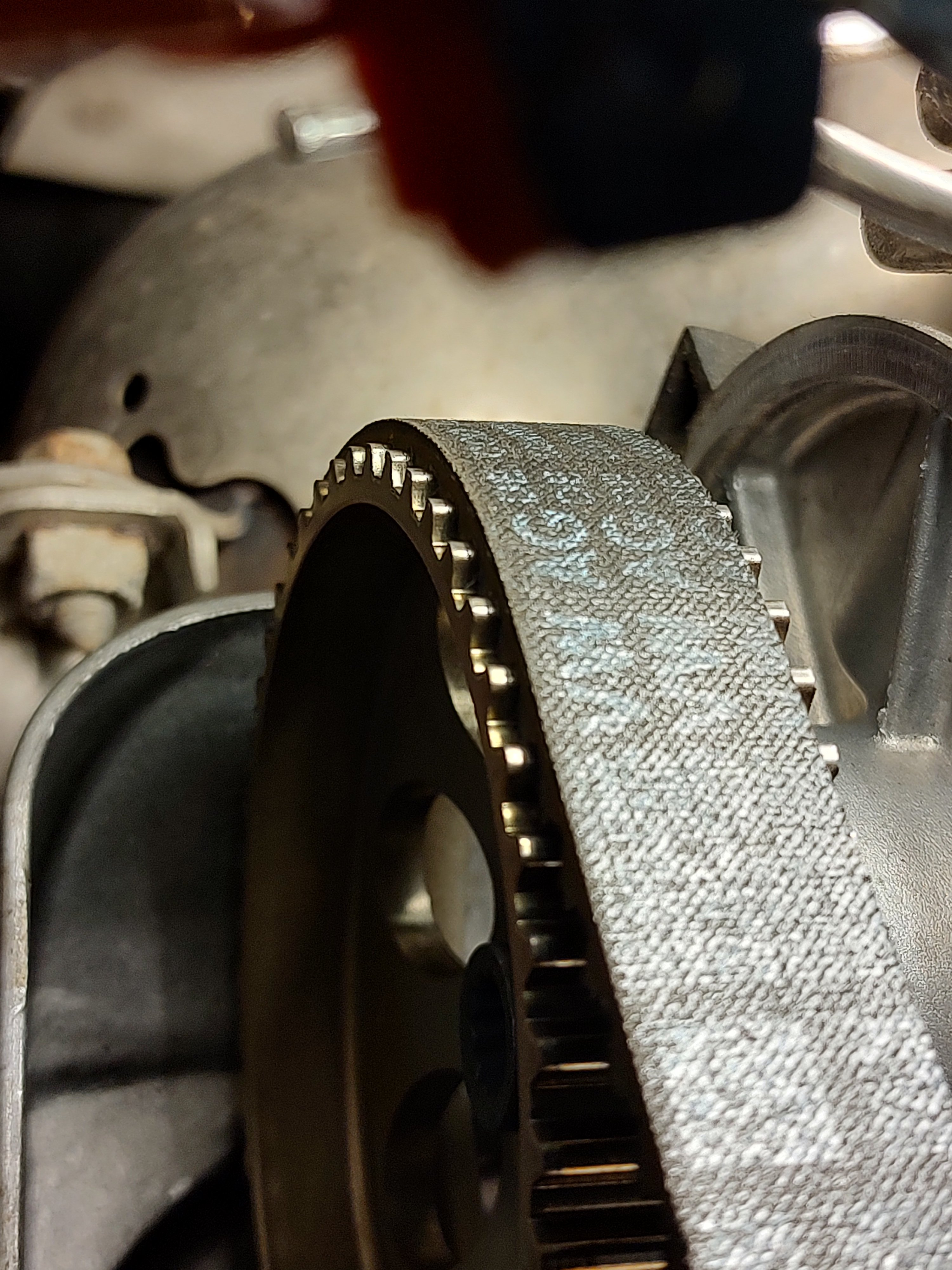
Yes, I'd be interested to hear about any timing belt failures on these engines? I have a 1.4 czca (non act) 125 engine in my 2016 Skoda superb MK3. Mine has done 95k miles now. I first inspected (and photographed for comparison) the belt at 3 years old and 51k. And still looks identical now at nearly 9 years and double the mileage (like new, no signs of fraying etc or wear). My car is kept in an warm garage which probably helps a little too... Photos below nearly 9 years and 95k miles. I don't plan to change any time soon, will keep inspecting every 15k or so.
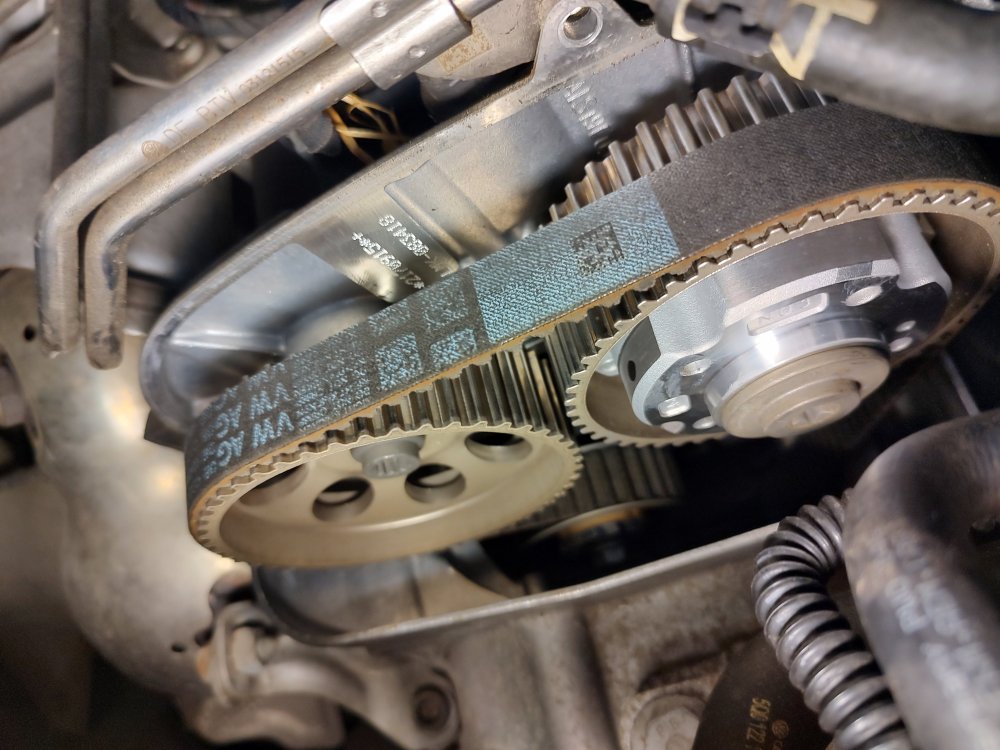
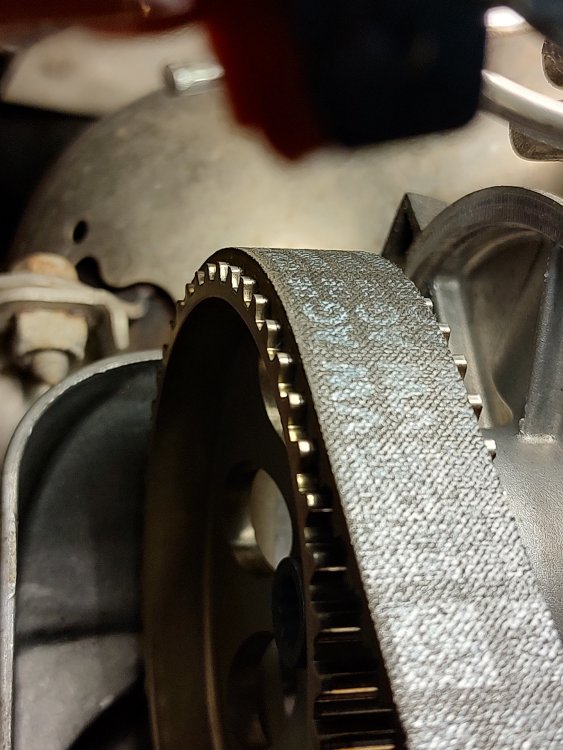 2 points
 -
2 pointsThe 6sp is only wet clutch plate pack design. . A generally reliable unit but that is not to say they never have a problem and clutch packs are consumable. Normally 140k miles maybe more if motorway driving orientated. But if paying for that work definitely get a garage who knows what they're doing to diagnose and quote. Otherwise if it doesn't fix it it will be on the ops head. Also should check other items that could show similar symptoms, engine mounts for one.2 points
-
I can also remember the (Welsh) Dragon 64, the Tandy TR(a)S(h)-80. Sinclair SX 80 and 81 ...2 points
-
So, I think this is mission accomplished. as suggested I put the forte treatment in then drove to the workshop. i pulled the hoses off the rad and charge cooler and took a hose to them both. Quite a lot of crud came out of both and they both needed several minutes hosing before the water ran clear. In then filled the system with water and remove the return line to the expansion tank. I ran it until this was clear too and then drained the system again from the bottom hoses. time for a cup of tea. now it was time to tackle the matrix. I bought an updated version from a local company who advertise on eBay. It’s a bit more money, but this is a job I want to do once only, and the wider waterways and brass/copper construction should last longer and prevent future problems. Also this came with the new seals and clamps. Someone had clearly been in there before as some clips were broken and the annoying plastic cover from the videos was missing. Hey ho This was the easiest and least time consuming part of the whole operation. The old unit came out easily, and the new one went in easily. Reconnecting the pipes is the hardest bit, helps to be left handed. loads of crud came out of the old matrix, almost like sand. Whether it was the original and it had been flushed out is hard to say. It may well have cleaned out, but having gone this far I wasn’t chancing it. then it was pipes back on and refill. I stupidly left my vacuum filler at home, So it had to be done the old fashioned way, and then bled using vcds. It’s definitely getting warm now. i had to top it up when i got home but this is to be expected. for future reference - vacuum filing should speed the process considerably and enable more flushes in the same amount of time. I’ve not tried this yet, and hope to not need to now! a smear of Vaseline on the male connectors greatly helps putting the pipes back on the radiators and the heater itself. The documented difficulty in getting all Of the old coolant out is no exaggeration. I wish I’d bought concentrated coolant as I’m now not sure there is quite enough antifreeze in. I did put a litre of concentrate in so it shoud be acceptable. I used g13 from euro, the new expansion bottle has got silica in it and to be honest for the £20 they cost it could/should be treated as a service item. the whole process took about 4 hours, if doing again this could be reduced.2 points
-
2 pointsGuys, i'm embarrassed. Turns out all seems to be good. My ObdEleven main paige was showing 15.2 and sometimes 15.9v. But at the battery terminal with tester it was actually 14.7v at idle. And ironically when you go deep inside ObdEleven menu, it also shows real voltage. Dont know why the main paige of the app is so off. Sorry guys but thanks for answering!2 points
-
Hi, Yesterday, I finally put my winter wheels on, checked front and rear brake discs and pads (127000km on the clock, all original ones except rear pads). I also regreased the front and rear sway bars silent blocks with marine grease (an excellent tip from our Master PhD Skoda expert @ApertureS 👋 🙏). I did it one year ago, and it removed all squeaks and creaks when driving over speed bumps. They started coming back only 2 weeks ago. This morning, my Mk3 was silent again over speed bumps. 😃 Tested & approved! 😉1 point
-
1 point
-
Source of the above, https://www.gov.uk/guidance/mot-inspection-manual-for-private-passenger-and-light-commercial-vehicles/8-nuisance#section-8-2-2 Unfortunately there's a sentence even further down the page than what I quoted, referring to retests after fails on emissions at plate figure. Retests must be done at same figure. Has to be said though, there appears to be a lot of variability in how these tests are really done 'at the coal face'.1 point
-
This is the exact wording of the test manual, for diesels of around this age. I'm not surprised that some testers don't get it right if they skim read straight to "For vehicles first used before..." Before the test, check the maximum smoke level limit for the vehicle and enter the required details into the diesel smoke meter. The maximum smoke level limit will be the level displayed on the manufacturer’s plate; or where there is no manufacturer’s plate information: For vehicles first used before 1 July 2008, the maximum level is: 2.5m-1 for a non-turbocharged engine 3.0m-1 for a turbocharged engine For vehicles first used between 1 July 2008 and 31 December 2013 the maximum level is 1.5m-1 for all engines.1 point
-
This time they used the plate figure, so 0.8 was what the car had to achieve.1 point
-
1 pointIm sorry. I was referring to the diagonal crease down the doors. My wife (who isn't into cars) commented that a neighbour with an Ioniq 5 must of had an accident or hit his gate-post....🙄1 pointThis some days ago ... fitted a XLR throttle box, noticeable improvement in riding comfort! Even on N is already better than the original setting! I usually use it S or S+ and already found it more than adequate. Have a laugh ... I fitted the controller "temporarily" in the coin/storage box by the steering wheel, since I was not sure I was going to like it or not. I usually open the box, change a setting, and drive, so I can evaluate how it performs. I am driving in traffic stop-and-go so to avoid too fast reaction I open and pass from S+ to N ... close the box and after a moment I notice car starts to become jerky and kangarooing like a mad horse ... I open the box and my handgel-bottles surely pressed and it was in R+ 😁🤪 Cannot imagine what it must be driving at WOT in R+ setting .... must be wild! Another step forward.1 pointI used this video (last post) to track down all the screws to replace my blower resistor. It involved half the dash!1 pointIt might be worthwhile removing the throttle body and giving it a good cleaning and checking the pipes/hoses are not clogged up. I suspect that you perhaps might do a lot of short local trips which could result in the throttle body becoming clogged. Does the engine idle nice and smoothly, or is it a bit rough at all? I had this issue on my last Superb and after cleaning it was like a new car and was also far more responsive and fun to drive.1 point1 pointNo... There are 1.4ACT engines in the Superb and Kodiaq up to 2018.1 point1 pointPossibly, but on my car, the clutch does not completely disengage and is held at a slight bite. I can feel the car relax back when I put the gearbox into neutral, which I now do instinctively when I am coming to a stop. Sometimes before I actually come to a complete stop. This has the added bonus of allowing a perfectly smooth halt.1 pointIt costs £80.00 for both services if you wait until renewal, but there is a discount to £60.00 if you renew more than two months early. (They don't publicise this as far as I can see.)1 pointThe "Public chargepoint Regulations 2023" only apply to new chargers from the 24th November. Existing public chargepoints have another 12 months to meet the regulations. https://www.gov.uk/government/publications/the-public-charge-point-regulations-2023-guidance/public-charge-point-regulations-2023-guidance1 point1 pointIt very much has to do with what I said. You said the market can't always be right and implied it needs intervention. You keep repeating it. In fact you've done it again in the post I'm quoting here. The reason I haven't presented any additional evidence is because there's no point. When I did, you started blathering on about colonialism and imperialism and how not ruining our economies to the benefit of the developing countries is unfair. It's not about the "science", it's about "Social Justice", and I have no interest in that. You want an electric car, fine. Don't object to me not wanting one. That is a silly thing to say, and reiterates your adherence to consensus. I don't need scientific consensus to see the effect of gravity. I can see it's effect, and the scientific explanation for it is plausible. The "science" behind man-made climate change is flaky at best, and downright dishonest at worst. The fact that a load of scientists have been persuaded to go along with it is to their shame. Every time they predict something and then get it completely wrong, they say "Ah! Our model was incorrect. We forgot to account for X. Please give us more money for additional resources & research to improve our model." They can't predict anything with a reasonable degree of accuracy and have now given up even trying. Thanks for the link to "Union of Concerned Scientists" by the way. That gave me a good laugh when this popped up immediately. 😂 Money. Lots and lots of someone else's money. Pfft! I screen-capped the graph from the link I provided. The curves, X & Y axes are all clearly labelled. Just because my choice of graph highlights a truth you'd rather wasn't highlighted does NOT make it dishonest. 🎵 Calling me "untrustworthy" is weak, you're playing to the clique, don't cry at my critique, it's the truth I seek. 🎵 Word! You're missing my point, or perhaps my point is missing you because you're avoiding it. My point (which I'll dumb-down for you) is "Do you think you are in agreement with every top expert on every issue you hold an opinion on?". You can dodge that question too, if you like. But it's there for people to see it's been asked and dodged. Again. I know this was to @PetrolDave but I'll address it anyway. For the love of God step away from the word "consensus" when talking about science. Consensus is anti-science.
 1 pointHi and welcome to the forum. A colleague at work has a 5 year old Karoq which suffered with the 'Kangaroo' issue and was subsequently fixed with the aforementioned ECU update. I must admit I was under the impression the 'Kangaroo' issue with the 1.5 TSi had been fully resolved by 2021 and wonder if your issue may relate to the well documented drivability problems which appear to impact some (although not all) 1.5 manual Karoq's? I sincerely hope you get the issues resolved🤞 More here :1 point1 pointWhen it starts raining I have to turn on the wipers. Unfortunately, fiddling around in menus when driving is "Simply dangerous" so the mantra "Simply clever" is in no way apt. I did wonder soon after getting the car if voice commands might transform the Fabia mc experience but can imagine the conversations that would ensue. "Sorry, I do not recognise that command." Just an impression but the Skoda group seem to lack the expertise to iron out the electronics and software issues. Some of the wilful behaviour displayed by my mc brings to mind Basil Fawlty lashing his BMC 1100 with a branch.1 point@Graham Butcher at the forefront of the innovation of the games industry. Grand theft auto, lemons etc. a big move on from the crap that was available at the time. Still very much innovating in Dundee. Often opportunities are taken up where it is easy to get stuff. Hence the City of Discovery was an early adopters of EV,s and the council got EU and UK grants and funding. So bring us around to LEZ,s but not ULEZ,s. You can not just pay £12 and take a non compliant ICE vehicle into the Zone. There was and is a need to reduce emissions. There is also a need to update the Council Tax because it is as ridiculous as the Community Charge was. An unfair tax and like the Council Tax not everyone payed. EDIT, Just this week. A Labour Councillor.
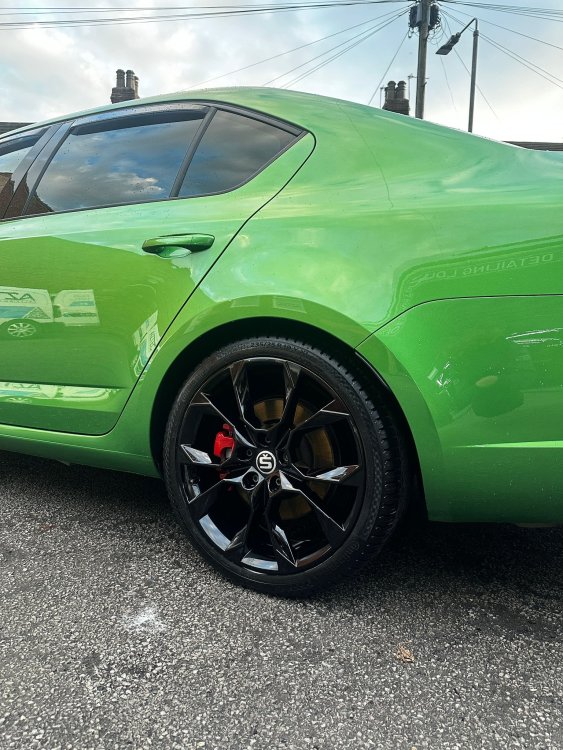
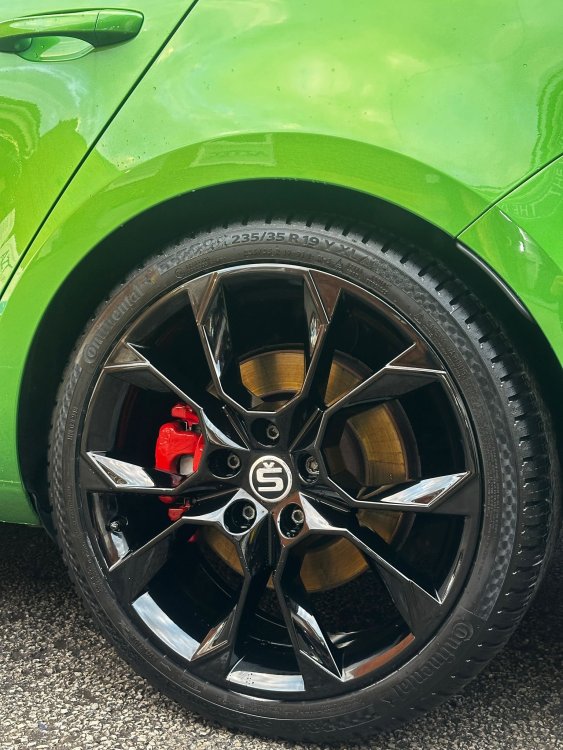
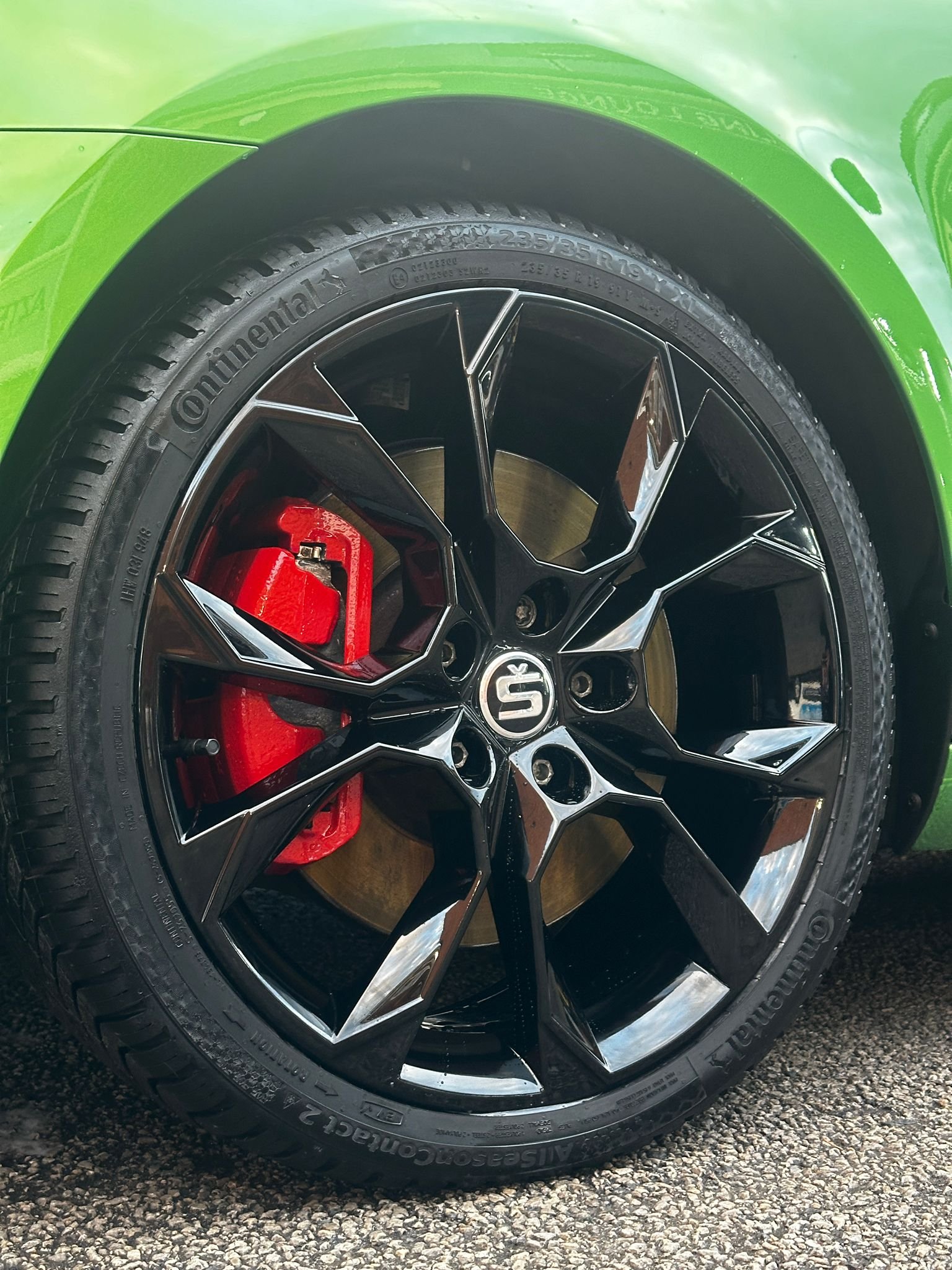
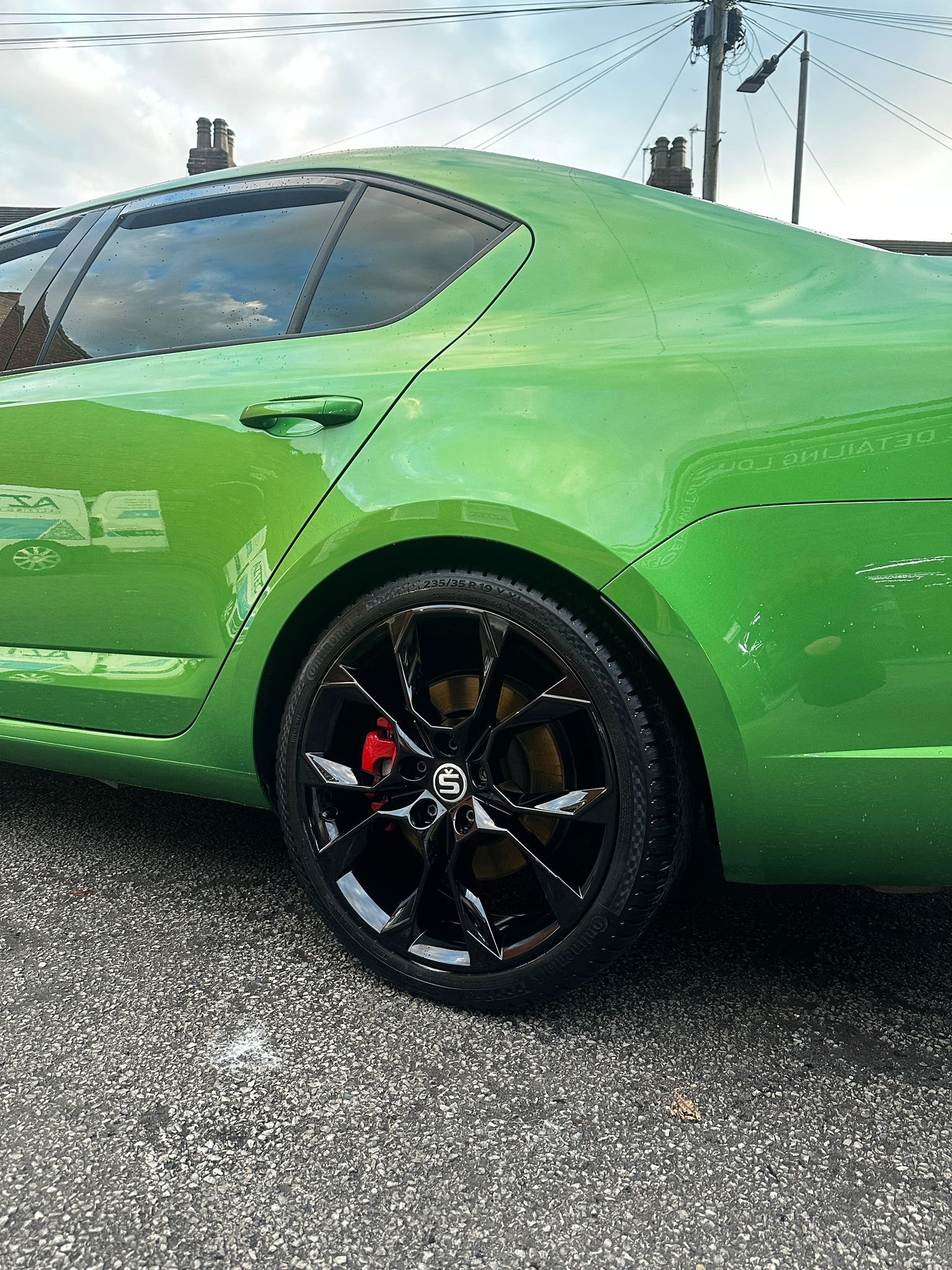
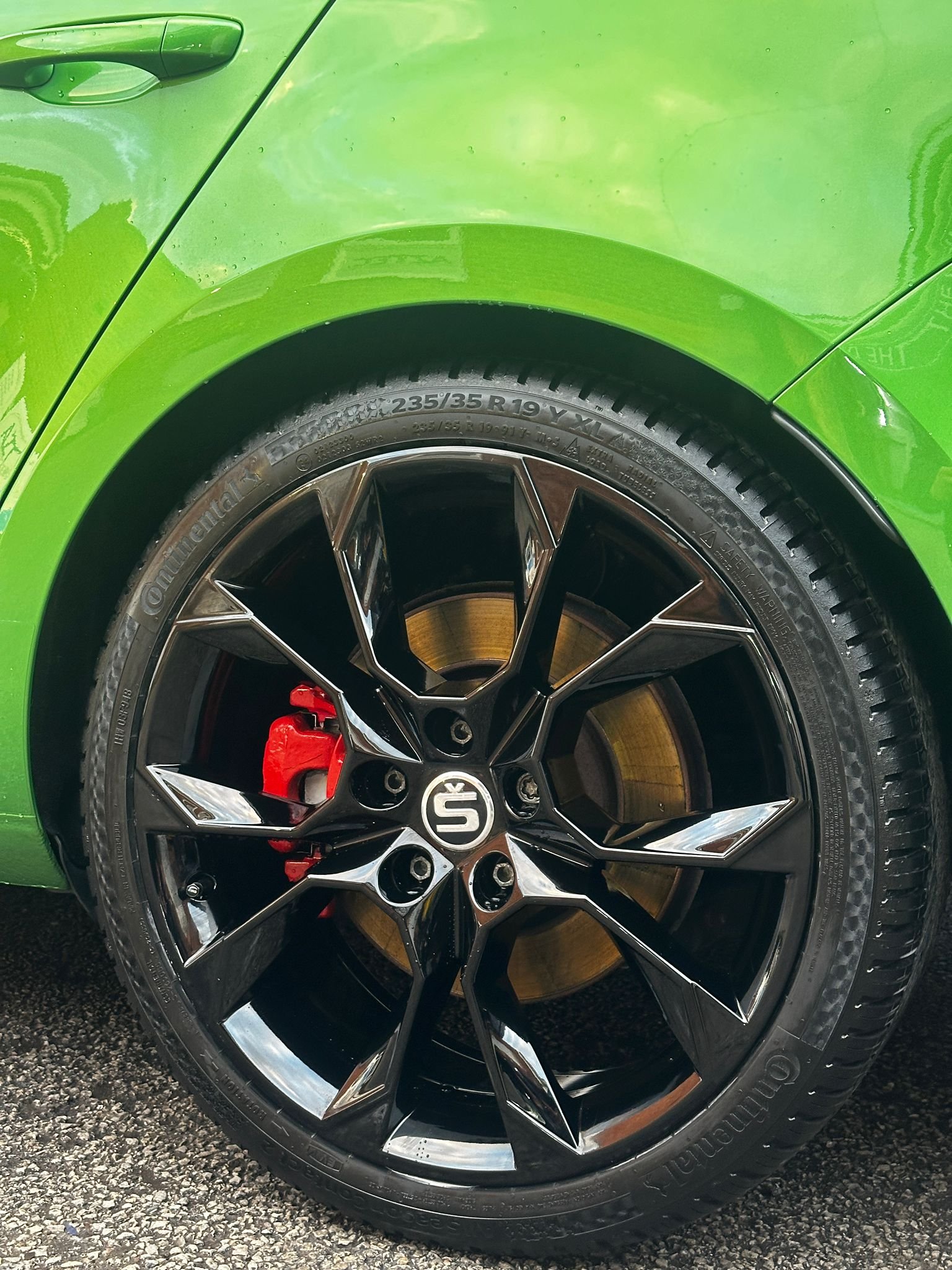
 1 point1 pointGot round to having the wheels refurbished, calipers repainted and new centre caps to match the new car badges. Was told the wheels had been repaired previously, so couldn't have them diamond cut. I've considered a bronze coloured wheel for a long time, but bottled it at the last minute and stuck with black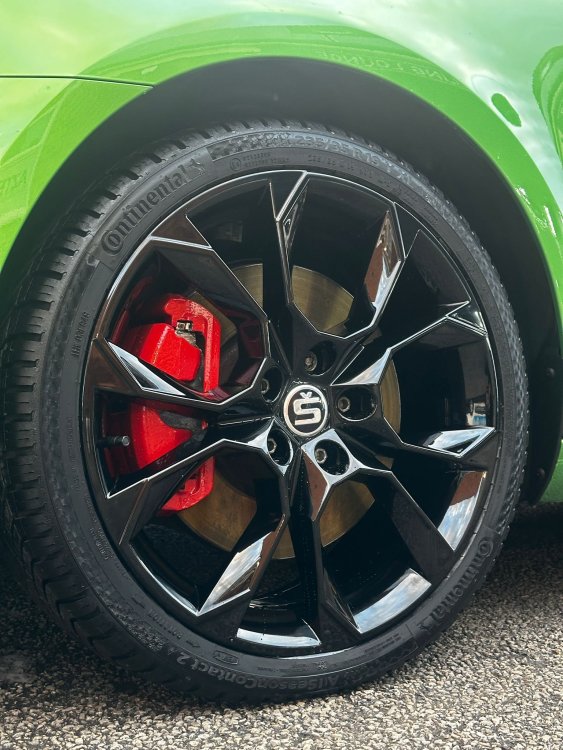
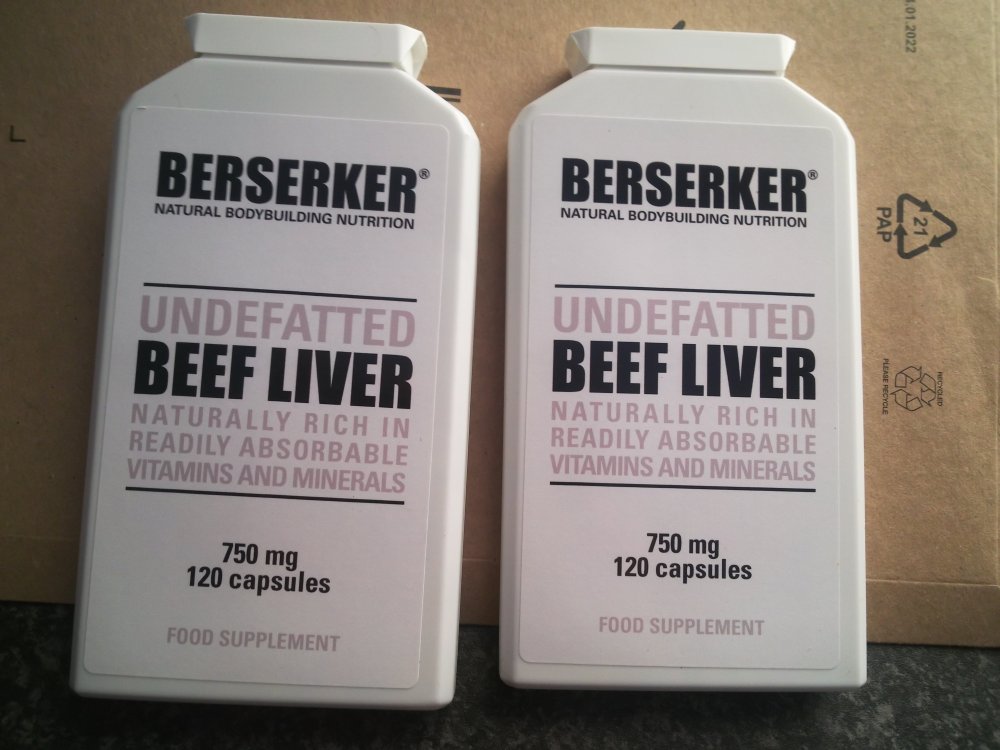
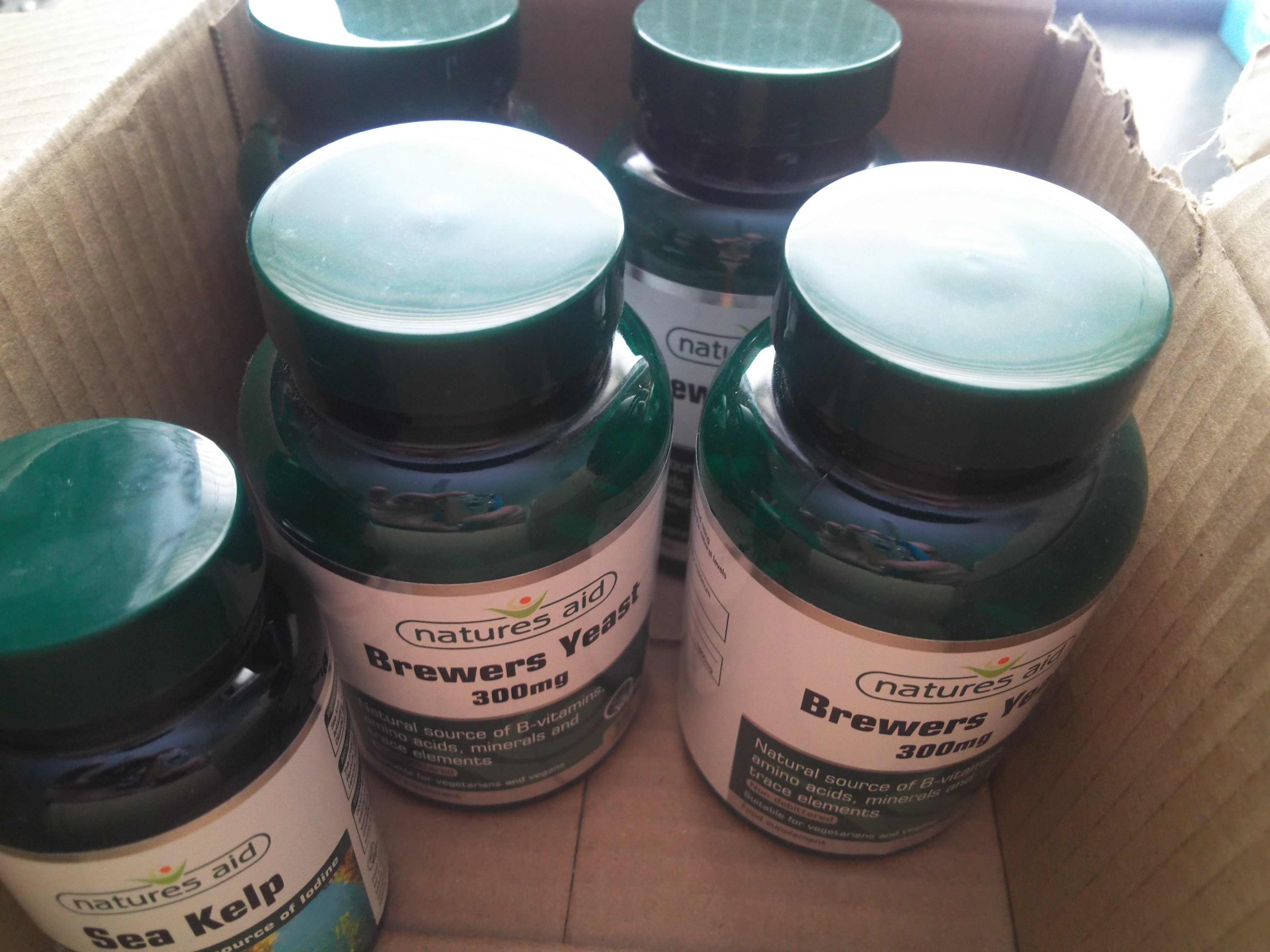
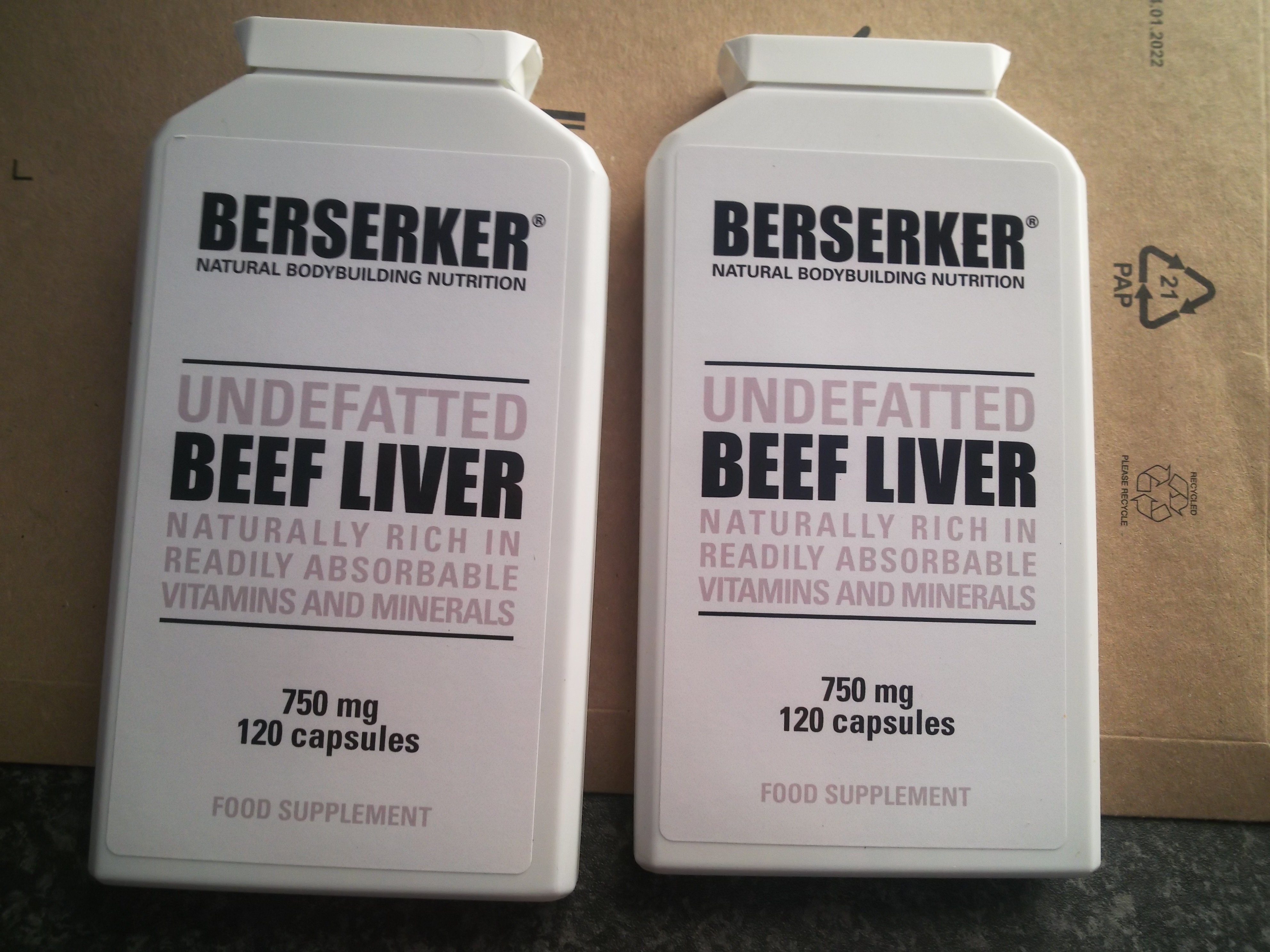
 1 point1 pointPlate value is what they should use 'if it can be read'. The wording in the test manual isn't wonderfully clear though, so the default limit is often mistakenly used. My A4 seems to have been tested to different limits almost in alternation.1 pointAre you able to check your actual plated value - is it 0.8?1 point1 point@apfm141 I looked up the 2023 spec for the Monte Carlo - it says that the light & view pack is standard - this pack includes - High Beam control and Rain sensors (used to operate the automatic wipers)1 point1 pointIf the rim doesn't have the OEM part number cast into it somewhere (usually on the back) then it's a fake. It looks like the number you are looking for is something like 5E0601025AJ HA7, as shown in the chart below. Octavia MK3 parts catalogue 4 5E0601025AA Aluminium rim 7.5Jx18 ET51 C3S GEMINI 5E0601025AA 8Z8 Diamond silver 4 5E0601025AJ Aluminium rim 7.5Jx18 ET51 F18 GEMINI 5E0601025AJ HA7 Anthracite metallic (grey) 4 5E0601025AK Aluminium rim 7.5Jx18 ET51 CL3 GEMINI 5E0601025AK FL8 Black metallic https://www.lllparts.co.uk/catalogs/skoda/CZ/OCT/753/6/601/601080 Notice that the below alloy rim GEMINI isn't a factory rim because its OEM part number doesn't have the format xxx601xxx. Alloy rims with the format xxx071xxx are from the Skoda accessory catalogue, which are about 60% cheaper than from the usual parts catalogue with the xxx601xxx format. They are often the same alloy rim, except for the different OEM part number cast into the back. Skoda do this so that the alloy rims in their accessory catalogue can compete on price with aftermarket alloy rims. 7.5Jx18 ET51 alloy rim GEMINI 5E0071498E HA7 (as shown in the Skoda accessory catalogue) https://eshop.skoda-auto.cz/cs_CZ/alu-kolo-gemini-18-octavia-iii/p/5E0071498E+HA7 Photo of factory alloy rim showing the location of the OEM part number 5E0601025AJ1 point1 pointOur 24 plate has the auto lights but the wipers aren't automatic I don't think, so the lights just go by ambient light level. I don't think it would take much to activate providing the hardware is present for it to work. High beam assist isn't fitted/activated either but it's pretty useless on the roads here so I would be deactivating it anyway.1 point1 pointAre you sure the features you want aren't already fitted? I thought the Monte Carlo was a fairly high spec model. Check - headlight switch has Auto position. AFAIK auto headlights are compulsory in some countries. Check for RLHS sensor mounted behind rear view mirror.1 point1 pointI've always thought the lights, when switched to 'auto' position, turned on in wet conditions because of the low light levels present.1 pointYes I reckon be close to that even at at an independent. I doubt you'd even get a manual clutch and dmf fitted now for 1k... dsg clutch kit is pricier and a bit more setting up. Maybe 1,500 would do it, you'd need to call around...1 point1 pointIf head gasket problems are suspected, best advice as a first check is to test coolant with a combustion products test kit.1 point1 pointNew delivery. Less than £100 a year including the extra Brewers Yeast & Sea Kelp so no more 30 pence a day.
 1 point1 pointLogging in as primary user needs verification by a dealer. Shouldn’t take long, you’ll need your Škoda ID, proof of ownership/purchase, and proof of your ID (driving license should do). That’s all because as primary user you can use the app to locate the vehicle and alert based on speed or location regardless of who is driving it. Hence the privacy considerations come in to play.1 point1 pointIf you had a non-FL (2013-2016) car, you can code out auto-stop-start. I know that this mod was not available on FL (2017-2020) cars though.....1 point1 pointI have been taking Brewers Yeast for 40 years now and Sea Kelp tablets, Cod Liver Oil, Glucosamine Sulphate, for about 30 years and will likely for the rest of my days. The years pass but the products hardly change. I used to take Desiccated Liver Tablets daily but stopped taking that around the time of mad cow disease. She maybe binned them. EDIT. Just ordered 6 months worth of Desiccated Liver tablets as readily available again & i am upping my daily miles on my bike and reducing food intake and hopefully diabetic & blood pressure medication as my weight reduces. I do not eat beef or lamb and only very occasionally i have bacon. Basically i seldom have hot cooked food other than soups or potato based dishes and keep processed foods to a minimum. For me it is about bowel movements being early in the day so never a need while cycling. So i eat fish or chicken (stock for soups from these), eggs, cheese, pasta & rice, honey, fruit and veg, beans, whole meals, grains, nuts, pulses / lentils etc and drink milk, water, decafe tea or coffee. No extra sugars or salt added but sometimes spices. Cheaper bulk buying or subscription getting a discount.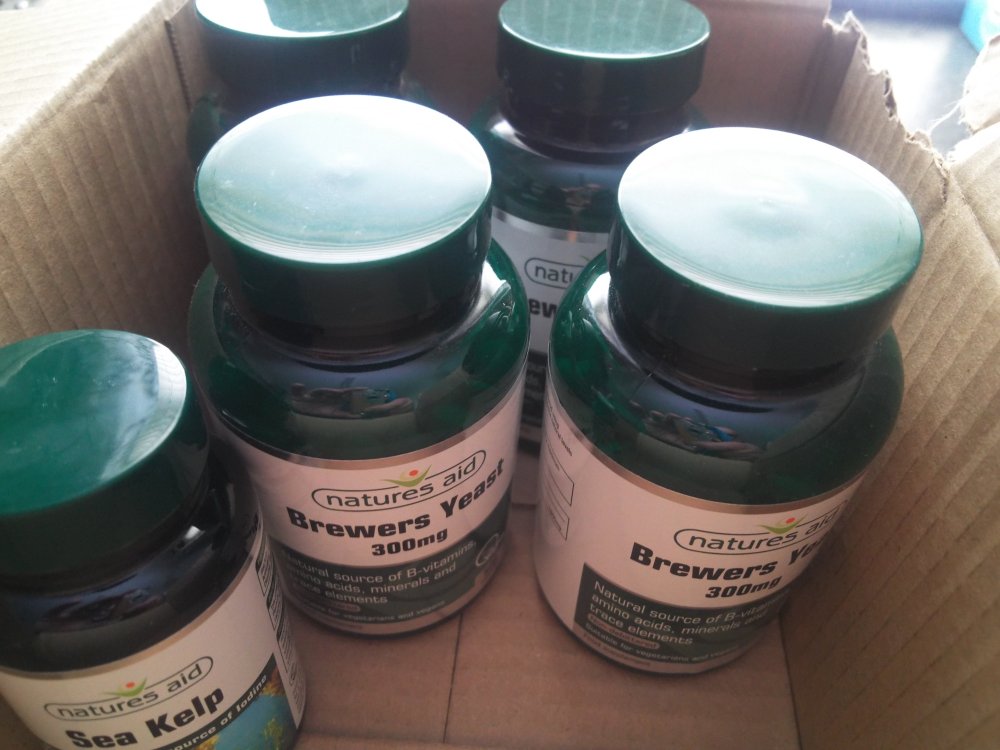
 1 point
.thumb.jpg.f83a46b9b3c0d976b9dbffbb523c9874.jpg)

























Important Information
Welcome to BRISKODA. Please note the following important links Terms of Use. We have a comprehensive Privacy Policy. We have placed cookies on your device to help make this website better. You can adjust your cookie settings, otherwise we'll assume you're okay to continue.