



Leaderboard
-
Lee01
FREEDOM18Points36,947Posts -

Guest_
FREEDOM18Points83,824Posts -
Kenny R
FREEDOM13Points4,781Posts -
MikeTheThinker
FREEDOM8Points8,537Posts




Popular Content
Showing content with the highest reputation on 07/07/24 in all areas
-
5 points5 points3 pointsYes, same steel bodies. The Superb may have more sound deadening, depending on the market or options fitted. It's a lot quieter than my previous mk2 Octavia RS. The 220 shares the same engine as the mk3 Octavia RS, and both r FWD - however the 280/272 use the Golf R engine, and it's AWD. They use the wet DSG, not dry. Only the lower powered engines use the dry 7-DSG.3 points2 pointsI've had 11 DSG's from 2008. Dry Clutch, Wet Clutch, 6 speed, 7 speed, transverse and longitudinal. I've had my fair share of issues with the DQ200 dry clutch but currently have two, a 2017 1.0Tsi Fabia and a 2023 1.5TSi Karoq. The DQ200 has steadily improved over the years and the Karoq's is the best I've had. I have 5 years warranty on this one so see how it goes.2 pointsSounds like the engine wasn't running at the end of the video.. but the "heating up at idle" part went up to 106C. Before the radiator fan turns on, the coolant can reach around 100-105°. Since the oil at this phase cools only by contact with the engine block (no airflow around the oil sump), these temps are IMO not impossible. I tried to find some data about oil temps on stock engines, and found a topic where people reported temps of newer Skodas with 1.0 N/A engines (no oil cooler) - they go up to around 130° on highways, 110 is standard temp at lower cruising speeds. TSIs with heat exchangers usually top around 110C. Someone mentioned old 1.2 three-cylinders, they supposedly went up to 150C, although that's unverified, oil overheating due to heat from the catalytic converter is a documented issue on those engines.2 pointsI don't think this is correct. See here: https://www.themotorombudsman.org/knowledge-base/what-are-a-consumers-legal-rights-when-buying-a-car 'If you are now outside of the first 30 days, the seller has one opportunity only to repair or replace the faulty car. You will not be able to ask for rejection at this stage. This does not apply to cars purchased before 1 October 2015. The Sale of Goods Act allows the seller to either repair or replace the car within a reasonable period of time without causing significant inconvenience. If you are complaining about a fault within the first six months of purchase, it is presumed this fault was there at the time of purchase. The seller will need to prove that this fault was not there at point of sale. If you are complaining about a fault outside of the first six months, you will need to prove that fault was there at point of sale. If the seller is unable to repair the fault because the same fault persists or a new inherent fault has developed, or the replacement car has an inherent fault, then you can ask for your money back or a price reduction (partial refund) if you wish to keep the car. Remember, for rejection outside of the first 30 days, the seller is entitled to deduct the mileage you have added onto the car.' And: https://www.autotrader.co.uk/content/advice/how-does-the-consumer-rights-act-protect-you-when-you-buy-a-car 'The Consumer Rights Act stipulates that dealers will only get one chance to repair or replace the product, so dealers can’t make multiple attempts to fix a problem unless otherwise agreed. If they fail to remedy the fault in one attempt or within a reasonable time period, you’ll be entitled to a full or partial refund. Alternatively, you can ask for another attempt at repairing/ replacing or for financial compensation. The law says, in almost every case, there can be no reductions from any refund given in the first six months. However, motor vehicles are the one exception, where the seller can make a ‘reasonable’ reduction for the amount the car has been used.' Agreed, although it looks like @Whitie needs to allow the seller '..one opportunity only..' to repair or replace it first - 'without causing significant inconvenience'. I think it'd be sensible for Whitie to seek advice from Trading Standards/Consumer Direct at this point Gaz2 points2 pointsThe Manufacturers warranty on a New car covers the DSG including clutches. Best you read the Warranty. If keeping beyond 3 years then extend the Warranty before the car is First Registered for 4 or 5 years. SKODA_Warranty_Terms_July_2023.pdf
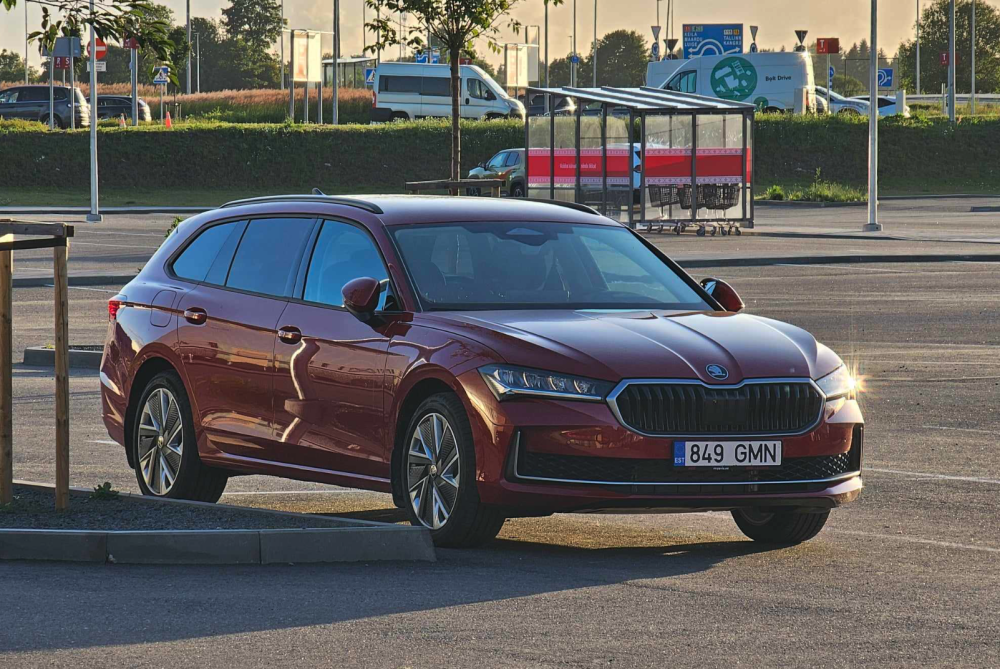
 2 pointsI would be rejecting the car and asking for a refund. Coolant issues are a nightmare on these engines. https://www.moneyhelper.org.uk/en/everyday-money/buying-and-running-a-car/your-rights-if-something-is-wrong-with-your-car2 points2 pointsNew Mk4 Superb owner here, shes quite an upgrade compared to my previous Mk3 superb, but that's mostly due to the spec and less due to the new model. Not to say that's a bad thing, I'm still really happy with the upgrade and would not like to go back to the previous car. The interior is quietness with sound proof glass and canton sound is really good. Also the automatic rear hatch with automatic cover is a hidden blessing, i did not imagine i would actually enjoy using it as much as i do. Part of the older mk3 tech that i did not have before is travel assist, yesterday i drove trough a city whilst using the accelerator pedal once and brake pedal twice. Coming from manual gearbox Mk3 the last one is something i did expect but also did not expect, there is so much less to do. The HUD has integration with android auto, so it does display the waze navigation turn arrow with the distance. Design is still understandably Skoda Superb, front looks great but rear just does not compute for me, old one looked better. Maybe it will grow on me, but for now it's a step back. Because 95% of the cars on the road are gray/silver/etc colour i selected the only other colour available that was not blue - red. It's not as bright as on the eniaq but still looks really good, i love it. Few annoyances that are starting to annoy me: the lack of memory for the simplest of things. I was told that those things are mostly due to the "green" nature of the car or for "safety", but i would still like to turn this BS off. First thing is the speed alert that just keeps coming back after each restart and there is no way to permanently disable the damn thing. Even if i turn off the beeping, it just reverts back to factory setting after i restart the car. Second thing is the seat heater memory, on the Mk3 i was able to enable this setting on the first day of ownership, so i would like to repeat this feature for this car. Since i do a lot of short trips during the winter, i got accustomed to just turning the heated seats and wheel on in november and turning it back off in march. Thirdly is there a way how to remove the "take over the steering" nanny in the travel assist? At around 500m on a flat straight road when that car is positioned correctly by travel assistant, and does not need any steering alterations the car starts annoying me to do some steering input just to make sure I'm still here. But the car did a good job already so what am i supposed to do, develop parkinsons just to keep the wheel twitching enough? Also, where are the front fogs? Not that they were used often, but still...
 2 points2 pointsI had this problem with version 1804 and it was fixed with version 1941. A dealer will have to do the upgrade and it will require at least 1 intermediate upgrade.2 points2 pointsThe melted DPF sensor after a cambelt change is very often issue. It happens because the plastic hoses get brittle from the high temp over time and during the belt service these sensor hoses get broken. Buy a new genuine sensor based on your car’s VIN. It’s very easy to fit if no other parts were damaged - just two screws if I recall correctly. The new sensor also requires software adaption and you’re done.2 pointsPreviously, before delivery of a new skoda, I was able to download the manual as a pdf and read the contents on my computer. I know there is an online html version, but it is very difficult to navigate without using a mouse. My desktop computer is setup for my disability (cerebral palsy) and I can easily navigate a pdf using mainly the keyboard. I can't manage a smart phone and I notice that the Connect Portal website is going to be withdrawn, and the app will be the only way to use those features. Is this a conscious decision by Skoda that one size fits all, because it does not.1 pointThis depends on fan's thermoswitch - stock on a non-ac Felicia is TH470.2, which set quite high, at 97C +2/-3.. Add delay before the hot coolant gets from thermostat to rad output, older switch that can drift from rated temp and you can get close to 110° quite easily. My point was, that temperatures beyond coolant temp aren't rare, so even exchanger can have a positive effect. Which is probably why VW slaps it on almost every engine, except those that needed it the most 😁1 pointHi - I’m using an iPhone 13 mini so not sure for android. I would say 2.4 as that’s the base standard for most hotspoting. it won’t find my phone either so I input the address and password manually onto the wlan settings in the infotainment system.1 pointThat code can be related to a lot of things, best off not just throwing parts and money at it. Try get it diagnosed first1 point1 pointJust go for it, I did after 50 years driving manuals only. Can't say what the Karoq DSG is like to drive, I bought a Kamiq DSG (1ltr) and loving it. I use mine mainly in D mode, it's very smooth and have learned to use Sport mode when I need that quick boost of speed on twisty roads, hills or overtaking. I'm a novice really driving this DSG, only around 3 months in but loving it.1 pointBest to ask the next workshop to hand you back the old clutch parts, just in case the plate is getting contaminated.1 point1 pointI bought my first DSG car, a Seat Ateca (also with the 1.5 TSI engine) in 2022. Since then it has covered 22K miles, in all road conditions and in most cases the DSG gearbox is brilliant. It makes the car very relaxing to drive in stop/start traffic, sport mode enables a very entertaining drive on twisty country roads and the paddle shifts enable me to override the early changing up nature of the gearbox, especially when accelerating away from a local roundabout up a long hill. The only aspect I need to be aware of is the slight hesitancy when pulling away from rest, such as joining traffic on a roundabout. It's never caused a problem.1 point1 pointThere are different versions of the DSG gearbox, to suit different engine power outputs. The 1.5 (and 1.0) petrol use a 7 speed dry clutch version (DQ200). We have a 2015 1.2 TSI Fabia ( 8 years) with the 7 speed dry clutch, a 2023 2.0 TSI Karoq with 7 speed wet clutch (DQ381) which replaced a 2013 2.0 TDI Touran with the 6 speed wet clutch (DQ250) (11 years and 108,000 miles) - still drove as smoothly as when it was new, There are differences in how they behave, predominantly in the way they move off from rest. TDI engines have torque at low revs, in my experience this allows the DSG to engage a clutch without the driver pressing the accelerator, this aids a smooth pull away from rest. The 2.0 TSI has the 7 speed wet clutch DSG and this has sufficient torque at low revs to move off, on level roads, without pressing the accelerator. In other words they will 'creep' like a torque convertor automatic. As others have said the DQ200 7 speed does not engage the clutches so readily at low revs, it does not creep so readily, which may be the reason why getting out of junctions quickly can be difficult sometimes. The footbrake has sensors on it which the DSG software uses to determine what to do. With the footbrake pressed firmly the clutches disengage, stop/start will stop the engine, moving ones foot quickly from footbrake to accelerator will generally lead to the car leaping forward after a delay while the engine is restarted, a gear is engaged (very often 2nd) and the clutches engage, pressing the accelerator further causes the DSG to select first gear before pulling away rapidly. Footbrake pressure can be used to control what the DSG does; Firm press will stop the car, disengage the clutches and stop the engine (if S/S active), reducing the pressure slightly (on the Fabia and Karoq) restarts the engine,, reducing the pressure further causes the clutches to engage (revs drop slightly). Releasing the footbrake then usually results in the car starting to creep, once moving pressing the accelerator as normal. Basically its using footbrake pedal pressure to control what a clutch pedal would on a manual. Thois might sound complicated but it becomes second nature. Hill Hold assist also comes into play. The Fabia does not have Hill Hold so requires accelerator pressure sometimes to pull away on a slope. The Karoq does have HillHold, this has the effect of delaying the release of the brakes when pressure is removed from the footbrake pedal which prevents rolling back. I would advise going for as long a test drive as possible , I don't think you will have any issues with DSG in most driving situations but perform parking maneuvers, reversing especially, stopping and starting on slopes. DSGs all have Sport mode and the ability to manually select gears. I tend to use Sport mode in the Fabia because I fell it creeps more readily and pulls away easier. Although the Karoq has paddle shifters I don'trealy use them and don't use manual mode. FInally a really clever thing with the DSG is the way it uses cruise control. Once cruise control is active the DSG will select whatever gears, higher or lower, it needs to maintain the set speed, and you won't even feel the changes.1 point@Detman please use the forums default language English... even if it's through a web translator.1 pointI wouldn't rely too much on not being too many differences but I found there a link for '2024 Skoda Kamiq Owner’s Manual'. - https://manual-directory.com/manual/2024-skoda-kamiq-owners-manual/ However Skoda UK should help you out with this as it is a duty of theirs to provide accessibility where they can and they certainly could with this. Great idea to read the Owners Manual before you get the car, better still read it when considering the car before buying it if you can.1 point1 point1 pointI would go over it with a fine sandpaper and then 2 or 3 layers of black matt paint.1 point1 pointThis excellent link posted by another member might be useful reading for you. https://www.asrgearboxrepairs.co.uk/dsg-7-speed-gearbox-problems/1 point1 pointWelcome. Others can help hopefully with part advice. Dingbro Paisley will be better at making sure you leave with the correct part rather than ECP.1 point1 pointHi everyone After 600k km octavia 1.9tdi 2006 is transformed in nails, new karoq 1.5tsi 2024 is arrived. I hope for another 600k km.1 point1 pointFWD & AWD are different DSG,s and then behave a bit different, and there is S maybe for jumping briskly in fast moving traffic, or even a 2.0 TSI.1 point1 pointMy 2019 1.5 TSI DSG is my first non-manual car. With this technical soul of mine, I can only be amazed by the smoothness of DSG gear shifting. My only grievance is the inability to jump briskly in a fast moving traffic gap, except by launching, which seems pretty extreme. When normally starting from standstill, DSG engages the clutch far before the revs reach the turbo boost threshold.1 pointJust bought one too. Had a pdi, but both screenwash and check oil light came on. So dealt with the screen wash first. The oil level appeared very low, so went to a garage to buy a litre. Came to recheck before topping up, oil in normal range. Oil temp was 95-100c for rest of journey. Checked after leaving overnight. Appeared to be very low, so followed owner manual, topped up 500ml then rechecked. Ended up putting 1litre in. Will be checking daily for now. Thanks to others who have shared their experiences and knowledge, has been really helpful.1 point1 point1 pointThe parts catalogue entry with diagram is HERE, but I'd also suspect the wiring bundle in the rubber boot that comes into the driver's door from the front wing. It's a known weak spot on Octavias and I presume Fabias where insulation can harden and conductors break.1 pointMine is 32K miles on a 70 plate SEL estate. No issues at all, passed the last service with no suspension issues, sounds very odd to me. Previous owner liked speeding over speed bumps?!?1 point1 pointI can see why that might happen, but this happened all by itself, and was only discovered because I had a reason to take the engine cover off, so they seem to possess the knack of self immolation !1 point1 pointNo, sorry I was referring to Papez's video about the TC6 oil temperature fitting.. In my posts with suggestions I see I made a good few typos but I hope you got what I meant. For engine breathing do double check you've put everything back as it should be and that there are no blockages and check any vacuums (do you have servo brakes).1 point@Kaoli Have you done brim to brim checks on similar or identical trips using the different modes to know what gives the best economy, lowest fuel consumption or are you just assuming. Getting a move on and lifting off the accelerator and going into 2 cylinder mode when no load on the engine might be more economic than ECO and coasting. It all depends on roads / location / traffic etc. Different strokes for different folks.1 point1 point@daviemck2006 I hope you said all that to them. It will be read here anyway. There are people that know nothing about cars and do nothing between Services or MOT,s so unless told they will never know what needs doing or might need doing within the next year. But as long as a person has no hearing or talking disability, as in they have a tongue in their mouth they should talk over advisories and any stuff pointed out to them. Then if they think or find out there was Up-selling or trying to take the p!ss tell the person responsible. That is the Manager, Director or the owner.

 1 pointFinished testing - it is now clear. Thanks all for your help. Does not coast in (normal) Drive. Only when gearbox is in E(co) mode. Gearbox reverts to normal D(rive) mode after parking despite Mode button remaining orange, "ECO" remaining selected when you do press the Mode button, and the appearance of the "ECO" symbol on the display panel from time to time (when 2-cylinder mode is in use). So for best economy I need to use the Mode button to reselect "ECO" mode every time I set off.1 point1 pointI've used Victoria garage a few times now. I bought my previous yeti there at a decent price and they had done absolutely every service item to it before I got it. The first service I got them to do was good, the second one along with an mot I had an issue with them. Their over zealous tester failed it with a broken spring, that was OK,but he proceeded to give it about 8 advisories for corrosion underneath and all discs. This was on a 9 year old low mileage car. I let my normal trusted mot tester look at it and he said he would not have mentioned the slight surface rust on rear axle, trailing arms,springs and fuel tank straps. They weren't any more corroded than any car underneath. This devalued my car by about £1000 when I sold it 6 months later. I then put my current Karoq to them for a service a couple of months ago. It was booked on the Skoda UK site and was quoted at about £285 if I remember correctly. They only charged me £208. That was OK. However,they noticed it was 3 weeks from an mot and tried me to let them test it. I declined as it was booked in at my trustedman 3days later. They then gave me an estimate of what they called advised remedial work, including, but not only, all 4 tyres perished,both front struts leaking oil, all 4 discs corroded, and needing pads and there was another couple of things I can't remember. In total it would have been over £1400 of work without tyres. When in for mot the tester said it was disgusting what they had said. He couldn't fault the tyres or shocks, he did give me advisories on all 4 discs, and said the front pads are low but the rear pads are OK. All wheels gave perfect readings on the rake tester. I have got new discs and pads for the front to fit when I can be arsed. So my opinion of Victoria is their work is good, but they are guilty of trying to create extra workfor themselves. I probably will use them for a service again next year but certainly not for a mot.1 point1 pointChange your tyre supplier then. That is so much male bovine faeces.1 pointI remember only too well spending hours on maintenance of my first cars in the 60's. Decarbonising, changing oil every 3,000 miles, greasing regularly, etc. etc. Thank heavens we have advanced from all that, cars are infinitely better now and continue to improve year by year.1 pointyes it was, with a heat gun you can remove it without problem. It was more tedious the cleaning with alcohol though.1 pointYes, but not that part rather the progression from 30 engine oil to 20w-50 it encouraged. Yes I know I've been in debates about oil beliefs for many years mainly related to my last "classic" but also wider debates about engine that I should or should not use from my very first "classic", most responders were basing their posts on out of date information, I've done the same on other subjects, I often get many things wrong but I've learnt through life so do many other people and some are willing to learn and others are not, ordinary mechanics and engineers tend to be quite stubborn and still to what they were trained or learnt even if that was decades ago (you can extended that to some medical people too. Problem is what works for one person or for one car or engine may not work so well for others with the same model (hopefully you heard this from someone else in one of the vids). The vid(s) cover this, the tests relate to a very tiny number of engines so there are numerous variables anyway in the real world and simulated or indoor tests are not the same as real world use only real time can really tell you and then it's a range of results based on numerous variables, this is part of the reason why the German and VW engineers keep changing their recommendations and specifications and numbers on the oils and coolant, along with continuous "improvements" of course. 😁 You have others that know a lot more about this here than I but again it suggests crankcase pressure to me. Have you tried removing the oil filler cap whilst the engine is running at idle to see if that changes the RPM? You could also perhaps try running at just about 'MIN' on the engine dipstick and only top up to that level to regularly keep to that level and see if that makes any difference at all, trying the removing oil filler cap at that level too. Different engine I know, but you could also try putting a rubber glove over the oil filler neck with the cap removed and engine running at various RPM, see if it inflates and how much, this was a good display for an A-series engine owner that had had the car and engine for decades and was trying to get to the bottom of why some A-series Spridgets blue -smoked sometimes when other Spridgets never did. Only out of curiosity do you mean you don't like oil only coolers?1 pointThe car you're looking at is about half the mileage of my estate (44k miles) on which the suspension is fine. I tend to do long journeys pretty well loaded up (two people and a full boot for the vast majority of that mileage). I have no concerns in that respect. As you're looking at a 2020 FE, insist the dealer does all the software updates available.1 point1 pointThey skimp on the soundproofing on the Octavia no matter the model. You need to go superb if you want quiet. If you follow guides above you will be surprised how little there is. Mine is a lease car so all I can do is turn the stereo up1 pointMy Karoq never coasts in Drive. Have to be in Eco and showing E I realise this is not the same for all vehicles, drivetrains or years.1 pointWell, those are helpfully labelled "mit silikat".1 pointIn terms of fuel consumption, as posters have put above, it all depends on your driving style. The turbocharger is designed to keep you pushing well between 2200 and 3500 rpm, they don't generally give much above that. In standard spec, your 2016 car can push out 180bhp. VAG TDI engines do not respond well to tuning (you might get an extra 20-30bhp without major upgrades). In UK MPG (and depending on temperature, way you drive and distance covered), you should get 42-55mpg. The longer/faster you drive it, the better. Make sure you allow the car to do full-regens (keep the DPF clear) and my personal recommendation (although controversial) is that some Cetane improver is put into the fuel system to improve combustion or use some super diesel occasionally to improve performance and keep the engine running well. One thing to note; don't be afraid to really push the car. TDI engines (once warm) go like stink. Make sure you regularly change the oil (vw507 grade) - 5W30 or 0W30 as it is now and take the vehicle on some long and fast runs (100kms plus) to keep it happy.1 point1 pointWell, I’m pleased to report that the problem has disappeared. Have just filled up at a local co-op. Can’t tell how relieved and happy my wife and I are. We were having visions of it spoiling our holiday but we need worry no more. Might actually get a full night’s sleep tonight. Thank you everybody for your suggestions. It would be nice to know the cause in case it happens in the future to me or anyone else for that matter but I suspect we’ll never get to the bottom of this mystery.1 pointThere are these updates, but not sure if the higher number will apply to your system. MEN3_EU_SK370_P0113P_0469 MEN3_EU_SK370_P2135P_0742 MEN3_EU_SK370_P1185L_1760 MEN3_EU_SK370_P2345L_1790 The only one I would suggest is 0742 to try (it won't load if it's not compatible) If it doesn't load, then 0469 is your current version and the end of the line.1 point1 pointI did a customers 87 Audi Coupe GT with £2k worth of Dynamatt and liner, the car was 20-mm lower after...😁1 point
















Important Information
Welcome to BRISKODA. Please note the following important links Terms of Use. We have a comprehensive Privacy Policy. We have placed cookies on your device to help make this website better. You can adjust your cookie settings, otherwise we'll assume you're okay to continue.