Leaderboard
-
Lady Elanore
FREEDOM8Points25,083Posts -
skomaz
FREEDOM6Points11,413Posts -

CrazySkoda
FREEDOMLite5Points38Posts -
Paul52
FREEDOM5Points819Posts




Popular Content
Showing content with the highest reputation on 30/03/26 in all areas
-
2 pointsYou all lost me when you started talking about . . . . gambling and loose women.2 points
-
2 pointsTry a DIY load test, first ensure battery is showing a reasonably high SOC, with the multimeter probes on the battery terminals get someone to crank the engine on the starter and note what the voltage drops to.2 points
-
2 pointsIt's been niggling at me why my battery suddenly gave up the ghost Sunday morning. I tried the thing of starting the car this morning (started just like it usually does) with 14.0 volts showing on my little meter, then turned on the headlights, the heated rear window, the heated windscreen and the fan up on high. The voltage dropped to about 13.5 volts and then went up a couple of points. I've been out in the car, my usual two 5 mile runs, and its started without problems each time. So what could have caused the problem? Once in a while I'll forget to unplug the sat-nav but didn't seem likely. Then I thought about my regular journey - to walk the dog in the local woods. Usually it is a reliable 5 miles journey each way but over the last couple of months the local authority has spent a small fortune reducing carriageway widths, tightening corners and widening footways on an important local staggered cross roads to create a wonderful cycle route where you seldom see a cyclist and this has meant traffic signal on all arms with long delays. It usually has been taking two and sometimes three complete cycles to get through the junction. With very long inter-green times I have been switching off my engine whilst waiting, moving forward and then switching off again. I'm now thinking with a four and a bit year old battery these repeated starts a couple of times a day over weeks may have drained the battery more than the driving sections were able to replace. Basically I've been using stop/start without the technology and bigger battery that this needs. Electrical engineering was my nightmare when I trained to be a civil engineer (best advice from the relevant professor was "You will be young civil engineers. When you go out on site and there is an electrical problem CALL A <expletive> ELECTRICIAN it will save your employer having to scrape you off the wall, what's left of you". I digress) so I don't know whether that's right or if I'm even on the right track but I think we can say I won't be switching the engine off at those road works again. Lesson learnt.2 points
-
🤫 My wife already thinks it’s strange enough that I talk to and meet up with strange men on the internet without that sort of rumour too!2 points
-
I reckon you’re leaving breadcrumbs as to where you’re leaving bodies on those roads 😂2 points
-
If it’s a good way to save money if you can’t use your credit card 😁2 points
-
2 points"You might start spending it more on gambling and loose women". Nigel, I thought we had agreed we weren't going to mention this on the forum? There are some loose lips here and we really don't want our other halves to question whether on Friday nights we are really at bible study together. I had a hard time convincing my wife that it's normal practice to use Pinot Noir as a stand in for Communion wine and that donations to BetFred on the credit card are charitable donations to help Betty and Frederick with their living costs; foreign holidays, maintaining the Mercedes etc. (Hopefully I'm not offending anyone - I still recall Bob's exit from the forum some years back for his misunderstanding of political correctness. Although on this forum the M word might be the problem).2 points
-
1 pointI just wanted to come on here and offer some praise to the Scala! As you can probably guess by my username, I drive a lightly modified vRS 245. If I’m honest, the Scala isn’t really my sort of car. However, when my Octavia was in for a service last week, I was interested to find the courtesy car was a 2026 Skoda Scala! It was a 6-speed car, with what I think was a 1.0 (although it felt like a 1.5!). I admit, I thought it was a Fabia at first, and didn’t find out it was a Scala until I opened the boot. I really, really liked it. Okay, sure, the clutch pedal felt like it wasn’t attached to the car, I couldn’t get the driving position right, I didn’t like how the steering wheel looked and I couldn’t stand the key fob with a physical key I kept flipping open to insert into a KESSY button. Aside from that though, I loved it! The steering wheel, while visually gawping, was very nice to use. I particularly like the one in my vRS, and found that the button placement in the Scala was even better. The digi dash offered plenty of options (far greater than the significantly more expensive 2024 M Sport 1 Series we have at home). The gearbox felt really tight, solid and engaging - pairing really well with what I thought was a 1.5 until I checked the build sheet in the glove box. I didn’t like how the clutch had no feedback, but that might have been a combination of the car having 1900 miles on it, and me not having driven a manual in a few months. That particular car was an absolute bog standard base model with one button for disabling stop-start. It did have a rear camera (which my vRS doesn’t), and I found everything inside a little bit nicer than the similarly priced Ibiza FR I normally drive. It sounded better, and I appreciated small features such as the adjustable seatbelt height, armrest and physical light switch. I’ve driven a lot of newer VAG cars (Mk4 Octavia, Mk8 Golf, Mk8.5 Golf, 2024 Polo, 2024 Leon FR, 2024 SEAT Arona, 2025 A3, among others) and almost all of them have been terrible. I thought they were overpriced and awful to drive (as both a keen driver and just a random person) with scarily light steering, no control feedback and dismal performance. I was really pleased to see that the Scala seems to have broken that trend.1 point
-
1 pointJust sold my beloved Octavia III And bought a new Škoda Superb Wagon 2.0 TDI Style. Love it1 point
-
1 pointHi and welcome to Briskoda @Zapan I assume you've already found the Superb forums. Good to hear you're enjoying your new Superb wagon 👍1 point
-
1 pointPaul you're over thinking it and possibly over complicating it (which would make you more employable with German car marques). Paul with your 14v and engine running you're really more measuring the alternator rather than the battery. Whilst the battery and alternator work as a pair, if one's weak it puts more strain on the other, as shown by the figures from others the computer system for charging and battery monitoring which will throw up various figures in various circumstances. As has been put a few engine starts does very little to a battery if it and the charging system are in reasonably condition and in fact as I've put the battery has to be very low indeed to have any difficulty starting the engine and you will hear this difficulty in starting. First thing to do is, as your preference, to fully and properly recharge your existing battery or buy and fit a new battery (and have it 'coded' in) and then go from there, have a solid foundation and start datum point. I would always fully charge the new battery to 100% before fitting it to the car - to give best solid foundation and start datum point. If I had your car and battery I would start by fully and properly recharging your existing battery, in the manner mentioned before in this thread, and go from there - you may want to chose differently, your car, your money, time and hassle (very easy clean hands work).1 point
-
1 pointThe car's system is set to charge the battery to about 80% (it might be less but I've never seen a definite figure) leaving 20% headroom for regenerative charging for VW's lip-service to emissions, whether the car gets much of that 20% is a different matter. Which is why I always suggest using an appropriate battery charger maintainer following the instructions in the car's 'Owner's Manual' and instructions for the charger maintainer and (preventatively rather than reactionary) fully recharging the battery (as slowly as possible/reasonable) to 100% (not the car's about 80%). The battery tester may be upset with the VW programming, you could disconnect the battery and test it independent of the car or just take its figures with a shovel of salt. It depends on how you are using your battery monitor to get your morning reading but 12.6v would be very good for a VW stop/start car. Just plugging in a scan tool and turning the ignition on will probably give a 0.3+V drop to the battery reading. Up to you but I would suggest putting the consumerist big boys sexy tools like the battery tester to one side (and forget the OBDEleven for this) and fully 100% recharging the battery as above, and then as many hours as possible after finishing fully recharging put multimeter probes directly on to the battery terminal posts and take a reading (engine not running), note it. Then use the car for a few days and take another reading in the same manner as before. Remember the car will want to drop the battery charge level to about 80% and that bonnet up the car's systems might give a drop of 0.2-0.3v or possibly more on a 2022 car. Use a multimeter, forget the battery tester (and OBDEleven) and report back to see about, if wanted or required, doing simple drop/strain tests on the battery with just the use of the multimeter and glamorous assistant to start the engine a number of times in quickish succession. Am I right in thinking your Octavia vRS is diesel with DSG? Let us know how you get on.1 point
-
1 pointIf you are on your second battery after 4 years there's really something wrong with your car, alternator or battery management module I would suggest.... Unless you are driving only a few miles a week the battery charge should be maintained automatically by the BMS while driving. Are you connecting a charger often and charging it manually ?1 point
-
1 pointYes, mine always charges at 14.5 or even higher on overrun, it will/can then drop to 13.5ish but I've never seen as low as 12.8V on the DVM, I've noticed of late though that if the ambient falls to say 5.5/5.0C, that it will charge continuously at ~ 14.5V but once the ambient rises to 6C, will return to its normal charging pattern.1 point
-
It's kind of odd how this developed. OK so it started with me having a bit of a moan about lack of choice and how there is no Skoda that meets my needs, or more accurately wants, as well as what was available 10 years ago. One day I might end up driving a DSG equipped car - more likely through lack of choice than as an active choice, but you can never tell. Many of the folk that contributed to prove the superiority of DSG / backwardness and general misguidedness of wanting a manual, first worked out the thought process behind why folk might want to stick with the older technology, before destroying the logic behind that thought, the thing is they got that first step wrong. Beyond saying 'still trusted to change gear myself' I didn't fully explain why I would want a manual or put forward any argument for manual superiority over DSG as a car or a driver, and I'm not going to, much as it could be fun to pick fault in pro DSG arguments - what would be the point, the end of the manual box is probably only a matter of when rather than if. I'd just like a bit more choice in the meantime, that's it, that's all, nothing else, no hating on DSGs or DSG drivers. ..... OK just one more thing, I'm genuinely assuming that the people on here driving a DSG are doing this as a result of a considered choice, I don't think that is the case for the majority of drivers. Even 10 years ago, the car salesman who didn't even bother trying to upsell me into an SEL or VRS still took the time to try and persuade me of the merits of DSG, now DSG is for most the default and soon to be only choice. Head down and preparing for incoming fire.1 point
-
1 pointSorry typo - September 2021. Fat fingers, bad eyesight and declining mental abilities not ideal for existing in the modern world. But not a bad description of a lot of us Yeti owners 🙂. (See, it's only us old 'uns that think the original smiley face is still cool. Or use the word cool).1 point
-
I have done this by a Lot of Cars without Problems. OCU Update when it was needed1 point
-
1 point"When you have eliminated the impossible, whatever remains, however improbable, must be the truth" ~ Sherlock Holmes/ Sir Arthur Conan Doyle1 point
-
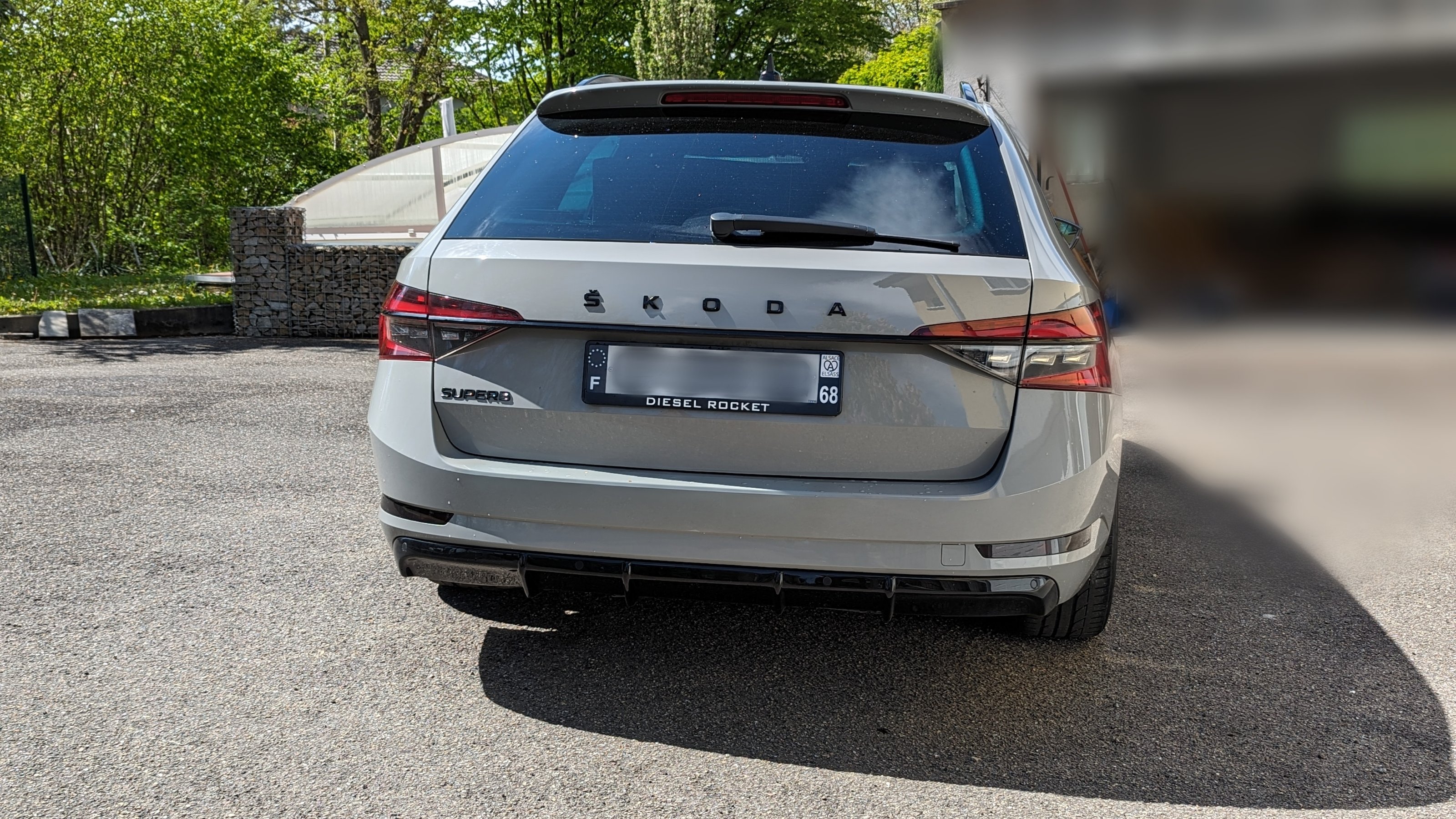
Ordered some more parts for dechrome today to go with the AliExpress badges. Found some on ebay with free delivery and much more reasonably priced than Kopacek, albeit not OEM parts, and supposedly the last in stock so I just had to order them! Badges https://www.aliexpress.com/item/1005009424974993.html?spm=a2g0o.order_list.order_list_main.23.78821802Xh8hCx https://www.aliexpress.com/item/1005003980570506.html?spm=a2g0o.order_list.order_list_main.29.78821802Xh8hCx Grill Surround https://www.ebay.co.uk/itm/177879476697 Lower Grill Strip https://www.ebay.co.uk/itm/157695824834 https://www.ebay.co.uk/itm/177879048390 Going to run with the vertical chrome stripes for now as per @JR RS. Looking to get roof rails and window chrome wrapped gloss black, and possibly the roof panel. May get vertical lines in grill wrapped too if it doesn't look right. Also ordered second hand drivers sunvisor to replace my one with a cracked mirror, and new Brembo rear discs and pads.1 point
-
1 pointJohn as I've said before don't put all your eggs in the basket of scanner, or battery testers, and simple maths (not that I can do even very simple maths now). It's a bit like someone who makes a cake and accurately measures all the ingredients out exact yet their cake isn't as good as someone who goes by their experience for the amount of ingredients they use rather than accurately or even measuring. You have enough experience to know what and when the battery might need, perhaps a quick check with multimeter probes on the battery terminals. I'm very much with Warrior193's idea that leaving the battery charging all to the car's charging system, rather than using an appropriate charger maintainer to get to 100%, shortens the useful service life of the battery. Whilst I don't like to change a battery prematurely it's always best to change it before it really "dies" on you and can't be recovered. I changed the EFB battery on my wife's 2015 Fabia prematurely just to eliminate any possibility of her having any hassle from it as that would have meant me having to get involved with the car (yeah, that didn't last).1 point
-
Take a look at the pinned topic above or click here https://www.briskoda.net/forums/topic/266114-18tsi-and-20tsi-engine-failures/ I would go with the 1.4 but, perhaps like all engines, it has had a few reports.1 point
-
1 pointI call it a total BS and fraud. But even if that somehow was the case, they have to do work. It is not your problem what risks or extra works are associated with what they must do. They have to figure it with manufacturer, not the customer.1 point
-
1 point
-
1 pointWe have a 25 plate Sportsline 1.5. On comfort setting the ride is OK on the 40 profiles, on normal definately too harsh. Not tried the sports mode. The low profile tyres are very easy to kerb the wheels. I will fit AllSeason tyres next but that may be 2 years away. Allseason tyres transformed the ride for the better on our Fiesta and previous Outlander, grip and turn-in were also noticably better. Just had to have replaced a cracked windscreen, stone chip, 5 weeks to get the heated screen imported. I do not find the wire distracting my wife's fiesta is much worse. My wife likes the sunroof for interor brightness and viewing (keen bird watcher!) but now I know the complications of having one I would prefer not to have it, I have never opened it, though I should to check for debris.1 point
-
1 pointA secondary battery (E.g L.A, NiCad, LiPo etc ) is one that can be recharged by reversing the chemical process - as opposed to a Primary battery ('dry' cell) where the process is non-reversable.1 point
-
1 pointHad my screen replaced because it kept rebooting after OTA update. Running 1989 and all good but replaced under warranty on 2023 Mk41 point
-
Not sure if this has been mentioned already, but different height springs also have different compression rates. Lowering springs tend to have a higher spring/compression rate (stiffer), while longer travelling springs tend to be... longer travelling... and thus are much softer. This may be desired if you are off-roading the car, but I'm not sure it will be the effect you want on the road. Yes, you can of course stick on higher springs that are thicker, or a narrower coil, but this will defeat the object. Similarly, as you can maybe imagine, lowering springs (being stiffer) often shorten the life of stock dampers, as said shocks are not designed to work with higher compression springs. I would take an educated guess that if this occurs with the lesser work required by lowering springs, then the increased workload demanded by higher travel, softer springs, will kill the shocks even faster. It might be worth first looking at a larger sidewall. I doubt you'll get much change out of £1600 for an aftermarket spring/shock setup, unless you do it yourself).1 point
-
1 pointThank you for your message. I am certainly going to make the most of the opportunity. Your advice is greatly appreciated. 😏1 point
-
Not sure if you’ve done this yet but I saw this posted in another part of the forum and thought it might be useful for you.1 point
-
1 pointEven though i follow your logic, this would be a ineffective way of investigating whether you have a leak or not. Pressurizing the system will get you a yes/no answer allot faster without any mess. Cooling system pressure tester Apologies if my forwardness in answering feels harsh. I am a pragmatist at heart. I cannot look into your wallet nor do i know your facilities or capabilities however, i think having this set will expedite this investigation allot. Looking forward to your results.1 point
-
I thought you mind find that. Safer for the brake assist system with it all taped up anyway though. 🙂 There could be a few other reasons for hesitation, but ignition system is a good thing to rule out relatively cheaply.1 point
-
Possibly it was serviced at an independent garage with no access to electronic service records - the inspection should give some indication if servicing has been neglected.1 point
-
There are scenarios where even a very good automatic isn't ideal, although it's less about it being "worse" and more about it being less predictable — and that's where control comes in. I'm not trying to say (modern) automatics are bad — quite the opposite. In 99% of driving conditions most people encounter, they're faster, smoother, and often more efficient. But as @Aspman mentioned, it also depends on the specific implementation, so results can vary. On a personal note — as I mentioned at the start of this thread — I would have gone with an automatic, but the price and added complexity of DSG and mHEV deterred me from it. What can I say? Aversion to complexity is a professional deformation, being an engineer 😄 Driving uphill on snow or other low-traction surfaces is a good example of when automatics struggle. Systems can sometimes hesitate or "hunt" between gears if the available traction confuses the shift logic—especially at low speeds. Modern gearboxes are much better than they used to be, but they still rely on programmed responses rather than true understanding of the situation. That's essentially why different driving modes exist — they are in essence modern, more sophisticated versions of the traditional "low gear" options automatics have. The gearbox and ECU don't actually know whether you're on snow, gravel, or dry asphalt—they infer it from inputs like wheel slip, throttle position, ambient temperature, maybe even navigation data. Modes like snow or off-road then adjust throttle response, shift points, and traction control behaviour to better match expected conditions. So that "extra pedal" and gear lever still give you something no automatic fully replicates: direct, guaranteed control. If conditions change, you can react immediately by selecting the gear you want, and that's it—no interpretation layer in between. With an automatic, that adjustment can be a bit more indirect. Depending on the system, you might need to switch modes or rely on the gearbox logic to respond, and that can take an extra moment or two. Some cars make this very quick with paddles or dedicated buttons, others less so—but in all cases, the system is still interpreting your input rather than executing a purely mechanical choice. If you want to hold a specific gear, in a manual you simply do it—no second-guessing. (Even though some automatics allow manual selection, they may still override it in certain situations.) Automatics may shift faster and often more efficiently, but they aren't fully aware of the environment—they infer it. In edge cases, that difference can matter, especially when you're deliberately operating near the limits of traction. But as you wrote @Evolution13, in most conditions that additional control means nothing.1 point
-
1 pointPart number is 5Q0 959 760 I believe but you can stick your head under the seat and read the current one off the label, or scan with vcds/obd11 etc to find info. Version A cannot be reflashed with updated software. I’m not sure if there is a revision version that would have new software by default but the newest seems to be 5Q0 959 760F My understanding is it’s a dealer fit as a parameterisation file has to be written for it to the car specifically. It sure if an independent VAG could do it with ODIS?! I’m interested in the answer as at some point I need to do the same.1 point
-
1 pointThe front sensors are all working as they should. The rear ones just show up on the screen as exclamation marks with the message 'clean parking sensors’. As none of the rear ones are working, I’m suspicious of the rear wiring loom connector which I will check.1 point
-
1 pointWhen you do get it started, check the battery voltage (engine running) should be ~ 14V, certainly > than say 13.5V while idling.1 point
-
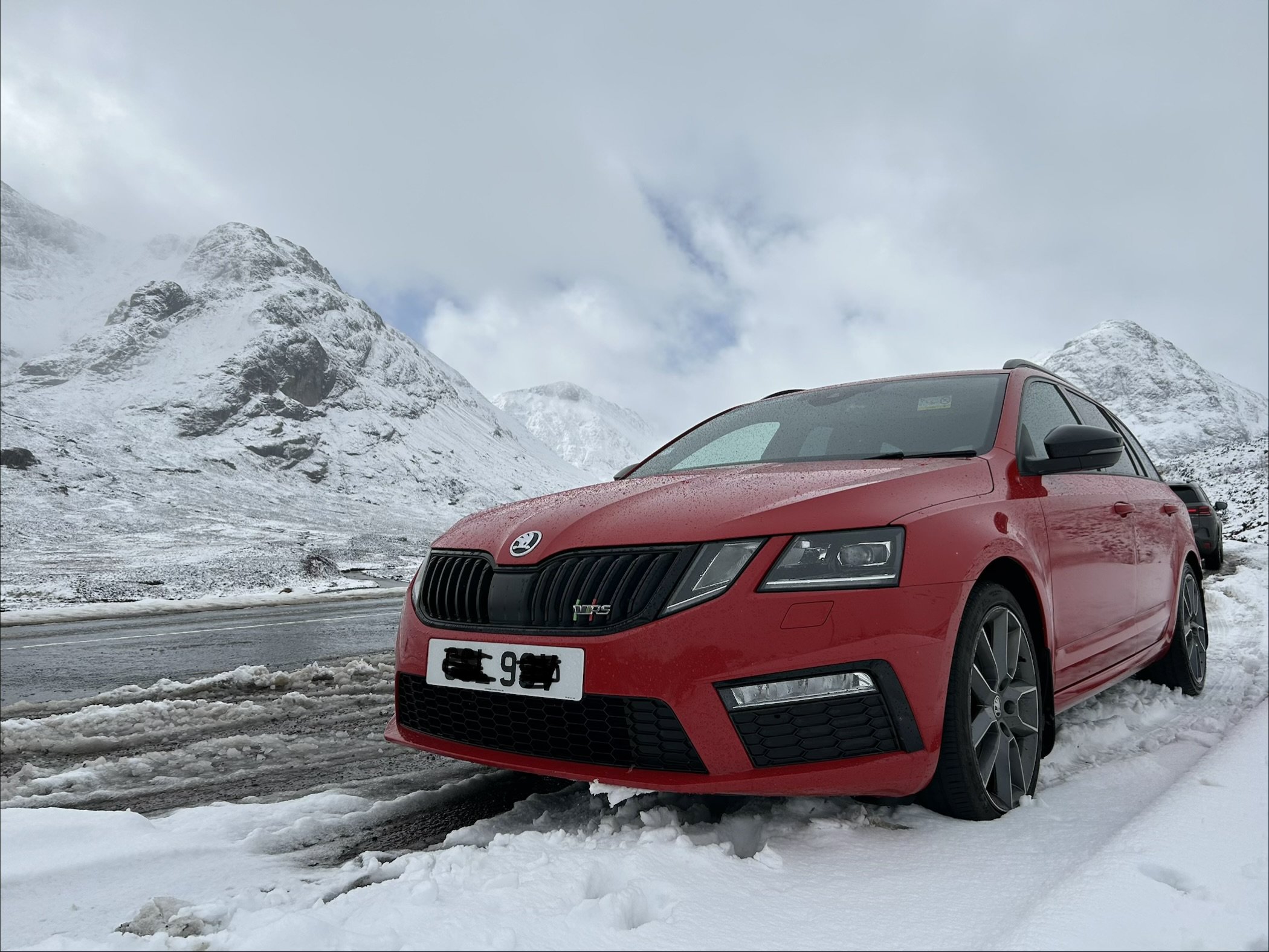
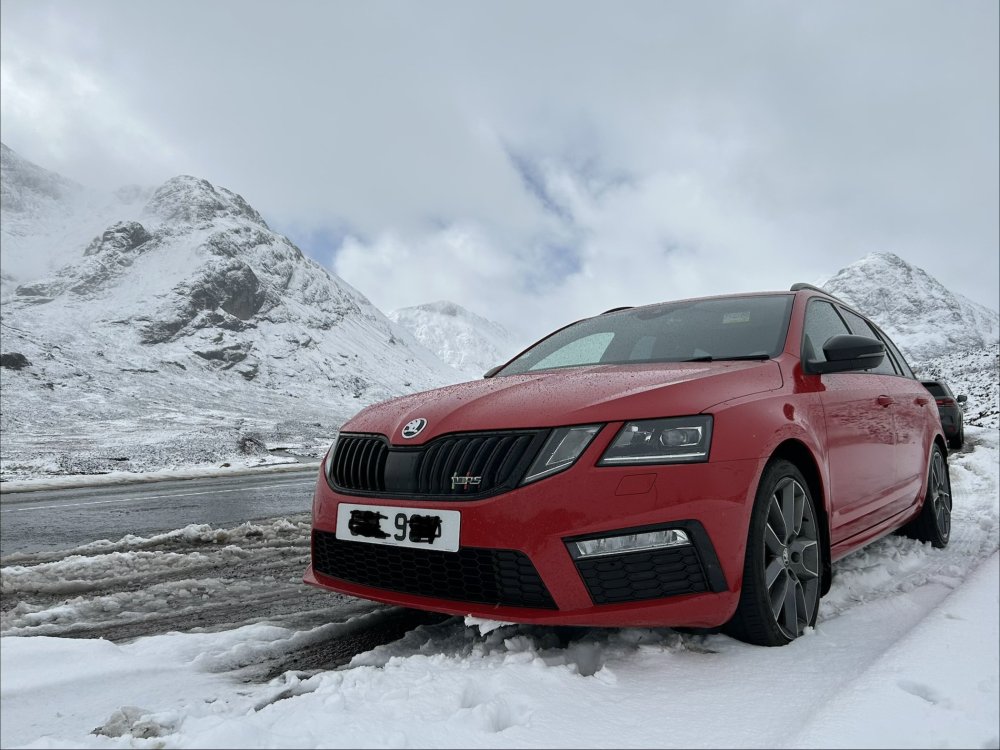
1 pointThe VRS in Glencoe on Wednesday. Got away with not having the winter wheels/tyres on 😵💫
 1 point
 -
1 pointEqually we never had an issue with our 2018 Karoq, manual 1.5, which had been faultless, part exchanged it on Friday for a new DSG 1.5, as delighted with that combo on our Kamiq. Hoping our new Karoq will be just as reliable.1 point
-
1 pointJust sounds like a high mileage driver. I think it’s mileage or time. Maybe they’ve overlooked that and just gone on time. It great but if they’re high miles driven well on the motorway then no biggy. Weird they clearly drive high miles but didn’t have the servicing in April of each year. Anyway seems like most things have been done if not on the button. If it runs well and seems in good condition then go for it. Don’t pay any attention to it looking clean; they’ll all be like that. What options does it have? Is it a Sportline or L&K…?1 point
-
I've driven autos since a Honda Accord Aerodeck in 1990 & would never choose a manual again. I was living in London at the time & the sheer number of gear changes just commuting to the office was ridiculous. I do do chuckle a little, in a good natured way, at claims that a manual box is essential to be "in control". I don't know if there are any statistics available but I'd be surprised if the vast majority of cars found upside down, wrapped around a lamp post or in a ditch weren't manuals. Might just be me, but I found the relaxed experience of moving to auto calmed my driving significantly. To the point where I wonder if they should be compulsory for new drivers? Final thought, F1 cars have managed without a clutch for 25 years & some teams ran a system that was fully automatic, until paddle shift was mandated. I wonder how much faster they would go if the driver was "in control" with a good old manual? 😉1 point
-
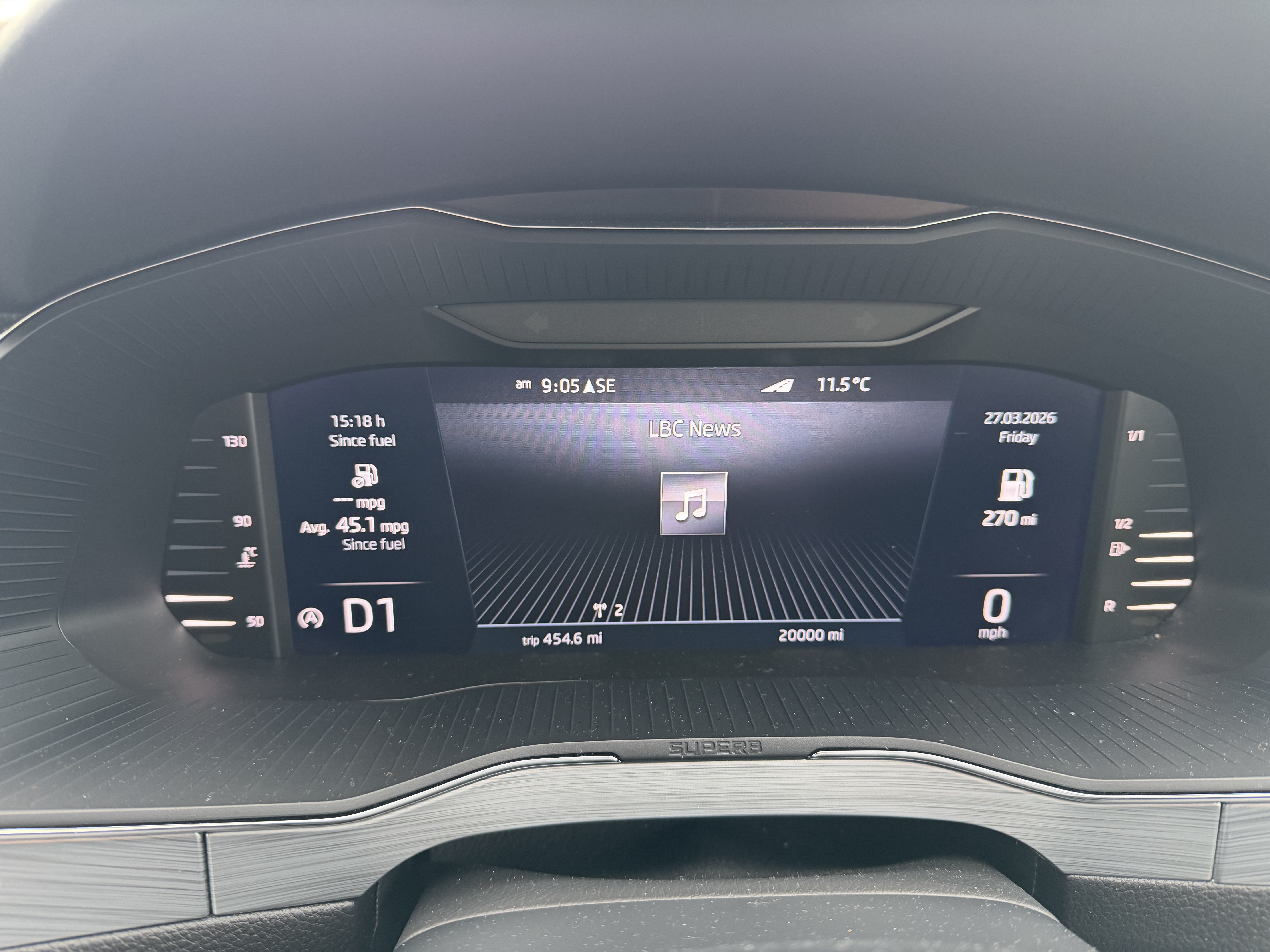
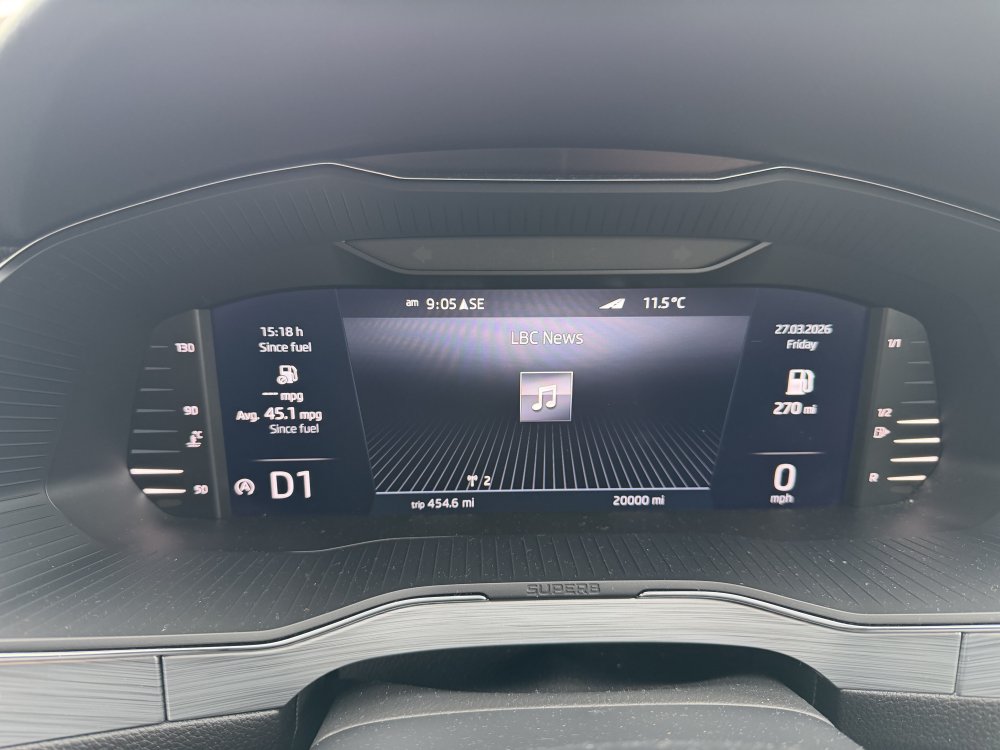
Hit an exciting milestone in the Superb last night - 20,000 miles! Only 15,000 are mine though - bought it with 5k already on the clock. So the 15,000 I’ve added to that have been from 31st May 2024 onwards.
 1 point
 -
Fortunately for those that hark back in time there are Millions of vehicles already built all around the world, manual, auto, semi-auto, cvt etc, just buy a used / cherished vehicle, and in the EU / UK a pre 2024 vehicle if there is compulsory 'safety features you do not want. As to EV,s just say no if not for you and there will be ICE vehicles available used for 'long time mister' and new ones still being build for years to come yet and allowed on the roads.1 point
-
You may well be right about the profit motive. What manufacturers don't get (and perhaps I need to say this quietly, is that I would pay more for a manual compared to a DSG, or perhaps put it another way, I would pay less for a DSG. Also prepared to pay more for a car with the luxury of a manual handbrake and wouldn't risk serious money on a car with a roof made of glass.1 point
-
Easier...without doubt. More enjoyable ?..... I enjoy deciding when I change gear. Like you say, cost will be less for servicing. Personally, I enjoy driving therefore I enjoy having total control .1 point
-
1 pointWe have Scoda Superb diesel 2016. We had a similar problem. Our garage recommended getting an OBD2. I fault was with the crankcase position sensor. It solved the problem.1 point
-
1 pointOk - next likely is a wheel speed sensor; usually the rear left. Not sure on any way to check other than looking for fault codes thrown.1 point
-
The best way to improve the ride is to use tyres with more sidewall height such as 195/65R15 and 205/55R16 instead of 225/45R17 and 225/40R18...rather than fitting springs that are too soft. Notice below, that the increased ride height springs are slightly stiffer than the standard ride height springs (ie. 0.25mm thicker wire diameter). This is to help compensate for the car's increased centre of gravity and associated tendency to roll more in corners. FRONT SPRINGS (for Octavia MK3 1.6TDI DSG estate FWD) Standard ride height front springs 5Q0411105GK Length 315mm Wire diameter 12.00mm Increased ride height front springs 5Q0411105HN Length 332mm Wire diameter 12.25mm REAR SPRINGS (for Octavia MK3 1.6TDI DSG estate FWD) Standard ride height rear springs 5Q0511121AD Length 348mm Wire diameter 10.75mm Increased ride height rear springs 5Q0511121BD Length 361mm Wire diameter 11.00mm Some increased ride height front springs (matching 5Q0411105HN) Kilen 23132 KYB RA1122 Lesjofors 4085733 https://www.autodoc.co.uk/car-parts/oem/5q0411105hn?supplier%5B%5D=246&supplier%5B%5D=85&supplier%5B%5D=253 Some increased ride height rear springs (matching 5Q0511121BD) Kilen 63141 KYB RA7155 Lesjofors 4285742 https://www.autodoc.co.uk/car-parts/oem/5q0511121bd?supplier%5B%5D=253&supplier%5B%5D=85&supplier%5B%5D=2461 point
-
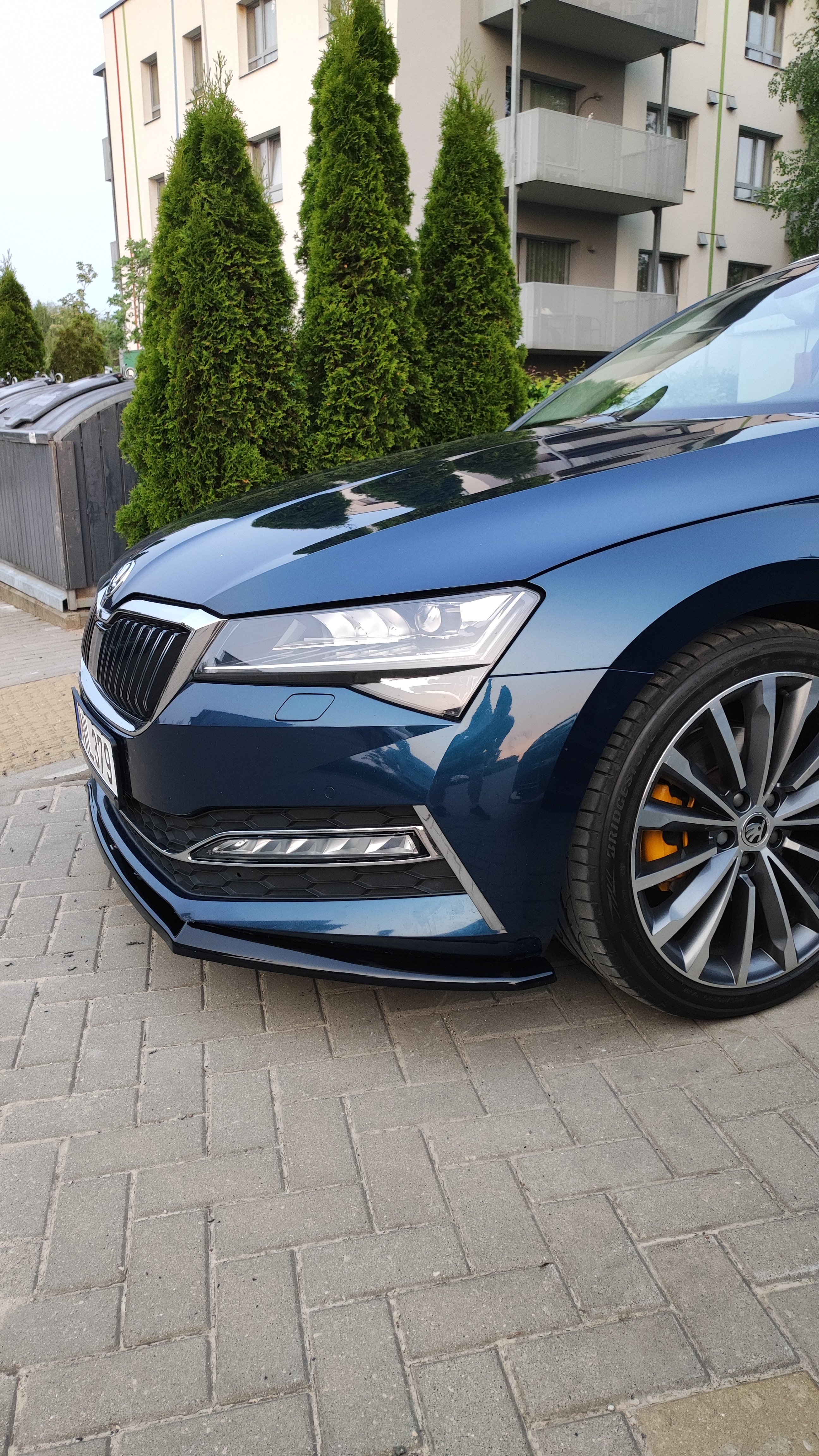
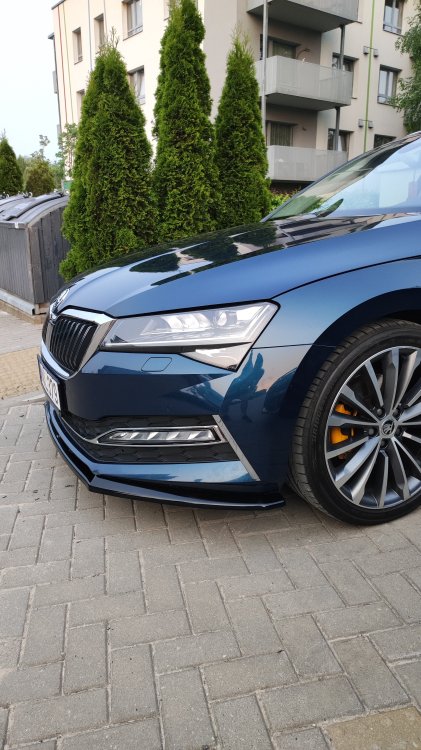
1 pointHere's mine - high mileage lava blue 2019 L&K FL from Lithuania.
 1 point
 -
1 point
-
Update: Managed to get hold of a 0BS907554B controller. I originally have a 0BR907554B controller. I guess the difference is that the OBS is for automatic transmission cars, mine is a manual. And the 4WD now WORKS! I got rid of the N373 error but now have a 01315 (Transmission Control Module - no signal) which I guess is because my car doesn’t have a TCM module. So should I just keep on driving and be happy? Could this new module have adaptation values that will destroy my Haldex clutch or something else? my conclusion is that the “repaired” original controller is still bad.1 point



.thumb.jpg.9dd3f612ba7f13d10be5c518d3c8d255.jpg)